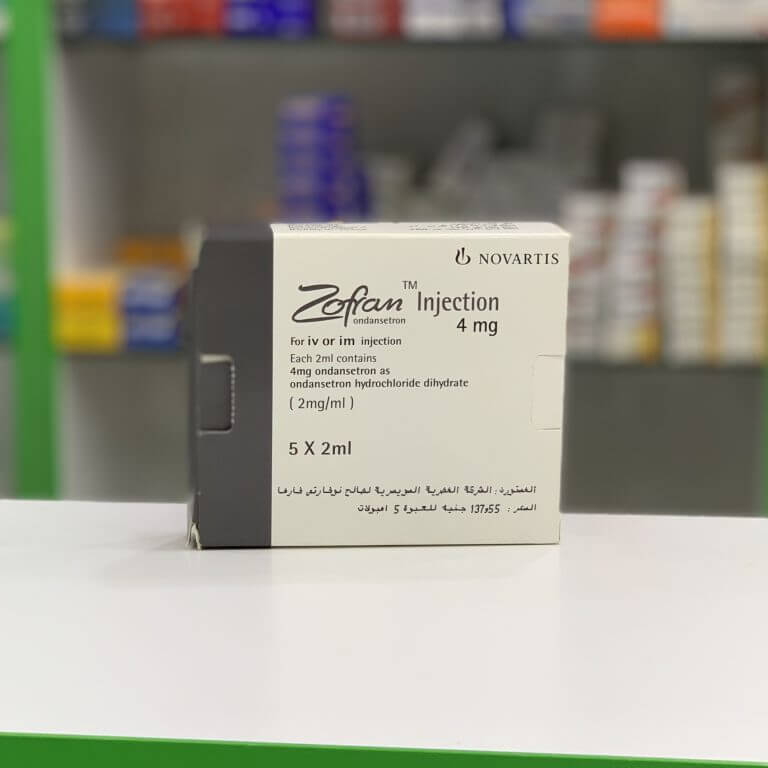
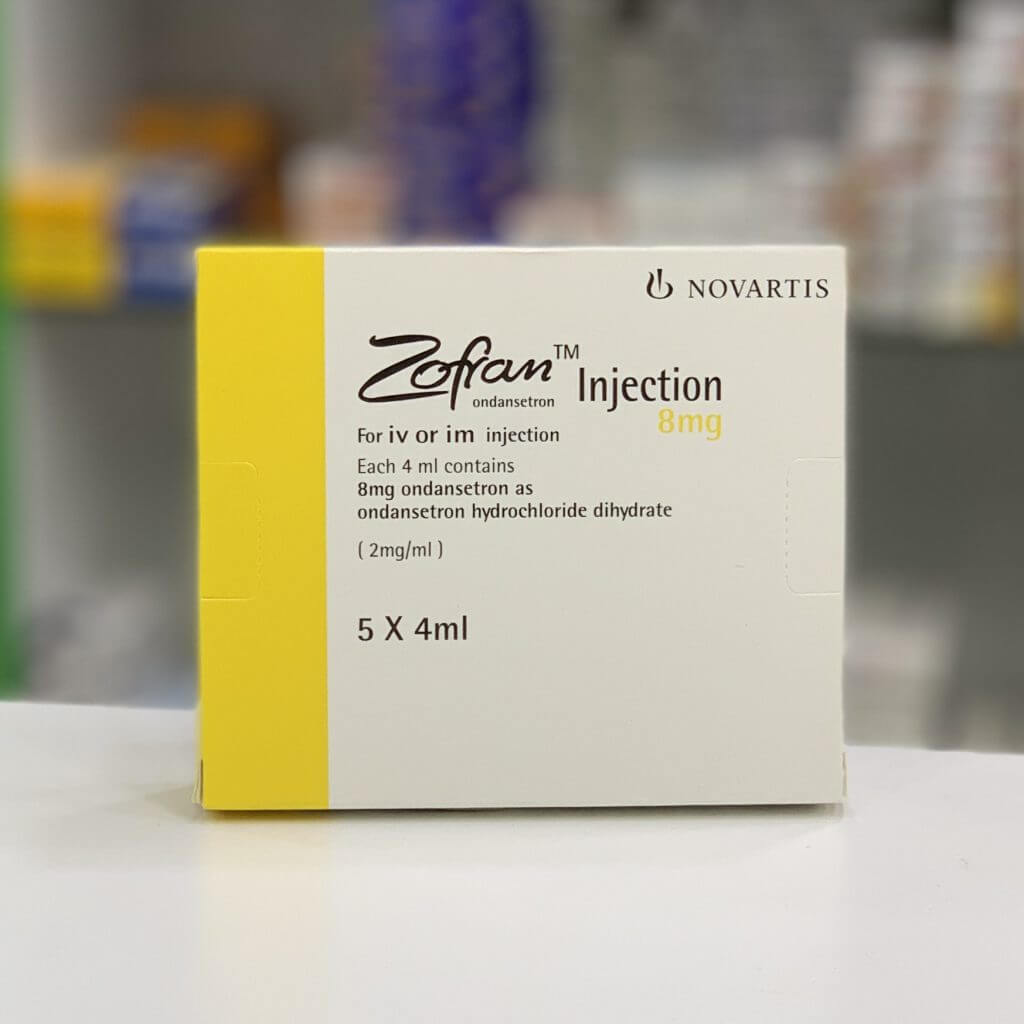
Zofran 4 mg/2 ml 5 ampoules
Composition:
Active ingredient:
Ondansetron (as hydrochloride dihydrate) 2 mg/1 ml
Inactive ingredients: citric acid monohydrate (E330), sodium citrate (E331), sodium chloride and Water for Injections.
Properties:
Zofran Solution for Injection or Infusion contains a medicine called ondansetron (as hydrochloride dihydrate). This belongs to a group of medicines called anti-emetics.
Indications:
-preventing nausea and vomiting caused by chemotherapy or radiotherapy for cancer
-preventing nausea and vomiting after surgery
Dosage and administration:
- Chemotherapy and Radiotherapy induced nausea and vomiting (CINV and RINV)
Adults:
The emetogenic potential of cancer treatment varies according to the doses and combinations of chemotherapy and radiotherapy regimens used. The selection of dose regimen should be determined by the severity of the emetogenic challenge.
The dose range of Zofran Solution for Injection or Infusion is 8 to 32 mg a day and selected by doctor.
- Emetogenic chemotherapy and radiotherapy: The recommended intravenous or intramuscular dose of Zofran is 8 mg administered as a slow injection in not less than 30 seconds immediately before treatment.
Highly emetogenic chemotherapy: For patients receiving highly emetogenic chemotherapy, e.g. high-dose cisplatin, Zofran may be administered as a single 8 mg intravenous or intramuscular dose immediately before chemotherapy. Doses of greater than 8 mg and up to 16 mg of Zofran may only be given by intravenous infusion diluted in 50-100 ml of saline or other compatible infusion fluid and infused over not less than 15 minutes A single dose greater than 16 mg should not be given due to dose dependent increase of QT-prolongation risk. For management of highly emetogenic chemotherapy, a dose of 8 mg of Zofran may be administered by slow intravenous injection in not less than 30 seconds, or intramuscular injection immediately before chemotherapy, followed by two further intravenous or intramuscular doses of 8 mg two to four hours apart, or by a constant infusion of 1mg/hour for up to 24 hours.
The selection of dose regimen should be determined by the severity of the emetogenic challenge.
The efficacy of Zofran in highly emetogenic chemotherapy may be enhanced by the addition of a single intravenous dose of dexamethasone sodium phosphate, 20 mg administered prior to chemotherapy.
Oral treatment is recommended to protect against delayed or prolonged emesis after the first 24 hours.
Paediatric population:
CINV in Children and Adolescents (aged 6 months to 17 years)
The dose of CINV can be calculated based on body surface area (BSA) or weight. Weight-based dosing results in higher total daily doses compared to BSA-based dosing.
There are no data from controlled clinical trials on the use of Zofran in the prevention of chemotherapy-induced delayed or prolonged nausea and vomiting. There are no data from controlled clinical trials on the use of Zofran for radiotherapy-induced nausea and vomiting in children.
In paediatric clinical studies, ondansetron was given by IV infusion diluted in 25 to 50 ml of saline or other compatible infusion fluid and infused over not less than 15 minutes.
Weight-based dosing results in higher total daily doses compared to BSA-based dosing.
Ondansetron should be administered immediately before chemotherapy as a single I/V dose of 0.15 mg/kg. The I/V dose must not exceed 8 mg.
On Day 1, two further IV doses may be given in 4-hourly intervals. Oral dosing can commence twelve hours later and may be continued for up to 5 days. The total daily dose must not exceed adult dose of 32 mg.≤ 10 kg Up to 3 doses of 0.15 mg/kg every 4 h2 mg syrup every 12 h> 10 kg Up to 3 doses of 0.15 mg/kg every 4 h 4 mg syrup or tablet every 12 h The intravenous dose must not exceed 8 mg
The total daily dose must not exceed adult dose of 32 mg
Elderly:
Zofran is well tolerated by patients over 65 years and no alteration of dosage, dosing frequency or route of administration are required.
- Post-Operative Nausea and Vomiting (PONV)
Adults:
For the prevention of PONV the recommended dose of Zofran Solution for Injection or Infusion is a single dose of 4 mg by intramuscular or slow intravenous injection administered at the induction of anaesthesia.
For treatment of established PONV a single dose of 4 mg given by intramuscular or slow intravenous injection is recommended.
Paediatric population:
Children and Adolescents (aged 1 month to 17 years)
For prevention of PONV in paediatric patients having surgery performed under general anaesthesia, a single dose of Zofran may be administered by slow intravenous injection (not less than 30 seconds) at a dose of 0.1mg/kg up to a maximum of 4 mg either prior to, at or after induction of anaesthesia.
For the treatment of PONV after surgery in paediatric patients having surgery performed under general anaesthesia, a single dose of Zofran may be administered by slow intravenous injection (not less than 30 seconds) at a dose of 0.1mg/kg up to a maximum of 4mg.
There is no data on the use of Zofran for the treatment of PONV in children under 2 years of age.
Elderly:
There is limited experience in the use of Zofran in the prevention and treatment of PONV in the elderly, however Zofran is well tolerated in patients over 65 years receiving chemotherapy.
Patients with renal impairment:
No alteration of daily dosage or frequency of dosing, or route of administration are required.
Patients with hepatic impairment:
Clearance of Zofran (ondansetron) is significantly reduced and serum half-life significantly prolonged in subjects with moderate or severe impairment of hepatic function. In such patients a total daily dose of 8 mg IV or oral should not be exceeded.
Side effects:
These reactions are rare in people taking Zofran. If you have an allergic reaction, tell your doctor or a member of the medical staff straight away.
The signs may include:
- sudden wheezing and chest pain or chest tightness
- swelling of your eyelids, face, lips, mouth or tongue
- skin rash – red spots or lumps under your skin (hives) anywhere on your body
collapse.
Other side effects include:
Very common:
Common:
- a feeling of warmth or flushing
- constipation
- changes to liver function test results (if you have Zofran injection with a medicine called cisplatin, otherwise this side effect is uncommon)
- irritation and redness at the site of injection
Uncommon:
- hiccups
- low blood pressure, which can make you •feel faint or dizzy
- uneven heart beat
- slow heart rate
- chest pain
- fits
- unusual body movements or shaking.
Rare:
- feeling dizzy or lightheaded during I/V administration
- blurred vision
- disturbance in heart rhythm (sometimes causing a sudden loss of consciousness).
Very rare:
- poor vision or temporary loss of eyesight, which usually comes back within 20 minute
Contraindications:
– taking apomorphine (used to treat Parkinson’s disease)
– allergy (hypersensitivity) to ondansetron or any of the other ingredients in Zofran injection
Warnings and precautions:
- Please tell your doctor, nurse or pharmacist if you are taking, have recently taken or might take any other medicines. This includes medicines that you buy without a prescription and herbal medicines. This is because Zofran can affect the way some medicines work. Also some other medicines can affect the way Zofran works.
In particular, tell your doctor if you are taking any of the following medicines: carbamazepine or phenytoin, used to treat epilepsy, as these medicines may reduce the effect of Zofran.
Rifampicin, used to treat infections such as tuberculosis (TB), as this medicine may reduce the effect of Zofran antiarrhythmic medicines used to treat an uneven heartbeat, as these medicines may interact with Zofran and effect the rhythm of the heart beta-blocker medicines used to treat certain heart or eye problems, anxiety or prevent migraines, as these medicines may interact with Zofran and effect the rhythm of the heart, tramadol, a pain killer, as Zofran may reduce the effect of tramadol.
- Medicines that affect the heart:
Cancer medicines (especially anthracyclines), as these may interact with Zofran to cause heart arrhythmias.
If you are not sure if any of the above applies to you, talk to your doctor before having Zofran injection.
- Zofran injection should not be given in the same syringe or infusion (drip) as any other medication.
Check with your doctor or pharmacist before having Zofran injection if:
-you have ever had heart problems;
-you have an uneven heart beat (arrhythmias);
-you are allergic to medicines similar to ondansetron, such as granisetron;
-you have liver problems;
-you have a blockage in your gut;
-you have problems with the levels of salts in your blood, such as potassium, sodium and magnesium.
Pregnancy and breast-feeding
- It is not known if Zofran is safe during pregnancy. If you are pregnant, think you may be pregnant or are planning to have a baby, ask your doctor for advice before taking this medicine.
- Do not breast-feed if you have Zofran. This is because small amounts pass into the mother’s milk. Ask your doctor for advice.
Driving and using machines:
Zofran is not expected to impair the ability to drive. However, if any of the side effects affect you (e.g. dizziness, blurred vision) caution is advisable. Do not drive or operate machines if you are feeling unwell.
- Zofran Solution for Injection or Infusion contains sodium citrate and sodium chloride. This means that Zofran injection contains 7 mg of sodium per 4 mg dose. If you are on a low sodium diet, speak to your doctor before you have Zofran injection.
Storage:
Store at a temperature not exceeding 30°C
Package:
Carton box holds plastic tray of 5 ampoules 2 ml
 Русский
 English
 عربي
عربي