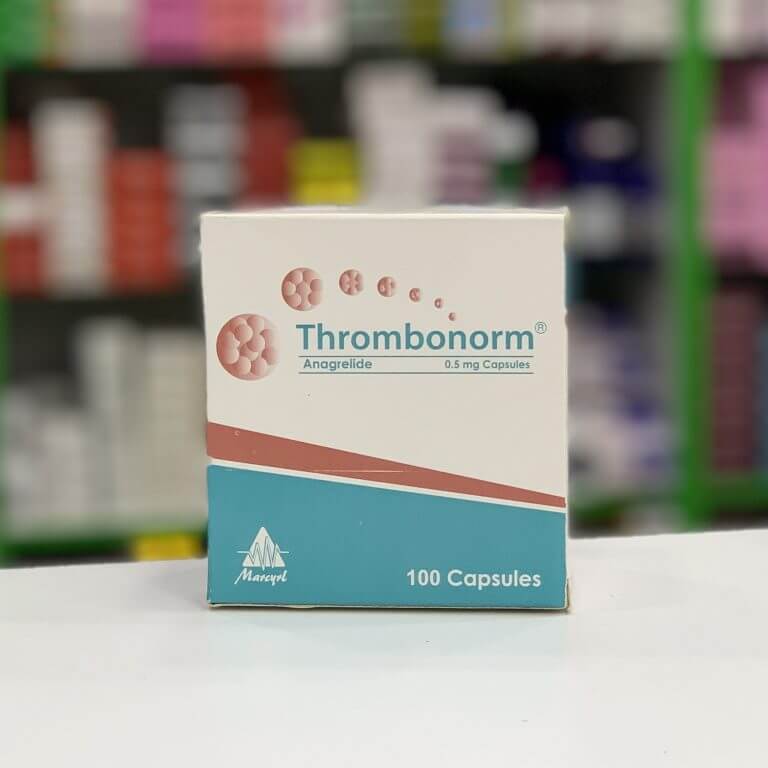
Thrombonorm 0.5 mg 100 capsules
Composition:
Anagrelide hydrochloride 0,57 mg
Equivalent to anagrelide 0,50 mg
Inactive ingredients:
Lactose monohydrate, PVP K30, croscarmellose sodium, microcrystalline cellulose 101, magnesium stearate, tween 80, gelatin, titanium dioxide, brilliant blue, carmoisine.
Properties:
The mechanism by which anagrelide reduces blood platelet count is still under investigation. Studies in patients support a hypothesis of dose-related reduction in platelet production resulting from a decrease in megakaryocyte hypermaturation. In blood withdrawn from normal volunteers treated with anagrelide a disruption was found in the postmitotic phase of megakaryocyte development and a reduction in megakaryocyte size and ploidy.
Indication:
For the treatment of patients with thrombocythemia secondary to myeloproliferative disorders to reduce the elevated platelet count and the risk of thrombosis and to ameliorate associated symptoms including thrombo-hemorrhagic events.
Dosage and administration:
Adult
Thrombocythemia
Indicated for essential thrombocythemia and for thrombocythemia secondary to myeloproliferative disorders to decrease risk thrombosis and thrombo-hemorrhagic event:
0.5 /6hr or 1 mg /12hr; increase PRN not more frequently than 0.5 mg/day/week
Not to exceed 10 mg/day or 2.5 mg/dose
Hepatic Impairment:
Moderate: Start with 0.5 mg/day for at least 1 week; increase PRN no more frequently than 0.5 mg/day/week
Pediatric
Thrombocythemia
0.5 mg/day to 0.5 mg/6hr; adjust dose PRN no more frequently than 0.5 mg/day/week
Adult: The recommended starting dose is 0.5 mg to 1 mg (2 capsules of 0.5 mg twice a day) and can be increased to 4 times daily.
Side effects:
Common: Bloating or swelling of the face, arms, hands, lower legs, or feet
body aches or pain, burning, crawling, itching, numbness, prickling, “pins and needles”, or tingling feelings, chest pain, congestion, cough, difficult or labored breathing, dryness or soreness of the throat, fast, irregular, pounding, or racing heartbeat or pulse, fever, hoarseness
rapid weight gain, runny nose, tender, swollen glands in the neck, tightness in the chest,trouble with swallowing, voice changes.
Less common: Anxiety, blurred vision
burning feeling while urinating, chills, cold sweats, confusion, decreased urine output
dehydration, difficult or painful urination
dilated neck veins, dizziness, faintness, or lightheadedness when getting up suddenly from a lying or sitting position, extreme tiredness or weakness, general feeling of discomfort or illness, headache, irregular breathing, joint pain, purplish patches on the skin, loss of appetite, muscle aches and pains, nausea, noisy breathing, pale skin, redness of the face, neck, arms, and occasionally, upper chest, severe pain or pressure in the chest or the jaw, neck, back, or arms, sudden severe headache or weakness, swollen, painful, or tender lymph glands in the neck, armpit, or groin
trouble sleeping, troubled breathing with exertion, unusual bleeding or bruising
unusual tiredness or weakness, vomiting
vomiting of blood or material that looks like coffee grounds, weight gain.
Contraindications:
Anagrelide is contraindicated in patients with severe hepatic impairment. Exposure to anagrelide is increased 8-fold in patients with moderate hepatic impairment. Use of anagrelide in patients with severe hepatic impairment has not been studied.
Warnings and precautions:
Anagrelide therapy requires close clinical supervision of the patient. While the platelet count is being lowered (usually during the first two weeks of treatment), blood counts (hemoglobin, white blood cells), and renal function (serum creatinine, BUN) should be
monitored. Cases of clinically significant hepatotoxicity (including symptomatic ALT and AST elevations and elevations greater than three times the ULN) have been reported in post-marketing surveillance. Measure liver function tests (ALT, AST) before initiating anagrelide treatment and during therapy.
Storage:
Store at a temperature not exceeding 30°C in a dry place.
Package:
Carton box contains 10 strips each of 10 hard gelatin capsules and inner leaflet.
 Русский
 English
 عربي
عربي