• (Add Comment)

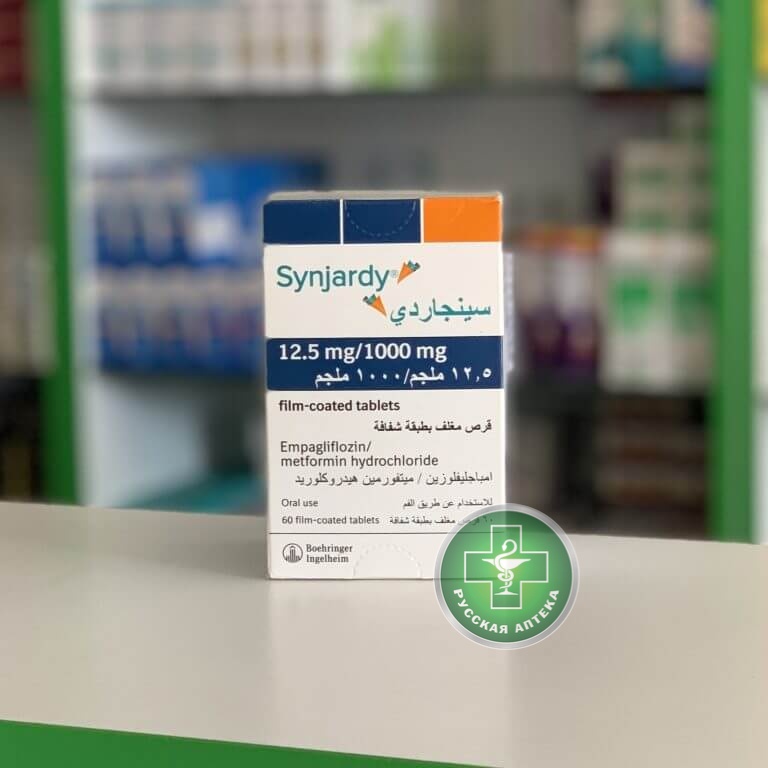
Synjardi 12.5 mg/1000 mg, 60 tablets

870£

View analogs

Синжарди используется:

-у пациентов, у которых диабет недостаточно контролируется только метформином;

– в сочетании с другими лекарствами от диабета у пациентов, у которых диабет в достаточной степени не контролируется этими лекарствами плюс метформин;

-у пациентов, которые уже принимают метформин и эмпаглифлозин в виде отдельных таблеток.


Buy

Product quantities

• Sharm El Sheikh: In stock
• Hurghada: In stock
• Dabaa: Running out

Form of Release: Tablets

Product Brand: Boehringer Ingelheim

Product Categories: Diabetes

Торговое название:

Синжарди 12,5 мг/1000 мг

60 таблеток, покрытых пленочной оболочкой.

Состав :

Каждая таблетка, покрытая пленочной оболочкой, содержит: 

Эмпаглифлозин 12,5 мг

Метформина гидрохлорид 1000 мг

Неактивные Ингридиенты: 

Крахмал кукурузный, коповидон, диоксид кремния коллоидный безводный, магния стеарат, гипромеллоза, макрогол 400, титана диоксид (Е171), тальк.

Характеристики:

Синджарди содержит два действующих вещества эмпаглифлозин и метформин. Каждый из них принадлежит к группе лекарств, называемых «пероральные противодиабетические средства». Это лекарства, принимаемые внутрь для  лечения диабета 2 типа. Эмпаглифлозин принадлежит к группе препаратов, называемых ингибиторами котранспортера глюкозы-2 (SGLT2). Он работает, блокируя белок SGLT2 в почках. Это приводит к удалению сахара в крови (глюкозы) с мочой. Метформин снижает уровень сахара в крови по-другому, в основном блокируя выработку глюкозы в печени. 

Тем самым Synjardy снижает количество сахара в крови. 

Это лекарство также может помочь предотвратить болезни сердца.

Показания:

Синжарди используется:

-у пациентов, у которых диабет недостаточно контролируется только метформином;

– в сочетании с другими лекарствами от диабета у пациентов, у которых диабет в достаточной степени не контролируется этими лекарствами плюс метформин;

-у пациентов, которые уже принимают метформин и эмпаглифлозин в виде отдельных таблеток.

Инструкция по применению:

-Всегда принимайте это лекарство точно так, как сказал вам врач. 

Доза Synjardy варьируется в зависимости от вашего состояния и доз лекарств от диабета, которые вы в настоящее время принимаете. Ваш врач  при необходимости скорректирует вашу дозу и точно скажет, какую дозу лекарства следует принимать.

-Рекомендуемая доза — одна таблетка два раза в день. Ваш врач обычно начинает лечение Синджарди, назначая  дозу таблетки, которая обеспечивает ту же дозу метформина, которую вы уже принимаете (850 мг или 1000 мг два раза в день), и  самую низкую дозу эмпаглифлозина (5 мг два раза в день). 

-Если вы уже принимаете оба лекарства по отдельности, ваш врач начнет  лечение с таблеток Synjardy, которые содержат одинаковое количество обоих лекарств. 

-Если у вас снижена функция почек, ваш врач может назначить более низкую дозу или решить использовать альтернативное лекарство.

– Проглотите таблетку целиком, запивая водой.

– Принимайте таблетки во время еды, чтобы снизить вероятность расстройства желудка.

– Соответствующая диета и физические упражнения помогают организму лучше использовать уровень сахара в крови. Во время приема Синджарди важно соблюдать диету и  программу физических упражнений, рекомендованную вашим врачом.

– Если вы примете больше таблеток Синджарди, чем предусмотрено, у вас может возникнуть лактоацидоз. 

– Если вы пропустите дозу, примите ее, как только вспомните. Если вы не помните, пока не придет время приема следующей дозы, пропустите пропущенную дозу и вернитесь к своему обычному графику. Не принимайте двойную дозу этого лекарства.

– Do not stop taking Synjardy without first consulting your doctor. Your blood sugar levels may increase when you stop  taking Synjardy.

Side effects:

Possible signs of severe allergic reaction may include:

Swelling of the face, lips, mouth, tongue, or throat that may lead to difficulty breathing or swallowing;

Rare: 

A very serious side effect called lactic acidosis. If this happens you must  stop taking Synjardy and contact a doctor or the nearest hospital immediately, as lactic acidosis may lead to coma;

Rare:

The signs of diabetic ketoacidosis (increased levels of “ketone bodies” in your urine or blood, rapid weight loss, feeling sick or being sick, stomach pain, excessive thirst, fast and deep breathing, confusion, unusual sleepiness or tiredness, a sweet smell to your breath, a sweet or metallic taste in your mouth or a different odor to your urine or sweat;

Very common:

If you take Synjardy with another medicine that can cause low blood sugar, such as a sulfonylurea or insulin, your risk of  getting low blood sugar is increased. The signs of low blood sugar may include shaking, sweating, feeling very anxious or confused, fast heartbeat, excessive hunger, headache;

Common:

The signs of urinary tract infection are:

  • burning sensation when passing urine;
  • urine that appears cloudy;
  • pain in the pelvis, or mid-back pain (when kidneys are infected);

Uncommon:

Signs of dehydration are not specific, but may include:

  • unusual thirst;
  • lightheadedness or dizziness upon standing;
  • fainting or loss of consciousness;

Very common:

  • feeling sick (nausea), vomiting);
  • diarrhea or stomach ache;
  • loss of appetite;

Common:

  • genital yeast infection (thrush);
  • passing more urine than usual or needing to pass urine more often;
  • itching;
  • rash or red skin – this may be itchy and include raised bumps, oozing fluid or blisters;
  • changes to the way things taste;
  • thirst;
  • blood tests may show an increase in blood fat (cholesterol) levels in your blood;
  • constipation;
  • decreased or low vitamin B12 levels in the blood (symptoms may include extreme tiredness (fatigue), a sore and red  tongue (glossitis), pins and needles (paraesthesia) or pale or  yellow skin);

Uncommon:

  • hives;
  • straining or pain when emptying the bladder;
  • blood tests may show a decrease in kidney function (creatinine or urea)
  • blood tests may show increases in the amount of red blood cells in your blood (haematocrit);

Rare:

  • necrotising fasciitis of the perineum or Fournier’s gangrene, a serious soft tissue infection of the genitals or the area 

between the genitals and the anus;

Very rare:

  • abnormalities in liver function tests, inflammation of the liver (hepatitis)
  • redness of the skin (erythema)
  • inflammation of the kidneys (tubulointerstitial nephritis).

Contraindications:

Do not take Synjardy:

  • if you are allergic to empagliflozin, metformin or any of the other ingredients of this medicine;
  • if you have uncontrolled diabetes, with, for example, severe hyperglycemia (very high blood glucose), nausea, vomiting,  diarrhea, rapid weight loss, lactic acidosis or ketoacidosis;
  • if you have had a diabetic pre-coma;
  • if you have serious kidney problems;
  • if you have a severe infection such as an infection affecting your lung or bronchial system or your kidney;
  • if you have lost a lot of water from your body (dehydration), e.g. due to long-lasting or severe diarrhea, or if you have vomited several times in a row;
  • if you are treated for acute heart failure or have recently had a heart attack, have severe problems with your circulation (such as shock) or have breathing difficulties. This may lead to a lack in oxygen supply to tissue which can put you at risk for lactic acidosis;
  • if you have problems with your liver;
  • if you drink large amounts of alcohol, either every day or only from time to time;
  • if you are 85 years old or older.

Warnings and precautions:

  • Risk of lactic acidosis:

Synjardy may cause a very rare, but very serious side effect called lactic acidosis, particularly if your kidneys are not  working properly. The risk of developing lactic acidosis is also increased with uncontrolled diabetes, serious infections,  prolonged fasting or alcohol intake, dehydration, liver problems and any medical conditions in which a part of the body has a reduced supply of oxygen  (such as acute severe heart diseases).

If any of the above apply to you, talk to your doctor for further instructions.

  • Stop taking Synjardy for a short time if you have a condition that may be associated with dehydration (significant loss of body fluids) such as severe vomiting, diarrhea, fever, exposure to heat or if you drink less fluid than normal. Talk to your doctor for further instructions.
  • Stop taking Synjardy and contact a doctor or the nearest hospital immediately if you experience some of the symptoms  of lactic acidosis, as this condition may lead to coma.

Symptoms of lactic acidosis include:

-vomiting

-stomach ache (abdominal pain)

-muscle cramps

-a general feeling of not being well with severe tiredness

-difficulty in breathing

-reduced body temperature and heartbeat

Lactic acidosis is a medical emergency and must be treated in a hospital.

  • Talk to your doctor or nurse before taking this medicine and during treatment:

– if you experience rapid weight loss, feeling sick or being sick, stomach pain, excessive thirst, fast and deep breathing, confusion, unusual sleepiness or tiredness, a sweet smell to your breath, a sweet or metallic taste in your mouth, or a different odor to your urine or sweat, contact a doctor or the nearest hospital straight away. These symptoms could be a sign of “diabetic ketoacidosis” – a rare, but serious, sometimes life-threatening problem you can get with diabetes because of increased levels of “ketone bodies” in your urine or blood, seen in tests. The risk of developing diabetic ketoacidosis may be increased with prolonged fasting, excessive alcohol consumption, dehydration, sudden reductions in insulin dose, or a higher need of insulin due to major surgery or serious illness;

– if you have “type 1 diabetes” – this type usually starts when you are young and your body does not produce any insulin. 

Synjardy should not be used to treat patients with type 1 diabetes;

– might be at risk of dehydration, for example:

– if you are being sick, have diarrhea or fever, or if you are not able to eat or drink;

– if you are taking medicines that increase urine production (diuretics) or lower blood pressure;

– if you are over 75 years old (if you are 85 years old or older as you should not start taking Synjardy due to limited therapeutic experience);

– if you have a serious infection of the kidney or the urinary tract with fever. Your doctor may ask you to stop taking 

Synjardy until you have recovered;

– if you need to undergo an examination with iodinated contrast agents (such as X-ray or scan). 

  • Talk to your doctor immediately if you develop a combination of symptoms of pain, tenderness, redness, or swelling of the genitals or the area between the genitals and the anus with fever or feeling generally unwell. These symptoms could be a sign of a rare but serious or even life-threatening infection, called necrotising fasciitis of the perineum or Fournier’s  gangrene which destroys the tissue under the skin. Fournier’s gangrene has to be treated immediately.
  • Surgery:

If you need to have major surgery you must stop taking Synjardy during and for some time after the procedure. Your doctor will decide when you must stop and when to restart your treatment with Synjardy.

  • Kidney function:

During treatment with Synjardy, your doctor will check your kidney function at least once a year or more frequently if you 

are elderly and/or if you have worsening kidney function.

  • Foot care:

Like for all diabetic patients it is important to check your feet regularly and adhere to any other advice regarding foot care given by your health care professional.

  • Urine glucose:

Because of how this medicine works, your urine will test positive for sugar while you are taking this medicine.

  • Children and adolescents:

This medicine is not recommended for use in children and adolescents under 18 years, because it has not been studied in these patients.

  • Other medicines and Synjardi:

Если вам необходимо сделать инъекцию контрастного вещества, содержащего йод, в кровоток, например, во время  рентгена или сканирования, вы должны прекратить прием Синжарди до или во время инъекции. Ваш врач решит, когда вам следует прекратить и когда возобновить лечение препаратом Синджарди.

  • Сообщите своему врачу, если вы принимаете, недавно принимали или планируете принимать какие-либо другие лекарства. Вам может потребоваться более частые анализы уровня глюкозы в крови и функции почек, или вашему врачу может потребоваться скорректировать дозировку Синджарди. Особенно важно  отметить следующее:

– лекарства, повышающие выработку мочи (диуретики);

– другие лекарства, снижающие количество сахара в крови, такие как инсулин или препараты сульфонилмочевины;

– лекарства, которые могут изменить количество метформина в крови, особенно если у вас снижена функция почек (например, 

такие как верапамил, рифампицин, циметидин, долутегравир, ранолазин, триметоприм, вандетаниб, изавуконазол, кризотиниб, 

олапариб);

– бронходилататоры (бета-2-агонисты);

– кортикостероиды;. 

– НПВП и ингибиторы ЦОГ-2 (такие как ибупрофен и целекоксиб);

– некоторые лекарства для лечения повышенного кровяного давления (ингибиторы АПФ и антагонисты рецепторов ангиотензина II);

– лекарства, содержащие алкоголь;

– йодсодержащие контрастные вещества (лекарственные средства, используемые при рентгенографии;

– литий.

  • Синжарди с алкоголем:

Избегайте чрезмерного употребления алкоголя во время приема Синджарди, поскольку это может увеличить риск лактоацидоза.

  • Беременность и кормление грудью:

-Если вы беременны или кормите грудью, думаете, что беременны или планируете завести ребенка, проконсультируйтесь с врачом, прежде чем принимать это лекарство. 

Не принимайте Синджарди, если вы беременны. Неизвестно, вредно ли это лекарство для будущего ребенка.

-Метформин проникает в грудное молоко в небольших количествах. Неизвестно, проникает ли эмпаглифлозин в грудное молоко человека. 

Не принимайте Синджарди, если вы кормите грудью.

  • Вождение и использование машин:

Синжарди оказывает незначительное влияние на способность управлять автомобилем и работать с механизмами. 

Прием этого лекарства в сочетании с препаратами сульфонилмочевины или инсулином может привести к  слишком низкому падению уровня сахара в крови (гипогликемии), что может вызвать такие симптомы, как дрожь, потливость и изменение зрения, а также может повлиять на вашу способность управлять автомобилем и работать с механизмами. 

Не садитесь за руль и не используйте какие-либо инструменты или машины, если во время приема Synjardy у вас закружилась голова.

  • Храните в недоступном для детей месте.

Хранилище:

Хранить в прохладном сухом месте.

Упаковка:

Картонная коробка содержит 6 блистеров по 10 таблеток, покрытых пленочной оболочкой, и вкладыш-вкладыш.

Active Ingredients:

No comments yet. Be the first to write one.

Leave a Comment

Your comment will be published after moderation.
You’ll receive a notification to your email when someone replies.
I'm not a robot

Related Products