Русский
 English
 عربي
عربي
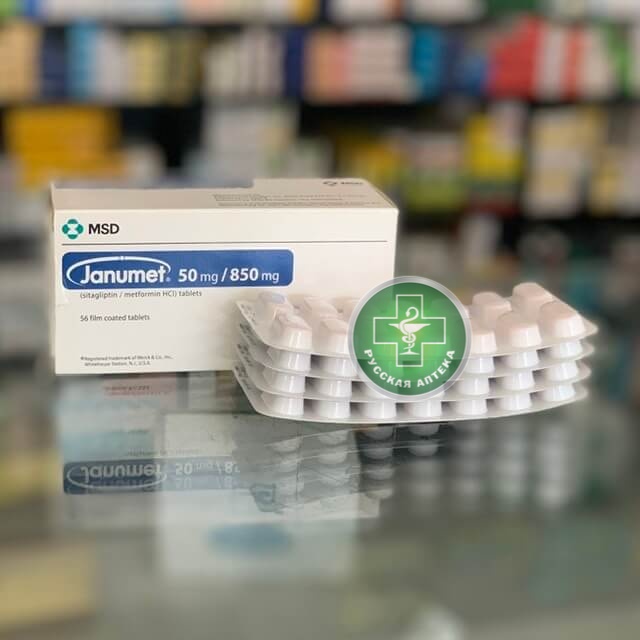
Janumet 50/850 mg 56 tablets
674£
View analogsAs a starting therapy for patients with type 2 diabetes mellitus to improve glycemic control, if diet and exercise regimens do not allow adequate control; as an adjunct to diet and exercise regimen to improve glycemic control in patients with type 2 diabetes mellitus who did not achieve adequate control against the background of monotherapy with metformin or sitagliptin, or after unsuccessful combined treatment with two drugs.
Combination therapy
Patients with type 2 diabetes mellitus to improve glycemic control in combination with sulfonylurea derivatives (triple combination: metformin + sitagliptin + sulfonylurea derivative) when diet and exercise regimen in combination with two of these three drugs (metformin, sitagliptin or sulfonylurea derivatives) are not lead to adequate glycemic control; in combination with thiazolidinediones (PPARY receptor agonists activated by the peroxisome proliferator), when diet and exercise regimen in combination with two of these three drugs (metformin, sitagliptin or thiazolidinedione) do not lead to adequate glycemic control; in combination with insulin, when diet and exercise regimen in combination with insulin do not lead to adequate glycemic control.
Form of Release: Tablets
Product Brand:
Merck
About the brand
Product Categories: Diabetes


Janumet 50/850 mg 56 tablets
Composition:
Each tablet contains:
Sitaglipin 50 mg
Metformin hydrochloride 850 mg
Auxiliary components:
microcrystalline cellulose, polyvinylpyrrolidone (povidone), sodium stearyl fumarate, sodium lauryl sulfate, purified water.
Properties:
The drug is a combination of two hypoglycemic drugs with a complementary mechanism of action, designed to improve glycemic control in patients with type 2 diabetes mellitus: sitagliptin, an inhibitor of the enzyme dipeptidyl peptidase-4 (DPP-4), and metformin, a representative of the biguanide class.
Metformin
Metformin is a hypoglycemic drug that increases glucose tolerance in patients with type 2 diabetes mellitus by lowering basal postprandial blood glucose concentrations. Its pharmacological mechanisms of action differ from the mechanisms of action of oral hypoglycemic drugs of other classes.
Metformin reduces glucose synthesis in the liver, reduces glucose absorption in the intestine and increases insulin sensitivity by increasing peripheral glucose uptake and utilization. Unlike sulfonylurea derivatives, metformin does not cause hypoglycemia either in patients with type 2 diabetes mellitus or in healthy people (with the exception of some circumstances) and does not cause hyperinsulinemia. During treatment with metformin, insulin secretion does not change,
Sitagliptin
Sitagliptin is an orally active, highly selective inhibitor of the DPP-4 enzyme for the treatment of type 2 diabetes. The pharmacological effects of the DPP-4 class of drugs are mediated by the activation of incretins. By inhibiting DPP-4, sitagliptin increases the concentration of two known active hormones of the incretin family:
glucagon-like peptide 1 (GLP-I) and glucosedependent insulinotropic polypeptide (GIP). Incretins are part of the internal physiologic system of glucose homeostasis regulation. At
normal or increased blood glucose concentration, GLP-I and GIP increase the synthesis and secretion of insulin by the ß-cells of the pancreas. GLP-I also suppresses the secretion of glucagon by the a-cells of the pancreas, thus decreasing the synthesis of glucose in the liver. This mechanism of action differs from the mechanism of action of sulfonylurea derivatives, which stimulate the release of insulin at low blood glucose concentrations, which is fraught with the development of sulfonyl-induced hypoglycemia not only in patients with type 2 diabetes mellitus, but also in healthy individuals. Sitagliptin at therapeutic concentrations does not inhibit the activity of related enzymes DPP-8 or DPP-9. Sitagliptin differs in chemical structure and pharmacological action from GLP-I analogues, insulin, sulfonylurea derivatives or meglitinides, biguanides, peroxisome proliferator-activated receptor y-receptor agonists (PPARY), alphaglucosidase inhibitors and amylin analogues. which is fraught with the development of sulfonyl-induced hypoglycemia not only in patients with type 2 diabetes mellitus, but also in healthy individuals. Sitagliptin at therapeutic concentrations does not inhibit the activity related enzymes DPP-8 or DPP-9. Sitagliptl differs in chemical structure and pharmacological action from GLP-I analogues, insulin, sulfonylurea derivatives or meglitinides, biguanides, peroxisome proliferator-activated receptor y-receptor agonists (PPARY), alphaglucosidase inhibitors and amylin analogues. which is fraught with the development of sulfonyl-induced hypoglycemia not only in patients with type 2 diabetes mellitus, but also in healthy individuals. Sitagliptin at therapeutic concentrations does not inhibit the activity of related enzymes DPP-8 or DPP-9. Sitagliptin differs in chemical structure and pharmacological action from GLP-I analogues, insulin, sulfonylurea derivatives or meglitinides, biguanides, peroxisome proliferator-activated receptor y-receptor agonists (PPARY), alphaglucosidase inhibitors and amylin analogues.
Indications:
As a starting therapy for patients with type 2 diabetes mellitus to improve glycemic control, if diet and exercise regimens do not allow adequate control; as an adjunct to diet and exercise regimen to improve glycemic control in patients with type 2 diabetes mellitus who did not achieve adequate control against the background of monotherapy with metformi sitagliptin, or after unsuccessful combined treatment with two drugs.
Combination therapy: For patients with type 2 diabetes mellitus to improve glycemic control in combination with sulfonylurea derivatives (triple combination: metformin + sitagliptin + sulfonylurea derivative), when diet and exercise regimen are combined with two of these three drugs (metformin, sitagliptin or derivatives sulfonylureas) do not lead to adequate glycemic control; in combination with thiazolidinediones (PPARY receptor agonists activated by the peroxisome proliferator), when diet and exercise regimen in combination with two of these three drugs (metformin, sitagliptin or thiazolidinedione) do not lead to adequate glycemic control; in combination with insulin, when diet and exercise regimen in combination with insulin do not lead to adequate glycemic control.
Method of administration and dosage:
The method of application and dosage regimen of a particular drug depends on its form of release and other factors. The optimal dosage regimen is determined by the doctor. The compliance of the used dosage form of a particular drug with indications for use and dosage regimen should be strictly observed
Contraindications:
Type 1 diabetes mellitus; kidney disease or decreased renal function (with serum creatinine concentrations> 1.5 mg / dl and> 1.4 mg / dl in men and women, respectively, or decreased CC (<60 ml / min), including due to cardiovascular collapse (shock), acute myocardial infarction or septicemia; acute conditions occurring with the risk of developing renal dysfunction, such as dehydration (with diarrhea, vomiting), fever, severe infectious diseases, hypoxia (shock, sepsis, renal infections, bronchopulmonary diseases) ; acute or chronic metabolic acidosis, including diabetic ketoacidosis (with or without coma); clinically pronounced manifestations of acute and chronic diseases that can lead to the development of tissue hypoxia (including heart or respiratory failure, acute myocardial infarction); extensive surgery and trauma, when insulin therapy is indicated; liver failure, impaired liver function; chronic alcoholism, acute alcohol poisoning; pregnancy, lactation period; lactic acidosis (including a history); application for at least 48 hours before and within 48 hours after carrying out radioisotope or X-ray studies with the introduction of an iodine-containing contrast agent; adherenc a hypocaloric diet (less than 1000 kcal / day); children and adolescents up to 18 years old;
hypersensitivity to sitagliptin, metformin or any of the components of the drug. and history); application for at least 48 hours before and within 48 hours after carrying out radioisotope or X-ray studies with the introduction of an iodine-containing contrast agent; adherence to a hypocaloric diet (less than 1000 kcal / day); children and adolescents up to 18 years old; hypersensitivity to sitagliptin, metformin or any of the components of the drug. and history); application for at least 48 hours before and within 48 hours after carrying out radioisotope or X-ray studies with the introduction of an iodine-containing contrast agent; adherence to a hypocaloric diet (less than 1000 kcal / day); children and adolescents up to 18 years old; hypersensitivity to sitagliptin, metformin or any of the components of the drug.
Precautions:
Metformin and sitagliptin are excreted primarily by the kidneys. The risk of metformin accumulation and the development of lactic acidosis increases in proportion to the degree of impaired renal function, therefore, the drug should not be prescribed to patients with a serum creatinine concentration above the upper age limit of the norm. In elderly patie due to age-related decline in renal function, a
minimum dose of the drug should be used to achieve adequate glycemic control. In elderly patients, especially those aged 280 years, regular monitoring of renal function is performed. Before starting therapy with the drug, as well as at least 1 time per year after starting treatment, normal renal function should be confirmed using appropriate tests. In patients at risk of developing renal dysfunction, monitoring of renal function should be performed more frequently,
Side effects:
-headache,
-dizziness;
-hypoglycemia;
-constipation;
-infections of the upper respiratory tract and nasopharyngitis;
-osteoarthritis and pain in the limbs;
– insignificant leukocytosis due to an increase in the number of neutrophils (not considered clinically significant).
Storage method:
At a temperature not higher than 30 degrees. In a dry place.
Packing:
The cardboard box holds 14, 28, or 56 tablets.
Tags, Keywords:
Active Ingredients:
No comments yet. Be the first to write one.
Your comment will be published after moderation.
You’ll receive a notification to your email when someone replies.