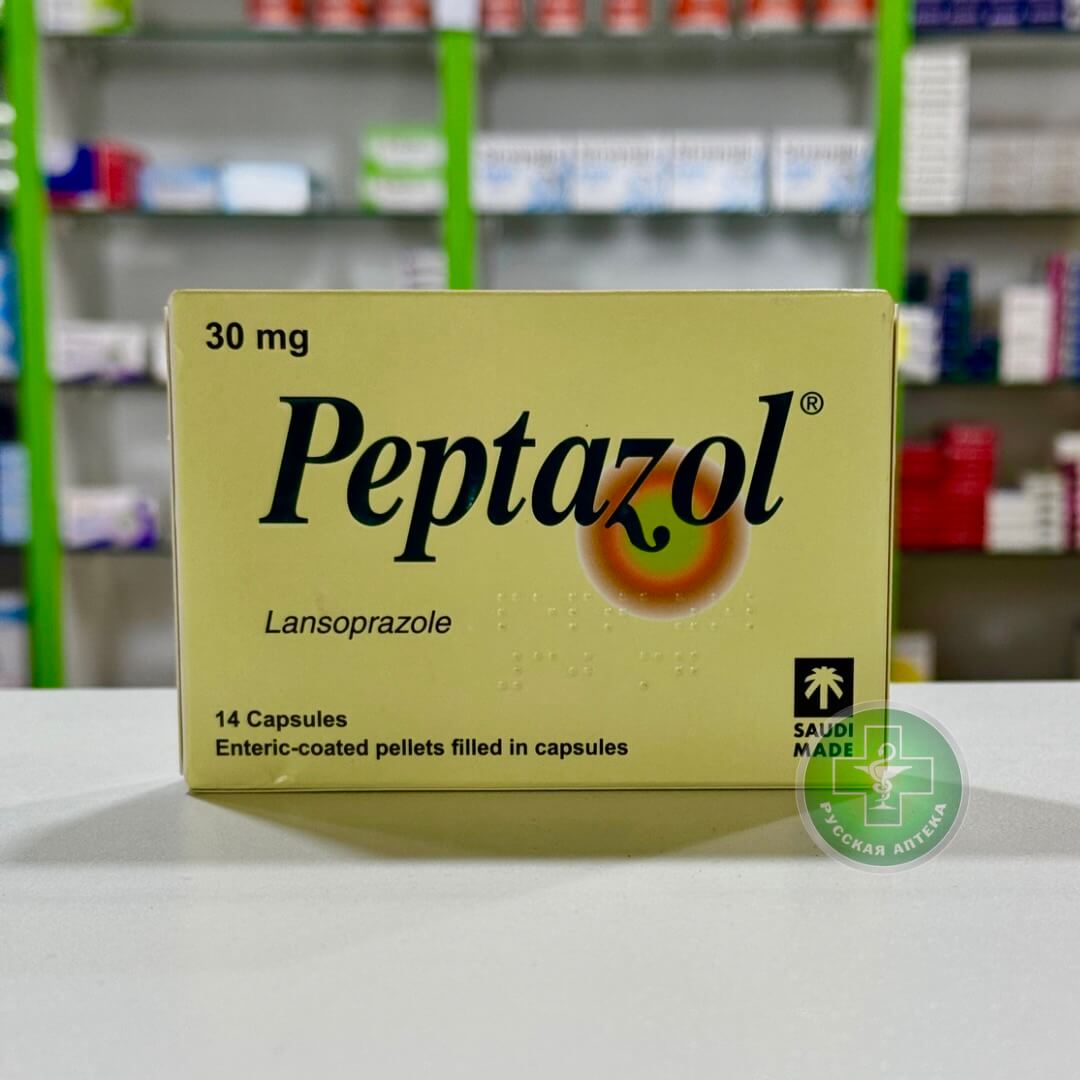
Peptazol 30 mg 14 capsules
Composition:
• Active ingredient: Lansoprazole (Lansoprazole - 30 mg)
Pharmacological properties:
• Lansoprazole inhibits the enzyme H⁺/K⁺-ATPase in the parietal cells of the stomach, thereby blocking the final stage of hydrochloric acid secretion.
• Provides a rapid and prolonged reduction in gastric acidity.
• Has greater bioavailability when taken before meals.
Indications for use:
• Gastric ulcer and duodenal ulcer
• Gastroesophageal reflux disease (GERD)
• Erosive esophagitis
• Zollinger-Ellison syndrome
• Ulcer prevention when taking NSAIDs
• As part of Helicobacter pylori eradication therapy (in combination with antibiotics)
Method of administration and dosage:
• Usually prescribed dose for adults:
o GERD, duodenal ulcer: 30 mg once daily 30 minutes before meals, for 4-8 weeks
o Gastric ulcer: 30 mg once daily for 4-8 weeks
o H. pylori eradication (as part of triple therapy): 30 mg twice daily for 7-14 days
o Zollinger-Ellison syndrome: initial dose 60 mg/day, can be increased to 120 mg per day, divided into 2 doses
• Use in children: not recommended without a doctor's prescription, especially under 12 years of age
 Русский
 English
 عربي
عربي