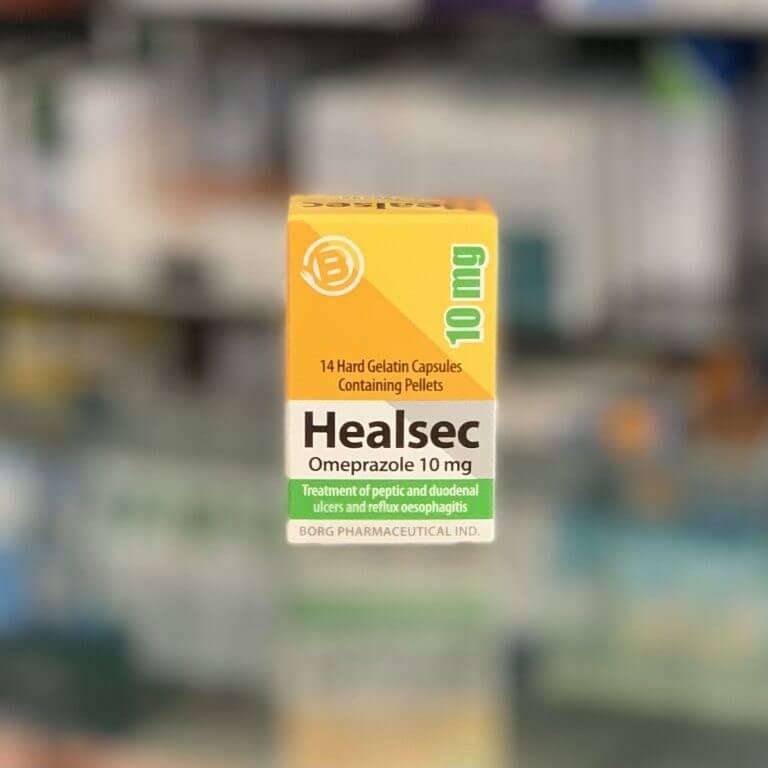
Healsec 10 mg 14 capsules
Composition:
Each capsule contains:
Omeprazole 10 mg
Auxiliary components:
Cromcamelose sodium, lactose monohydrate, povidone magnesium stearate, methacrulic acid polymer type C, talc.
Properties:
H + -K + -ATPase inhibitor. It inhibits the activity of H + -K + -ATP-ase in the parietal cells of the stomach and thereby blocks the final stage of the secretion of hydrochloric acid. This leads to a decrease in the level of basal and stimulated secretion, regardless of the nature of the stimulus. Due to a decrease in acid secretion, it reduces or normalizes the effect of acid on the esophagus in patients with reflux esophagitis. Omeprazole has a bactericidal effect on Helicobacter pylori. The eradication of H. pylori with the simultaneo use of omeprazole and antibiotics allows yo to quickly stop the symptoms of the disease, achieve a high degree of healing of the
damaged mucosa and persistent long-term remission, and reduce the likelihood of bleeding from the gastrointestinal tract.
Indications:
Peptic ulcer of the stomach and duodenum in the acute phase (including associated with Helicobacter pylori), reflux esophagitis, Zollinger-Ellison syndrome, erosive and ulcerative lesions of the stomach and duodenum associated with the intake of
NSAlDs.
Mode of application:
Inside, drinking a sufficient amount of water (the contents of the capsule cannot be chewed), 30 minutes before meals.
Peptic ulcer of the stomach and duodenum, not associated with Helicobacter pylori (including for the prevention of relapses) patients who are resistant to treatment with other antiulcer drugs are prescribed at a dose of 40 mg / day. The course of treatment for duodenal ulcer disease – 2 weeks, if necess – up to 4 weeks; with gastric ulcer – 4-8 we
- Gastroesophageal reflux disease (GERD): depending on the severity of esophagitis up to 80 mg per day (Healsec@ 40 mg – 1-2 capsules per day). The duration of the main course also depends on the severity of esophagitis and is 4-8 weeks. Supportive therapy should be carried out at the lowest effective dose, including on demand and intermittent courses. The duration of maintenance therapy is determined by the doctor.
- Eradication of Helicobacter pylori in infected patients with gastric ulcer and duodenal ulcer, as well as with other diseases in which eradication is required (as part of combination therapy). According to the recommendations, Healsec@ can be included in the following treatment regimens:
The first line (standard triple regimen) Helsec@ 40 mg once a day + clarithromycin 500 mg twice a day + amoxicillin 1000 mg twice a day. To increase the effectiveness of therapy, it is possible to prescribe Healsec@ 40 mg 2 times a day (doubling the standard dose) and increasing the duration of the course from 10-14 days.
The second line (four-way) It is used when the standard triple therapy is ineffective or when the penicillin group is intolerant. Bismuth tripotassiumdicitrate (120 mg 4 times a day) in combination with Helsec@ 40 mg once a day, tetracycline (500 mg 4 times a day), metronidazole (500 mg 4 times a day) for 10 days.
The third line and other alternative therapy options are prescribed based on the study of the individual sensitivity of H. pylori to antibacterial drugs. – Hypersecretory conditions (Zollinger-Ellison syndrome, stress ulcers of the gastrointestinal tract, polyendocrineadenomatosis, systemic mastocytosis and others): the dose is selected individually, depending on the initial level of gastric secretion, usually starting from 40 mg once a day. If necessary, the dose is increased to 80-120 mg per day; in this case, it is divided into 2-3 doses.
- Prevention and treatment of damage to the mucous membrane of the stomach and duodenum caused by the intake of nonsteroidal anti-inflammatory drugs (NSAIDgastropathy): dyspepsia, mucosal erosion, peptic ulcer – the drug is prescribed once 40
mg per day for 4-8 weeks.
- Prevention of aspiration of acidic stomach contents into the respiratory tract during general anesthesia (Mendelssohn’s syndrome) – 40 mg once.
Children over the age of 2 years, weighing more than 20 kg: for gastroesophageal reflux disease, Helsek should be prescribed in the recommended doses of omeprazole for pediatric practice (0.7-3.3 mg per kilogram of the child’s body weight per day in the treatment of GERD). The duration of the course is 4-8 weeks. over the age of 4 years, weighing more than 20 kg: duodenal ulcer caused by Helicobacter pylori, the drug should be prescribed in the recommended doses of omeprazole for pediatric practice (1-2 mg per kilogram of the child’s body weight per day for the eradication of Helicobacter pylori) in combination with antibacterial drugs.
Use of the drug in special cases Renal dysfunction. No dose adjustment is required.
Liver dysfunction. In patients with impaired liver function, the bioavailability and clearance of omeprazole increase, the therapeutic dose should not exceed 20 mg per day; the use of omeprazole at a dose of 40 mg is contraindicated.
Elderly age. The metabolic rate of omeprazole in the elderly is reduced, but dose adjustment is not required.
Contraindications:
Hypersensitivity to omeprazole, substituted benzimidazoles or other components of the drug. Simultaneous use with drugs nelfinavir, atazanavir, erlotinib, posaconazole.
Precautions:
Before using the drug, you should consult your doctor in the following cases:
- in the presence of a previously diagnosed gastric ulcer; severe liver disease, accompanied by liver failure; renal failure; jaundice; previous surgical intervention on the gastrointestinal tract;
- in the presence of “alarming” symptoms: a significant spontaneous decrease in body
weight, repeated vomiting, vomiting with an admixture of blood, discoloration of feces (tarry stools – melena), impaired swallowing;
- when new symptoms appear or changes in existing symptoms from the gastrointestinal tract;
- against the background of symptomatic treatment for indigestion or persistent heartburn (for 4 weeks or more);
- when used simultaneously with one or more of the following drugs: clopidogrel, digoxin, ketoconazole, itraconazole, warfarin, cilostazol, diazepam, phenytoin, saquinavir, tacrolimus, clarithromycin, voriconazole, rifampicin, St. John’s wort preparations. Although a causal relationship between the use of omeprazole and fractures associated with osteoporosis has not been established, patients at risk of developing osteoporosis or fractures in its background should be under appropriate clinical supervision.
Side effects:
In rare cases, the following usually reversible side effects may occur.
From the digestive system: diarrhea or constipation, nausea, vomiting, flatulence, abdominal pain, dry mouth, taste disturbances, stomatitis, transient increase in the level of liver enzymes in plasma; in patients with previous severe liver disease – hepatitis
(including jaundice), liver dysfunction. From the nervous system: headache, dizziness, agitation, drowsiness, insomnia, paresthesia, depression, hallucinations; in patients with severe concomitant somatic diseases, in patients with previous severe liver disease encephalopathy.
From the musculoskeletal system: muscle weakness, myalgia, arthralgia.
From the hematopoietic system: leukopenia, thrombocytopenia; in some cases agranulocytosis, pancytopenia.
On the part of the skin: itching; rarely (in some cases) – photosensitization, erythema multiforme, alopecia.
Allergic reactions: urticaria, angioedema, bronchospasm, interstitial nephritis and anaphylactic shock.
Others:
blurred vision, peripheral edema, increased sweating, fever, gynecomastia; rarely – the formation of gastric glandular cysts during long-term treatment (a consequence of inhibition of the secretion of hydrochloric acid, is benign, reversible).
Packaging:
Cardboard box holds a plastic jar with 7 or 14 capsules
 Русский
 English
 عربي
عربي