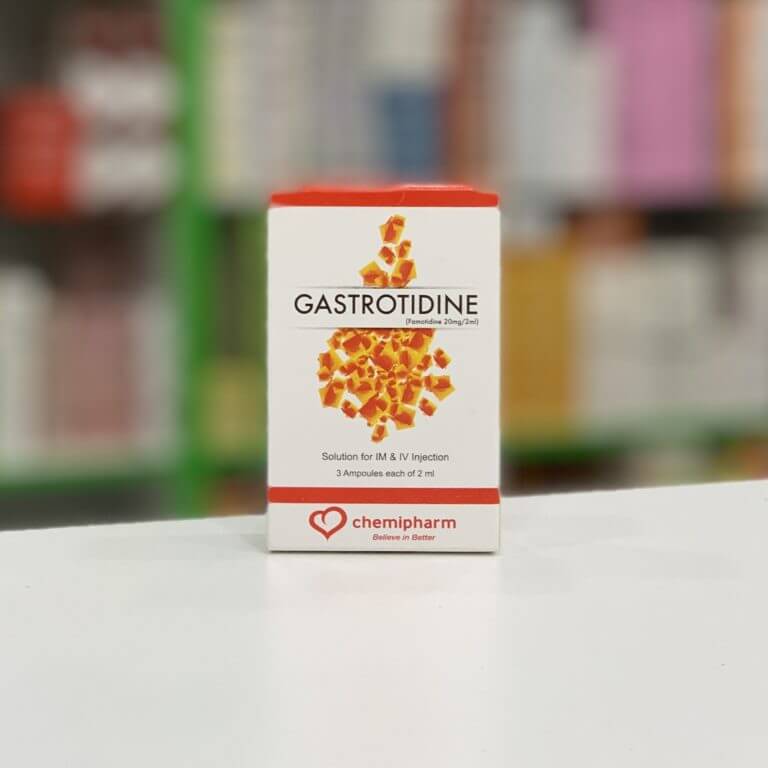
Gastrotidine 20 mg/2 ml 3 ampoules
Composition:
Each 2 ml contains:
Famotidine 20 mg
Inactive ingredients:
Aspartic acid, mannitol, water for injections.
Properties:
Blocker of histamine H2 receptors III generation. Suppresses the production of hydrochloric acid, both basal and stimulated by histamine, gastrin and, to a lesser extent, acetylcholine. Simultaneously with a decrease in the production of hydrochloric acid and an increase in pH, it reduces the activity of pepsin. The duration of action after a single dose depends on the dose and ranges from 12 to 24 hours.
Indications:
Treatment and prevention of recurrence of peptic ulcer of the stomach and duodenum, reflux esophagitis, Zollinger-Ellison syndrome, diseases and conditions accompanied by increased secretion of gastric juice, prevention of erosive and ulcerative lesions of the gastrointestinal tract while taking NSAIDs; bleeding from the upper gastrointestinal tract (for intravenous and intramuscular injection, as part of complex treatment).
Dosage and administration:
The drug is intended for intravenous and intramuscular administration.
The initial dose for intravenous administration should not exceed 20 mg 2 times a day (every 12 hours).
The contents of the vial should be dissolved in 20 ml of 0.9% sodium chloride or glucose solution, and then injected slowly (for at least 2 minutes).
The dosage is selected by the doctor individually.
On average, 20 mg is administered every 12 hours.
Side effects:
On the part of the digestive system: there may be a lack of appetite, dry mouth, taste disturbances, nausea, vomiting, bloating, diarrhea or constipation; in some cases – the development of cholestatic jaundice, an increase in the level of transaminases in the blood plasma.
From the side of the central nervous system: headache, fatigue, tinnitus, transient mental disorders are possible.
From the side of the cardiovascular system: rarely – arrhythmias.
From the hemopoietic system: very rarely – agranulocytosis, pancytopenia, leukopenia, thrombocytopenia.
From the musculoskeletal system: possible muscle pain, joint pain.
Allergic reactions: skin itching, bronchospasm, fever are possible.
Dermatological reactions: alopecia, acne vulgaris, dry skin are possible.
Local reactions: irritation at the injection site.
Contraindications:
Pregnancy, lactation, hypersensitivity to famotidine.
Warnings and precautions:
Use with caution in patients with impaired renal and hepatic function.Before starting treatment, it is necessary to exclude the possibility of a malignant disease of the esophagus, stomach or duodenum.
Does not change the activity of microsomal liver enzymes.
The interval between taking antacids and famotidine should be at least 1-2 hours.
Clinical experience with famotidine in children is limited.
Storage:
Store at a temperature not higher than 2-8°C.
Package:
The cardboard box contains 3, 6 or 12 ampoules of 2 ml, paper instructions
 Русский
 English
 عربي
عربي