Русский
 English
 عربي
عربي
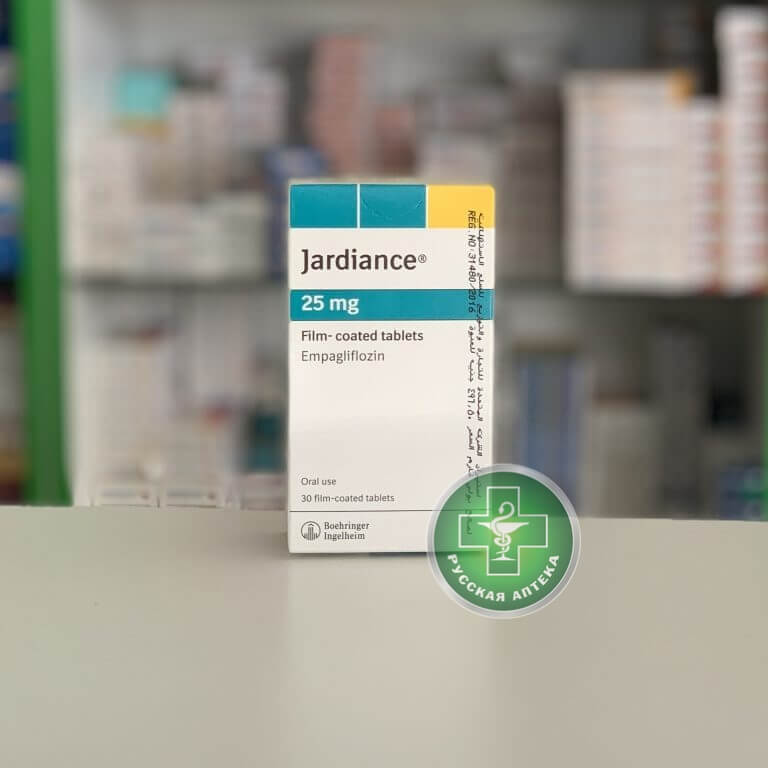
Jardiance 25 mg 30 tablets
626£
View analogsThe drug is indicated for patients with type 2 diabetes mellitus and high cardiovascular risk in combination with standard therapy for cardiovascular diseases.
Buy
Product quantities
Form of Release: Tablets
Product Brand:
Boehringer Ingelheim
About the brand
Product Categories: Diabetes


Jardiance 25 mg 30 tablets
Compound:
Each tablet contains:
Empagliflozin 25 mg
Auxiliary components:
Lactose monohydrate, microcrystalline cellulose, hyprolose, croscarmellose sodium, colloidal silicon dioxide, magnesium stearate.
Shell composition: Opadry yellow hypromellose 2910, titanium dioxide, talc, macrogol 400, iron dye yellow oxide.
Properties:
Empagliflozin is a reversible, highly potent, selective, and competitive inhibitor of the sodium dependent glucose transporter type 2 (SGLT2) with a concentration required to inhibit 50% of enzyme activity (IC50) of 1.3 nmol. The selectivity of empagliflozin for SGLT2 is 5000-fold higher than the selectivity for sodium-dependent glucose transporter type 1 (SGLT1), which is responsible for glucose absorption in the intestine.
In addition, empagliflozin has been shown to be highly selective for other glucose transporters responsible for glucose homeostasis in various tissues.
Indications:
For the treatment of type 2 diabetes mellitus in adults with inadequate glycemic control, in addition to diet and exercise:
– as monotherapy;
– as part of combination therapy with other hypoglycemic drugs, including insulin.
The drug is indicated for patients with type 2 diabetes mellitus and high cardiovascular risk in combination with standard cardiovascular disease therapy to reduce:
-general mortality due to reduction of cardiovascular mortality;
-cardiovascular mortality and hospitalization for heart failure.
Dosage and administration:
The recommended starting dose is 10 mg (1 10 mg tablet) once daily. The drug should be taken orally with water.
If a daily dose of 10 mg does not provide adequate glycemic control, the dose may be increased to 25 mg (1 tablet 25 mg) 1 time / day.
The maximum daily dose is 25 mg.
Jardins® can be taken with or without food at any time of the day.
Contraindications:
– hypersensitivity to empagliflozin and / or any excipient in the composition of the drug;
– type 1 diabetes mellitus;
– diabetic ketoacidosis;
– lactose intolerance, lactase deficiency, galactose malabsorption syndrome (the composition of the drug includes lactose monohydrate);
– renal failure with GFR <30 ml/min/1.73 m2;
-pregnancy;
– period of breastfeeding;
-age over 85 years;
– age up to 18 years (due to insufficient data on efficacy and safety).
Carefully:
patients at risk of developing hypovolemia (the use of antihypertensive drugs with a history of arterial hypotension);
– with diseases of the gastrointestinal tract, leading to loss of fluid;
-age over 75 years;
– use in combination with sulfonylurea derivatives or insulin;
– infections of the genitourinary system;
– a diet low in carbohydrates;
– history of diabetic ketoacidosis;
– low secretory activity of β-cells of the pancreas.
Precautionary measures:
The use of Jardins® is contraindicated in patients with type 1 diabetes mellitus.
diabetic ketoacidosis
Cases of diabetic ketoacidosis, a serious and life-threatening condition requiring urgent hospitalization, have been reported with the use of empagliflozin, incl. with a lethal outcome. In some of these cases, the manifestations were atypical and were expressed in a moderate increase in the concentration of blood glucose (not more than 14 mmol / l (250 mg / dl)).
The risk of developing diabetic ketoacidosis should be considered in the event of such non-specific symptoms as nausea, vomiting, lack of appetite, abdominal pain, severe thirst, difficulty breathing, disorientation, unmotivated fatigue or drowsiness.
If such symptoms develop, patients should be promptly evaluated for ketoacidosis regardless of blood glucose levels. If ketoacidosis is suspected, the use of Jardins should be discontinued, the patient should be examined and treated immediately.
Side effects:
Infectious and parasitic diseases: often – vaginal candidiasis, vulvovaginitis, balanitis and other genital infections, urinary tract infections.
From the side of metabolism and nutrition: very often – hypoglycemia (when used together with sulfonylurea derivatives or insulin).
From the side of the cardiovascular system: infrequently – hypovolemia.
From the urinary system: often – frequent urination; infrequently – dysuria.
On the part of the skin and subcutaneous tissues: often – pruritus.
Storage method:
Store at a temperature not exceeding 25 degrees.
Package:
Cardboard box contains 30 tablets, paper instructions.
Tags, Keywords:
Active Ingredients:
No comments yet. Be the first to write one.
Your comment will be published after moderation.
You’ll receive a notification to your email when someone replies.