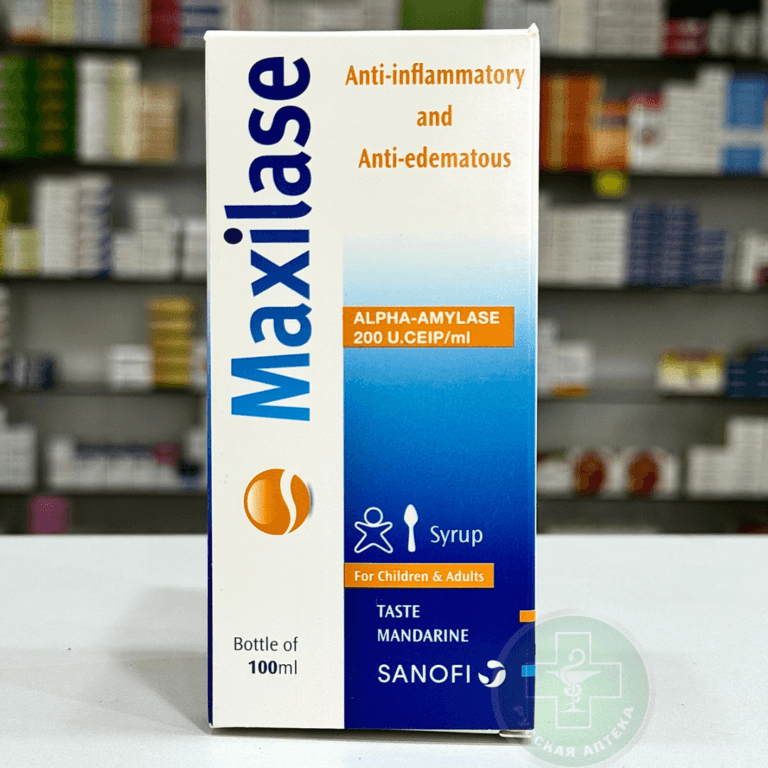
Maxilase Syrup 100 ml
Composition:
1 ml of syrup contains:
Alpha-amylase – 200 ICJ
Auxiliary components: sucrose, sodium methylhydroxybenzoate, sodium propylhydroxybenzoate, glycerin, sunset yellow (E 110), soluble mandarin essence, citric acid monohydrate, distilled water.
Pharmacological group:
anti-inflammatory enzymes.
Pharmacological properties:
An enzymatic drug with anti-edematous and anti-inflammatory activity. It inhibits abnormal capillary permeability (which increases in the first stage of inflammation) by reducing the release of fluid from the vessels, thereby facilitating the resorption of edema.
Indications:
Treatment and prevention of edema and inflammation. Additional antibiotic therapy i otorhinolaryngology, dentistry, orthopedics and traumatology. Respiratory complications of infectious diseases.
Mode of application:
Infants and children under 3 years of age (up to 15kg): 1 teaspoon (5ml) 3 times a day. Children over 3 years old (> 15kg): 1 tablespoon (10ml) 3 times a day. Adults: 1 tablespoon (15 ml) 3 times a day.
Contraindications: hypersensitivity to alpha-amylase or any of the auxiliary components.
Precautions:
Due to the presence of sucrose, patients with rare hereditary problems of fructose intolerance, malabsorption of glucosegalactose or sucrose-isomaltase deficiency should not take this medication, diabetic patients should take into account that a teaspoon (5 ml) contains 3.2 g of sucrose , and a tablespoon (15 ml) contains 9.6 g of sucrose. Maxilase syrup contains El 10, which may cause allergic reactions. The drug also contains sodium parahydroxybenzoate and sodium propyl methyl parahydroxybenzoate, which may cause allergic reactions (possibly
delayed).
Precautions:
If symptoms persist or appear (severe sore throat, headaches, nausea, vomiting) or in case of concomitant fever, the treatment strategy should be reviewed. The duration of treatment should not exceed 5 days without consulting a doctor.
Pregnancy and lactation:
There are no clinical data on use during pregnancy. Animal studies have not revealed any harmful effects directly or indirectly affecting pregnancy and embryo-fetal development. Pregnant women are prescribed with extreme caution. It is not known whether alpha-amylase passes into breast milk. This medication should not be used while breastfeeding.
Side effects:
diseases of the skin and subcutaneous tissue.
very rare: urticaria, rashes.
Storage:
Store at a temperature not exceeding 25C, out of the reach of children. Expiration date: 18 months.
Packaging:
a cardboard box with a 100 ml amber glass bottle.
 Русский
 English
 عربي
عربي