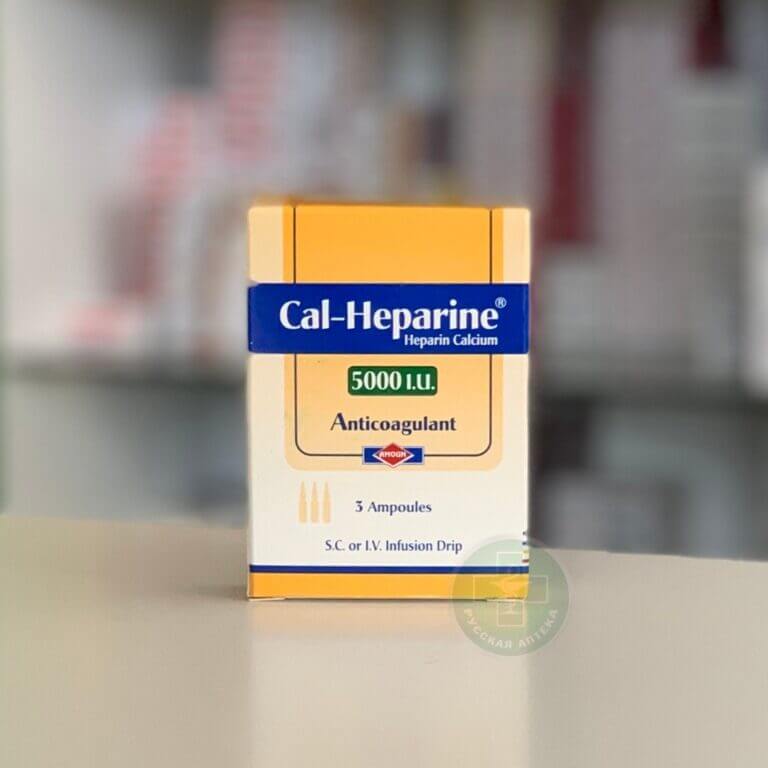
Cal Heparine 5000 IU/ml 3 ampoules x 1 ml
Composition:
Each 1 ml solution contains:
Heparin Calcium 5000IU
Solution for injection
Properties:
Direct-acting anticoagulant, increases blockade of blood coagulation factors activated by antithrombin III, inactivates factor Xa, inhibits coagulation and blood clot formation. Accelerates the formation of complexes of thrombin with antithrombin III, slowing down the transformation of fibrinogen into fibrin and organization of thrombus. Reduces platelet aggregation.
Indications:
-Treatment of deep vein thrombosis, -pulmonary embolism,
-unstable angina pectoris and acute peripheral arterial occlusion
-prophylaxis of mural thrombosis following myocardial infarction
-extracorporeal circulation and haemodialysis.
Dosage and administration:
This medicine is only prescribed by a doctor. Follow your doctor’s instructions.
Recommended dosage:
-Treatment of mild to moderate pulmonary embolism/Treatment of unstable angina/Treatment of acute peripheral arterial occlusion:
Adults: Loading dose 5000 units, alternatively (by intravenous injection) loading dose 75 units/kg, followed by (by continuous intravenous infusion)or 18 units/kg/hour, laboratory monitoring essential preferably on a daily basis, and dose adjusted accordingly.
-Treatment of severe pułmonary embolism:
Adults: Loading dose 10 000 units, followed by (by continuous intravenous infusion) 18 units/kg/hour, laboratory monitoring essential-preferably on a daily basis, and dose adjusted accordingly.
-Treatment of deep-vein thrombosis:
Adults: Loading dose 5000 units, alternatively (by intravenous injection) loading dose 75 units/kg, followed by (by continuous intravenous infusion) 18 units/kg/hour, alternatively (by subcutaneous injection) 15 000 units every 12 hours, laboratory monitoring essential-preferably on a daily basis, and dose adjusted accordingly.
-Thromboprophylaxis in medical patients: (by subcutaneous injection)
Adults: 5000 units every 8-12 hours
-Thrombophylaxis in surgical patients: (by subcutaneous injection)
Adults: 5000 units for 1 dose, to be taken 2 hours before surgery, then 5000 units every 8-12 hours
-Thromboprophylaxis during pregnancy: (by subcutaneous injection)
Adults: 5000-10 000 units every 12 hours, to be administered with monitoring, Important: prevention of prosthetic heart-valve thrombosis in pregnancy calls for specialist management
Hemodialysis: (by intravenous injection)
Adults: Initially 1000-5000 units, followed by (by continuous intravenous infusion) 250-1000 units/hour
Side effects:
-Mild pain/redness/irritation at the injection site may occur.
-Tell your doctor right away if you have any serious side effects, including: swelling at the injection site, bone pain, easily broken bones.
Tell your doctor right away if you develop any signs of serious bleeding, including unusual pain/swelling/discomfort, prolonged bleeding from cuts or gums, frequent nosebleeds, unusually heavy/prolonged menstrual periods, unusual/easy bruising, dark urine, black stools, severe headache, unusual dizziness.
-Some patients can have certain bad reactions to heparin (heparin-induced thrombocytopenia-HIT or heparin-induced thrombocytopenia and thrombosis-HITT). This can occur during treatment and up to several weeks after treatment with heparin has stopped. You should not use this drug again if you have this type of reaction with heparin.
-Get medical help right away if you have any very serious side effects, including: pain/loss of feeling in the arms/legs, change in color of the arms/legs, chest pain, trouble breathing, confusion, weakness on one side of the body, trouble speaking, vision changes.
Contraindications:
Hypersensitivity, bleeding or tendency to bleeding (thrombocytopenia, hypofibrinogenemia, hemophilia, vascular permeability disorder), gastric and duodenal ulcer, acute bacterial endocarditis, cerebral hemorrhage, postoperative period during interventions on the brain and spinal cord.
Warnings and precautions:
- Before using this medication, tell your doctor or pharmacist your medical history, especially of: bleeding/blood problems (such as low platelet count, hemophilia), high blood pressure (hypertension), heart problems (such as infection of the heart, heart attack), recent surgery/procedure, cancer, stomach/intestinal ulcers or tube drainage, liver disease, high level of potassium in the blood.
- To lower the chance of getting cut, bruised, or injured, use caution with sharp objects like razors and nail cutters, and avoid activities such as contact sports.
- This medicine may cause stomach bleeding. Daily use of alcohol while using this medicine will increase your risk for stomach bleeding. Limit alcoholic beverages. Ask your doctor or pharmacist about how much alcohol you may safely drink.
- Before having surgery, tell your doctor or dentist about all the products you use (including prescription drugs, nonprescription drugs, and herbal products).
- This medication contains sodium. Consult your doctor or pharmacist if you are on a salt-restricted diet or if you have a condition that could worsen if you have more salt (such as heart failure).
- Older adults, especially women over 60 years of age, may be more sensitive to the side effects of this drug, especially bleeding.
- During pregnancy, this medication should be used only when clearly needed. Discuss the risks and benefits with your doctor.
- This medication does not pass into breast milk. Consult your doctor before breast-feeding.
- Drug interactions:
Some products that may interact with this drug include: mifepristone, oritavancin, telavancin
- Keep out of reach of children.
Storage:
Store ampoules in the original package, in the fridge at a temperature 2°C-8°C, (do not freeze), away from light.
Package:
Carton box holds a plastic tray with 3 glass ampoules each of 1 ml and an insert leaflet.
 Русский
 English
 عربي
عربي