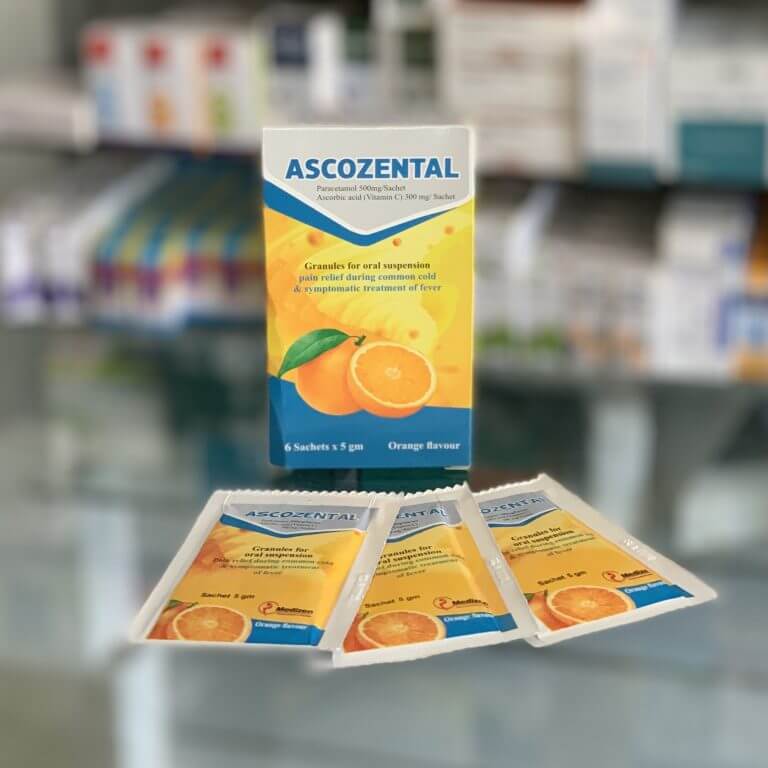
Ascozental 6 sachets
Composition:
Each sachet contains:
Paracetamol 500 mg
Ascorbic acid 300 mg
Auxiliary components:
Anhydrous citric acid, sucrose, orange flavor, mannitol, menthol, colodial silicone dioxide, Aerosil 200.
Properties:
Combined analgesic drug.
Paracetamol has analgesic and antipyretic effects. Blocks COX-I and COX-2 mainly in the central nervous system, affecting the centers of pain and thermoregulation. In inflamed tissues, cellular peroxidases neutralize the effect of paracetamol on COX, which explains the almost complete absence of its antiinflammatory effect. The drug has no negat effect on water-salt metabolism (sodium and water retention) and the gastrointestinal
mucosa, due to the lack of effect on the synthesis of prostaglandins in peripheral tissues. The possibility of methemoglobin formation is unlikely.
Ascorbic acid (vitamin C) is not formed in the human body, it comes only with food.
Physiological functions: is a cofactor of some hydroxylation and amidation reactions transfers electrons to enzymes, supplying them with a reducing equivalent. Participates in the reactions of hydroxylation of proline and lysine residues of procollagen with the formation of hydroxyproline and hydroxylysine (posttranslational modification of collagen), oxidation of lysine side chains in proteins with the formation of hydroxytrimethyllysine (in the process of kartytite synthesis), oxidation of folic acid to folinic acid, metabolism and hydroxylation of drugs in liver microsomes dopamine to form norepinephrine. Increases the activity of amidating enzymes involved in the processing of oxytocin, ADH and cholcystokinin. Participates in steroidogenesis in the adrenal glands.
The main role at the tissue level is participa in the synthesis of collagen, proteoglycans other organic components of the intercellular
substance of teeth, bones and capillary endothelium.
Indications:
- as an antipyretic agent for infectious and inflammatory diseases (ARVI, including influenza);
- as an anesthetic for mild and moderate pain syndrome (headache, toothache) of noninflammatory origin, for neuralgia, pain in muscles and joints, algodismenorrhea.
Method of administration and dosage:
Adults: 1 sachet 3-4 times a day.
Children over 12 years of age (over 40 kg): 1 sachet 2 times a day. Dissolve 1 sachet of granules in a glass of water and drink. The course of treatment is on average 5 days.
Contraindications:
-severe kidney disease;
-severe liver disease;
-renal and / or hepatic failure;
-deficiency of glucose-6-phosphate dehydrogenase;
- erosive and ulcerative lesions of the gastrointestinal tract in the acute phase;
- gastrointestinal bleeding;
-Children under 6 years old;
-pregnancy;
-period of lactation (breastfeeding).
With caution: erosive and ulcerative lesions of the gastrointestinal tract (in history), congenital hyperbilirubinemia (Gilbert, Dubin-Johnson and Rotor syndromes); blood diseases (thrombocytopenia, leukopenia, agranulocytosis), sideroblastic anemia, thalassemia; hemochromatosis, hyperoxaluria, urolithiasis; bronchial asthma; alcoholism.
Precautionary measures:
Do not exceed the recommended dose of Ascosental.
With hyperthermia lasting more than 3 days and pain syndrome for more than 5 days, a doctor’s consultation is required.
After 5 days of using the drug Ascosental, it is necessary to control the picture of peripheral blood and the functional state of the liver.
Paracetamol distorts laboratory tests when quantifying plasma glucose and uric acid concentrations.
To avoid toxic damage to the liver, paracetamol should not be combined with drinks containing alcohol, and should not be taken by people prone to alcohol abuse.
There is evidence that the frequent use of drugs containing paracetamol leads to an aggravation of the symptoms of bronchial asthma. Concomitant use of other drugs should be agreed with your doctor.
Side effects:
Paracetamol: From the digestive system: rarely – nausea, very rarely – vomiting, diarrhea, pain in the epigastric region, jaundice, pancreatitis and increased activity of liver enzymes. Allergic reactions: rarely – skin rash, pruritus, urticaria, angioedema. From the hematopoietic and lymphatic system: very rarely – anemia, leukopenia.
Others: weakness.
Vitamin C. Allergic reactions: skin rash, skin flushing. Laboratory indicators:
thrombocytosis, hyperprothrombinemia, erythropenia, neutrophilic leukocytosis, hypokalemia, glucosuria.
Storage method:
At a temperature not higher than 30 degrees. In a dry place.
Packaging:
The cardboard box holds 10, 20 or 50 sachets.
 Русский
 English
 عربي
عربي