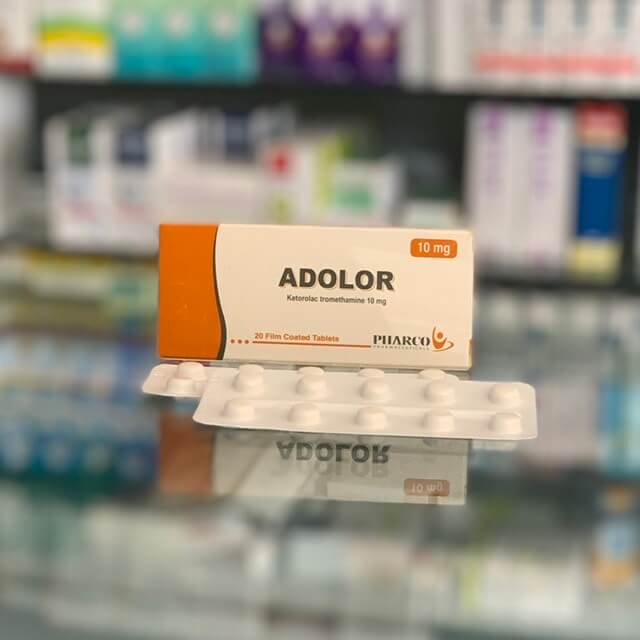
Adolor 10 mg 20 tablets
Composition:
Each tablet contains:
Ketorolac tromethamine 10 mg
Auxiliary components:
microcrystalline cellulose, magnesium stearate, talc, crospovidone (kollidon CC), lactose monohydrate (milk sugar).
Properties:
Ketorolac has a pronounced analgesic effect, also has anti-inflammatory and moderate antipyretic effects.
The mechanism of action is associated with non-selective inhibition of the activity of the enzyme cyclooxygenase 1 and 2, mainly. in peripheral tissues, which results in inhibition of the biosynthesis of prostaglandins modulators of pain sensitivity, thermoregulation and inflammation. Ketorolac is a racemic mixture of [-] S and [+] R enantiomers, with the analgesic effect due to the [-] S form.
The drug does not affect opioid receptors, does not depress respiration, does not cause drug dependence, does not have sedative and anxiolytic effects.
In terms of the strength of the analgesic effect, it is comparable to morphine, significantly superior to other NSAlDs.
After oral administration, the onset of the analgesic effect is noted, respectively, after 1 hour, the maximum effect is achieved after 1-2 hours.
Indications:
– pain syndrome of moderate and severe intensity of various origins (including in the postoperative period, with cancer, etc.).
Method of administration and dosage:
Adolor is used orally once or repeatedly, depending on the severity of the pain syndrome. A single dose – 10 mg, with repeated administration, it is recommended to take 10 mg up to 4 times / day, depending the severity of the pain; the maximum daily dose should not exceed 40 mg.
When taken orally, the duration of the course should not exceed 5 days.
Contraindications:
- hypersensitivity to ketorolac or other NSAlDs,
“aspirin” asthma, bronchospasm, angioedema;
- hypovolemia (regardless of the cause that caused it), dehydration;
- erosive and ulcerative lesions of the gastrointestinal tract in the acute stage, peptic ulcers;
-hypocoagulation (including hemophilia);
- hepatic and / or renal failure (plasma creatinine is higher than 50 mg / l);
- hemorrhagic stroke (confirmed or suspected);
- hemorrhagic diathesis;
- simultaneous reception with other NSAlDs;
-high risk of developing or recurrent bleeding
(including after surgery);
- violation of hematopoiesis;
-pregnancy, childbirth and lactation;
- children under 16 years of age (efficacy and safety have not been established);
-anesthesia before and during surgery (as the risk of bleeding is high);
-chronic pain.
With care: bronchial asthma, cholecystitis, chronic heart failure, arterial hypertension, impaired renal function (plasma creatinine below 50 mg / l), cholestasis, active hepatitis, sepsis, systemic lupus erythematosus; advanced age (over 65); polyps of the mucous membrane of the nose and nasopharynx.
Precautionary measures:
The effect on platelet aggregation ceases after 24-48 hours. Hypovolemia increases the risk of adverse reactions from the kidneys. If necessary, it can be prescribed in combination with narcotic analgesics.
Do not use simultaneously with paracetamol for more than 5 days. Patients with blood clotting disorders are prescribed the drug only with constant monitoring of the platelet count, which is especially important in the postoperative period, which requires careful monitoring of hemostasis.
Side effects:
From the digestive system: often (especially in elderly patients over 65 years of age with a history of erosive and ulcerative lesions of the gastrointestinal tract) – gastralgia, diarrhea; less often – stomatitis, flatulence, constipation, vomiting, a feeling of fullness in the stomach; rarely – nausea, erosive and ulcerative lesions of the gastrointestinal tract (including with perforation and / or bleeding – abdominal pain, spasm or burning sensation in the epigastric region, melena, vomiting like “coffee grounds”, nausea, heartburn, etc.), cholestaticjaundic hepatitis, hepatomegaly, acute pancreatitis.
From the urinary system: rarely – acute renal failure, back pain with or without hematuria and / or azotemia, hemolytic uremic syndrome (hemolytic anemia, renal failure, thrombocytopenia, purpura), frequent urination, increased or decreased urine volume, nephritis, edema renal genesis.
From the senses: rarely – hearing loss, ringing in the ears, visual impairment (including blurred vision).
From the respiratory system: rarely:
bronchospasm or dyspnea, rhinitis, laryngeal edema (shortness of breath, difficulty breathing).
From the side of the central nervous system: often – headache, dizziness, drowsiness, rarely – aseptic meningitis (fever, severe headache, convulsions, stiff neck and / or back muscles), hyperactivity (mood changes, anxiety), hallucinations, depression, psychosis.
From the side of the cardiovascular system: less often – increased blood pressure, rarely pulmonary edema, fainting.
From the side of hematopoiesis: rarely anemia, eosiophilia, leukopenia.
Storage method:
At a temperature not higher than 30 degrees. In a dry place.
Packaging:
The cardboard box contains 2 blisters of 10 tablets, paper instructions.
 Русский
 English
 عربي
عربي