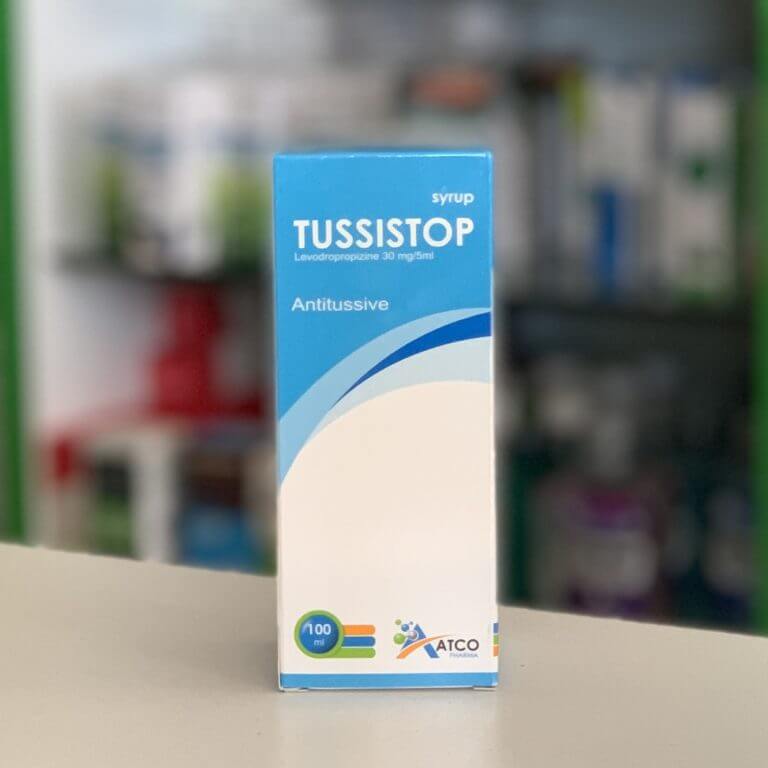
Tussistop 30 mg/5 ml Syrup 100 ml
Composition:
Each 5 ml Syrup contains: Levodropropzine 30 mg
Inactive ingredients:
Glycerin, sorbitol 70% solution, methyl paraben sodium, propyl paraben sodium, citric acid, sucrose, cherry flavor, carmoisine red and purified water
Properties:
Levodropropizine is a medication with antitussive activity, predominantly peripheral type tracheobronchial, associated with anti-allergic and anti-bronchospasm activity, In addition, it shows a local anesthetic action,
Levodropropizine acts on the bronchopulmonary system by inhibiting hapten-induced bronchospasm, serotonín and bradykinin. The drug does not inhibit acetylcholine-induced bronchospasm, thus demonstrating the absence of anticholinergic effects.
Indications
Symptomatic treatment of cough
Dosage and administration:
It is advisable to take the drug apart from meals.
Adult: 10 ml of syrup up to 3 times daily with at least 6 hours intervals or as directed by your physician.
Children:
10-20 kg: 3 ml of syrup 3 times a day
20-30 kg: 5 ml of syrup 3 times a day
Pediatric population
Do not administer to children under 2 years of age
Contraindications
- Hypersensitivity to the active ingredient or to any of the excipients.
- Administration of the drug should be avoided in patients with bronchial hyper-secretion and with reduced mucosal function;
- Pregnancy and Lactation:
- Children’s age under 2 years
Side effects:
Palpitations, tachycardia, nausea, vomiting, diarrhea, erythema reactions may occur during treatment with levodropropizine. The reported as serious are hives and anaphylactic reaction;
-Eye disorders:
Mydriasis, bilateral blindness;
-Immune system disorders;
-Allergic reactions and anaphylactoid, eyelid edema, angioneurotic urticaria
Nervousness, drowsiness, personality alteration, or personality disorder;
-Nervous system disorders:
Syncope, dizziness, vertigo, tremors, paresthesia, hypoglycemic coma;
-Gastrointestinal disorders:
Gastric pain, abdominal pain, nausea, vomiting, diarrhea, glossitis and aphthous stomatitis.
-Hepatobiliary disorders:
Cholestatic hepatitis. tissue disorders
Hives, enthaneous skin exanthema, itching, angioedema,
skin reactions, epidermolysis!
-Musculoskeletal and connectłve tissue disorders:
Weakness of the lower limbs.
Pediatric population:
A case of drowsiness, hypotonia and vomiting has been reported in a newborn baby after taking levodropropizine by the lactating mother.
Warnings and precautions:
- Special caution should be used when administered to elderly patients.
- Levodropropizine should not be taken in patients with severe renal impairment (creatinine clearance below 35 ml / min).
- Tussistop syrup does not affect low-calorie and sugar control diets, and also can be administered to diabetic patients.
- TUSSISTOP solution contains methyl-p-hydroxybenzoate, which can cause allergic reaction
- The use of the drug should be avoided in women who intend to become pregnant or are already pregnant as its safety is not documented. Therefore, the use of the drug during lactation is contraindicated..
- Use with caution in those patients who intend to drive or operate machinery, informing them of this possibility.
Storage:
Store at temperature not exceeding 30°C,
keep out of reach of children.
Package:
Carton box containing amber glass bottle
containing 100 ml solution and inner leaflet.
 Русский
 English
 عربي
عربي