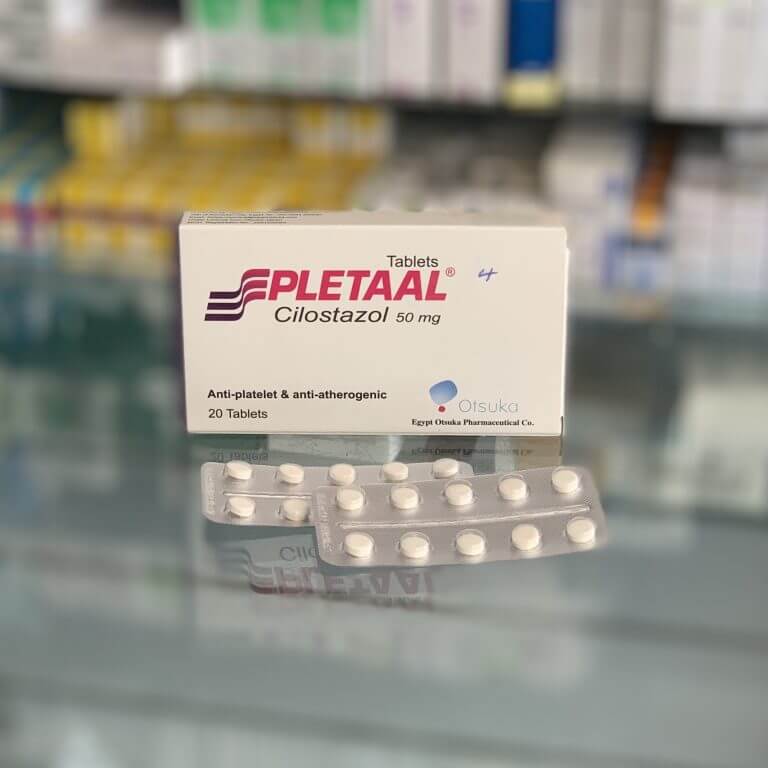
Pletaal 50 mg 20 tablets
Composition:
Each tablet contains:
Cilostazol 50 mg
Auxiliary components:
Starch, microcrystalline cellulose, carmelose calcium, hypromellose and magnesium stearate.
Properties:
PDE type 3 inhibitor (PDE3). Increases the content of intracellular cyclic adenosine monophosphate (cAMP) in various organs and tissues.
Cilostazol dilates mainly the femoral arterie to a lesser extent – the vertebral, carotid an superior mesenteric arteries. The renal arteries
are not sensitive to the effects of cilostazol.
The effectiveness of cilostazol in patients with intermittent claudication has been confirmed in 9 placebo-controlled clinical trials.
The effectiveness of cilostazol in patients with diabetes mellitus was found to be lower than in those without impaired carbohydrate metabolism.
Indications:
Symptomatic treatment for intermittent claudication.
Cilostazol is used to increase the maximum distance and distance traveled without pain in patients with intermittent claudication who have no pain at rest and no signs of peripheral tissue necrosis (Fontaine’s grade Il chronic lower limb ischemia).
Cilostazol is intended for use as a second-line therapy in patients with intermittent claudication in whom lifestyle changes (including smoking cessation and physical rehabilitation programs) and other appropriate interventions have not been sufficient to reduce symptoms of intermittent claudication.
Method of administration and dosage:
The optimal dosage regimen is determined by the doctor. The compliance of the used dosage form of a particular drug with indications for use and dosage regimen should be strictly observed.
Cilostazol therapy should be initiated under the supervision of a physician experienced in the treatment of intermittent claudication.
The recommended dose is 100 mg 2 times / day, 30 minutes before meals.
The physician should re-evaluate the patient’s condition after 3 months of treatment. If therapy with cilostazol does not have an adequate effect or there is no decrease in the severity of symptoms of intermittent claudication, cilostazol should be discontinued and other treatments should be considered.
Concomitant use of potent CYP3A4 inhibitors wiltCYP2C19 In patients receiving drugs that have a strong blocking effect on CYP3A4 (for example, some macrolides), or drugs that have a strong blocking effect on CYP2C19 (for example, omeprazole), the dose of cilostazol should be reduced to 50 mg twice per day.
Contraindications:
Hypersensitivity to cilostazol, severe renal failure (CC 05 ml / min); moderate or severe hepatic impairment; chronic heart failure; predisposition to bleeding (for example, peptic ulcer of the stomach or duodenal ulcer in the acute phase, recently (within the last 6 months) suffered a hemorrhagic stroke, proliferative diabetic retinopathy, poorly controlled arterial hypertension); history of ventricular tachycardia, ventricular fibrillation or polytopic ventricular premature beats (regardless of the presence or absence of adequate antiarrhythmic therapy); an extended QT interval on an ECG; history of severe tachyarrhythmia; unstable angina or myocardial infarction within the past 6 months; invasive coronary artery intervention in the past 6 months; taking two or more antiplatelet or anticoagulant drugs at the same time (eg, acetylsalicylic acid, clopidogrel, heparin, warfarin, acenocoumarol, dabigatran, rivaroxaban, or apixaban); concomitant use of potent inhibitors of CYP3A4 or CYP2C19 (for example, cimetidine, diltiazem, erythromycin, ketoconazole, lansoprazole, omeprazole and HIV-I protease inhibitors); pregnancy; breastfeeding period; age under 18. concomitant use of potent inhibitors of
CYP3A4 or CYP2C19 (for example, cimetidine, diltiazem, erythromycin, ketoconazole, lansoprazole, omeprazole and HIV-I protease inhibitors); pregnancy; breastfeeding period; age under 18. concomitant use of potent inhibitors of CYP3A4 or CYP2C19 (for example, cimetidine, diltiazem, erythromycin, ketoconazole, lansoprazole, omeprazole and HIV-I protease inhibitors); pregnancy; breastfeeding period; age under 18.
Precautions:
Patients should be warned to report any bleeding or bruising (subcutaneous hematoma) associated with minor bruising. In case of retinal hemorrhage, the administration of cilostazol should be discontinued.
Since cilostazol is an inhibitor of platelet aggregation, the risk of bleeding during surgery (including minor invasive procedur such as tooth extraction) is increased. For planned surgical interventions (if antiplatelet action is undesirable), cilostazol should be canceled 5 days before surgery.
Rare or very rare cases of hematological disorders have been reported, including thrombocytopenia, leukopenia, agranulocytosis, pancytopenia, or aplastic anemia. In most cases, these disorders resolved after discontinuation of cilostazol. However, in several cases, pancytopenia and aplastic anemia have been fatal.
Side effects:
From the side of the cardiovascular system: often – palpitations, tachycardia, angina pectoris, arrhythmia, ventricular premature beats, orthostatic hypotension.
From the respiratory system: often – rhinitis, pharyngitis.
From the digestive system: very often diarrhea, stool disorders; often – nausea, vomiting, dyspepsia, flatulence, abdominal pain; infrequently – gastritis.
From the liver and biliary tract: the frequency is unknown – hepatitis, deviation of liver function from normal values, jaundice.
From the nervous system and psyche: very often – headache; often – dizziness; infrequently – insomnia, sleep disturbance (unusual dreams), anxiety; frequency is unknown – paresis, hyperesthesia.
From the side of the blood coagulation system: often – ecchymosis, eye hemorrhages, epistaxis, gastrointestinal bleeding.
Storage method:
At a temperature not higher than 30 degrees. In a dry place.
Packaging:
The cardboard box holds 2 blisters of 10 tablets.
 Русский
 English
 عربي
عربي