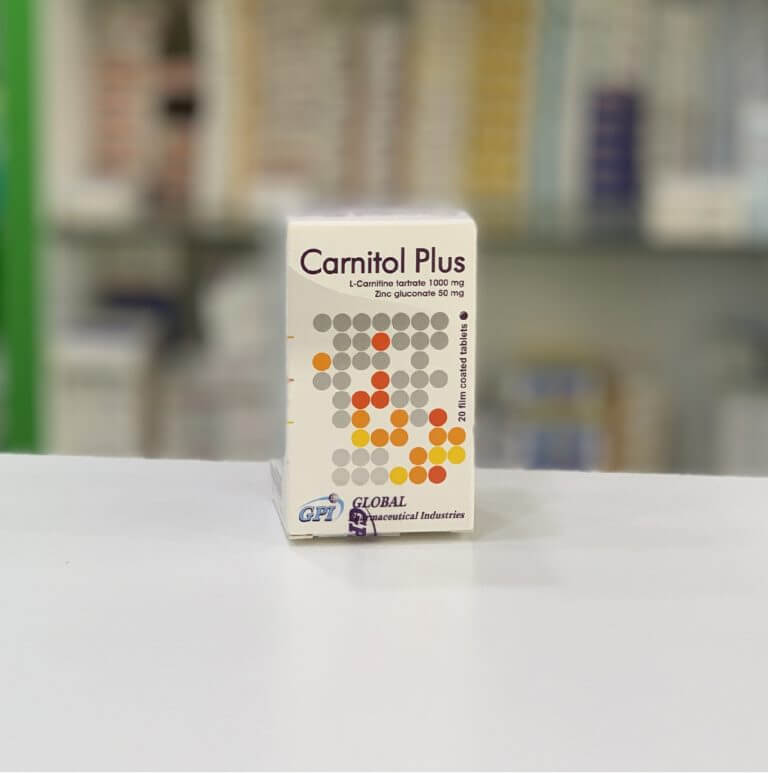
Carnitol Plus 20 tablets
Compound:
Active Ingredients:
L-carnitine L-tartrate 1000 mg
Zinc in chocolate 50 mg (equivalent to 7.17 mg zinc)
Auxiliary components:
Microcrystalline cellulose pH 101, croscarmellose sodium, colloidal silicon dioxide, talc and magnesium stearate, hydroxypropyl methylcellulose, polyethylene glycol, titanium dioxide
Properties:
L-carnitine is present as a natural component in animal tissues, microorganisms and plants. In humans, physiological metabolic needs are met both through the consumption of food containing carnitine and through endogenous synthesis in the liver and kidneys from lysine with methionine as a methyl donor. Only the L-isomer is biologically active, playing an essential role in lipid metabolism as well as in the metabolism of ketone bodies as branched chain amino acids. L-carnitine as a factor is necessary for the transport of long-chain fatty acids into the mitochondria, facilitating the oxidation of fatty acids, rather than their incorporation into triglycerides. By releasing CoA from its thioesters under the action of CoA carnitine acetyltransferase, L-carnitine also enhances metabolic flux in the Krebs cycle; by the same mechanism, it stimulates the activity of pyruvate dehydrogenase and, in skeletal muscle, the oxidation of branched-chain amino acids. Thus, L-carnitine is directly or indirectly involved in several pathways, so its availability should be an important factor controlling not only the oxidative utilization of fatty acids and ketone bodies, but also the utilization of glucose and some amino acids.
Indications:
Treatment of primary and secondary carnitine deficiency in adults and children over 12 years of age.
Mode of application:
Adults and children over 12 years of age: Tablets should be given in divided doses. It is better to monitor therapy by measuring free and acylcarnitine levels in both plasma and urine.
Treatment of congenital metabolic disorders and the severity of manifestations during treatment. However, the following can be considered as a general guideline. Oral dose up to 200 mg/kg/day in divided doses (2-4) is recommended for chronic use in some conditions, lower doses are sufficient for other conditions. If clinical and biochemical symptoms do not improve, the dose may be increased briefly. Higher doses up to 400 mg/kg/day may be necessary in acute metabolic decompensation, intravenous administration may be required.
Hemodialysis – maintenance therapy: if significant clinical benefit is achieved after the first course of intravenous carnitine, then maintenance therapy with 1 g per day of Carnitol Plus orally can be considered. On the day of dialysis, at the end of the session, you must enter an oral course of Carnitol Plus.
Contraindications:
Hypersensitivity to any component of the product.
Side effects:
Various mild gastrointestinal complaints have been reported with long-term oral levocarnitine use, including short-term nausea and vomiting, abdominal cramps, and diarrhea. Dosage reduction often reduces or eliminates the patient’s drug-related odor or gastrointestinal symptoms, if present. Tolerance should be carefully monitored during the first week of use and after dose increases.
Precautionary measures:
-By improving glucose utilization, administration of L-carnitine to diabetic patients receiving either insulin or oral hypoglycemic treatment may result in hypoglycemia. It is necessary to regularly monitor plasma glucose levels in order to immediately adjust hypoglycemic therapy if necessary. -The safety and efficacy of oral L-carnitine in patients with renal insufficiency has not been evaluated. Long-term use of high doses of oral L-carnitine in patients with severe renal impairment or in patients with end-stage renal disease (ESRD) on dialysis may lead to the accumulation of potentially toxic metabolites, trimethylamine (TMA) and trimethylamine-N-oxide. (TMAO) as these metabolites are usually excreted in the urine. This situation was not observed after intravenous administration of L-carnitine.
– Ask a doctor before use if you are taking minocycline, doxycycline, tetracycline, or are undergoing Coumadin therapy; zinc treatment may inhibit the absorption of these drugs.
Storage method:
Store in a dry place at a temperature not exceeding 30°C.
Package:
The cardboard box contains a plastic jar with 20 film-coated tablets, paper instructions.
 Русский
 English
 عربي
عربي