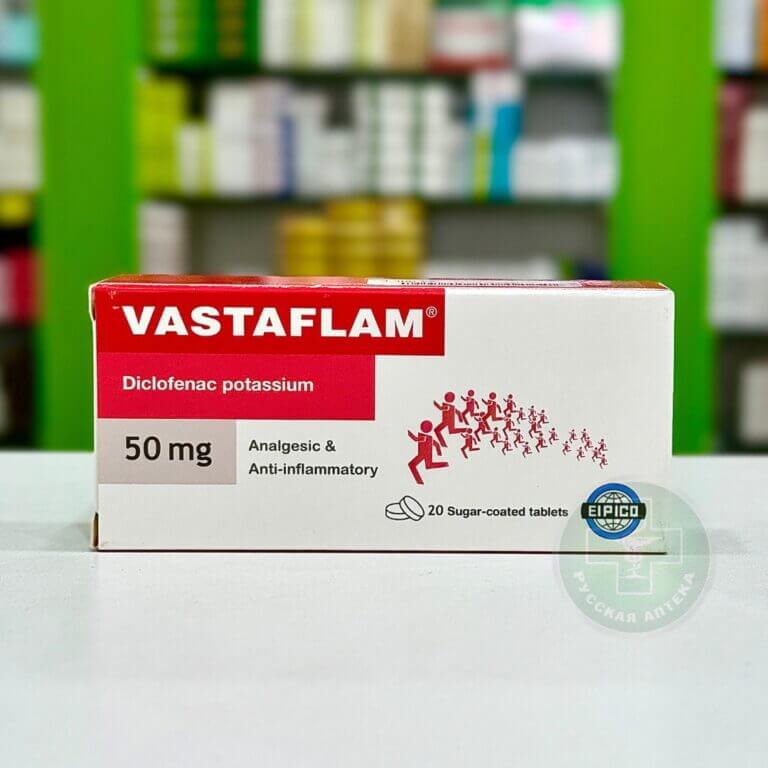
Vastaflam 50 mg 20 tablets
Composition:
Each coated tablet contains:
Diclofenac sodium – 50 mg.
Auxiliary components:
anhydrous dibasic calcium phosphate, microcrystalline cellulose, colloidal silicon dioxide, magnesium stearate, sodium starch glycolate, sucrose, gum, corn starch, talc, red iron oxide, titanium dioxide.
Description:
Diclofenac sodium belongs to non-steroidal drugs with pronounced antirheumatic, analgesic, anti-inflammatory and antipyretic properties. Diclofenac is a nonsteroidal anti-inflammatory and treatment has painkiller, antipyretic and anti-inflammatory action.
Diclofenac works by inhibiting the production of certain chemicals that are naturally produced in the body, cause pain and inflammation, such as prostaglandins, and inhibit the activity of cyclooxygenase types I and II.
Indications:
Osteoarthritis, back pain, acute musculoskeletal disorders and injuries, burs sprains, deformities and dislocations, relief of pain in fractures, ankylosing spondylitis, acute gout, rheumatoid arthritis, migraine attacks.
Control of pain and inflammation in orthopedic, dental and other minor operations.
Children 9 years of age and older: short-term treatment for fever associated with ear, throat, or nose (ENT) infections, such as pharyngotonsillitis, otitis media.
How to Use:
For oral administration, tablets should be swallowed whole with liquid, with food, or after meals.
The lowest effective dose is used to control symptoms: the recommended daily dose is 100—150 mg in 2 or 3 divided doses.
In milder cases, 75—100 mg daily in 2 or 3 divided doses is sufficient.
For migraines, the initial dose of 50 mg is at the first sign of an attack. If relief does not come 2 hours after the first dose, an additional 50 mg dose may be taken.
If necessary, additional doses of 50 mg can be taken at intervals of 4-6 hours, without exceeding the total dose of 200 mg per day.
Children 12 years and older:
The recommended daily dose is 75-100 mg in 2 or 3 divided doses.
Children 9 years of age (minimum 35 kg body weight) or older and adolescents should be given up to 2 mg / kg body weight per day in 3 divided doses,depending on the severity of the disorder.
Contraindications:
Children under 12 years old;
hypersensitivity to any component of the drug, aspirin;
severe heart, hepatic, renal failure;
bradycardia, severe arterial hypotension; stomach bleeding;
period of pregnancy, lactation.
Precautions:
With the development of hepatic diseases, the drug should be discontinued.
Patients with diseases of the heart and blood vessels during therapy should be under the supervision of a physician.
Weak and elderly patients, patients with low body weight should use the minimum therapeutically effective dose.
Before prescribing the medication, it is necessary to undergo a clinical examination for patients with peptic ulcers; with a history of intestinal bleeding;
with damage to the liver and kidneys, including a history;
with high blood pressure.
With bronchial asthma, hay fever, acute and chronic respiratory pathologies, in patients with polyps in the nose, taking the drug can cause asthmatic attacks.
Side effects:
Headaches, dizziness;
vertigo;
tachy / bradycardia, arterial hypertension, arrhythmia, heart failure;
painful sensations in the abdomen, vomiting, cramps, flatulence, nausea, diarrhea, dyspepsia;
fluid retention in the body, edema;
rash, Quincke’s edema.
Storage:
Store at a temperature not exceeding 30C in a dry place
Keep out of the reach of children.
Packaging:
The carton box contains blisters of 10 coated tablets each, paper instructions.
 Русский
 English
 عربي
عربي