Русский
 English
 عربي
عربي
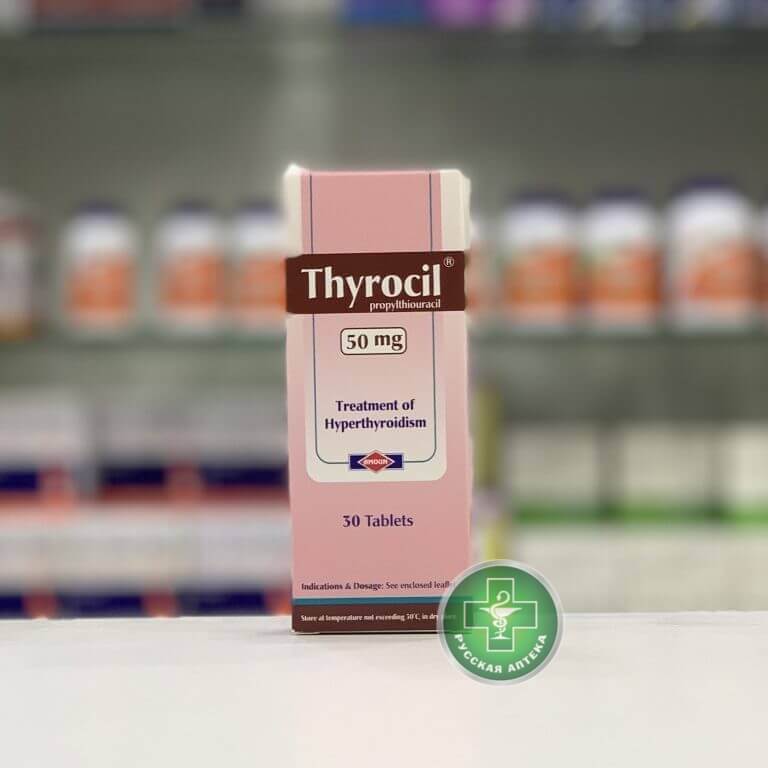
Thyrocil 50 mg 30 tablets
72£
View analogsTo ameliorate symptoms of hyperthyroidism in preparation for thyroidectomy or radioactive iodine therapy in patients who are intolerant of methimazole.
Buy
Product quantities
Form of Release: Tablets
Product Brand:
Amoun Pharmaceutical Co.S.A.E
About the brand
Product Categories: Hormones


Thyrocil 50 mg 30 tablets
Composition:
Each tablet contains:
Propylthiouracil 50 mg
Inactive ingredients:
Avicel PH102, Lactose Monohydrate, Crospovidone, Purified talc, Magnesium stearate, Maize Starch, Pink Colour.
Properties:
Propylthiouracil inhibits the synthesis of thyroid hormones and thus is effective in the treatment of hyperthyroidism. The drug does not inactivate existing thyroxine and triiodothyronine that are stored in the thyroid or circulating in the blood, nor does it interfere with the effectiveness of thyroid hormones given by mouth or by injection. Propyłthiouracil inhibits the conversion of thyroxine to triiodothyronine in peripheral tissues and may therefore be an effective treatment for thyroid storm.
Indications:
Thyrocil (Propyithiouracil) is indicated:
-In patients with Graves’ disease with hyperthyroidism or toxic multinodular goiter who are intolerant of methimazole and for whom surgery or radioactive iodine therapy is not an appropriate treatment option
-To ameliorate symptoms of hyperthyroidism in preparation for thyroidectomy or radioactive iodine therapy in patients who are intolerant of methimazole.
Dosage and administration:
Thyrocil is administered orally. The total daily dosage is usually given in 3 equal doses at approximately 8-hour intervals.
- Adults:
The initial dose is 300 mg daily. In patients with severe hyperthyroidism, very large goiters, or both, the initial dose may be increased to 400 mg daily; an occasional patient will require 600 to 900 mg daily initially. The usual maintenance dose is 100 to 150 mg daily.
- Geriatric Use
Dose selection for an elderly patient should be cautious, reflecting the greater frequency of decreased hepatic, renal, or cardiac function and of concomitant disease or other drug therapy.
Side effects:
Severe: hepatitis, liver failure necessitating liver transplantation or resulting in death. Inhibition of myelopoiesis (agranulocytosis, granulopenia, aplastic anemia, and thrombocytopenia), drug fever, a lupus-like syndrome (including splenomegaly and vasculitis), periarteritis, hypoprothrombinemia and bleeding have been reported. Nephritis, glomerulonephritis, interstitial pneumonitis, exfoliative dermatitis, and erythema nodosum have also been reported.
There are reports of vasculitis associated with the presence of anti-neutrophil cytoplasmic antibodies (ANCA), resulting in severe complications and death.
There have been rare reports of serious hypersensitivity reactions (e.g Stevens Johnson syndrome and toxic epidermal necrolysis) in patients treated with propyłthiouracil.
Other: skin rash, urticaria, nausea, vomiting, epigastric distress, arthralgia, paresthesias, loss of taste, taste perversion, abnormal loss of hair, myalgia, headache, pruritus, drowsiness, neuritis, edema, vertigo, skin, pigmentation, jaundice, sialadenopathy, and lymphadenopathy.
Contraindications:
-Individual hypersensitivity to the drug or any of the other product components.
Warnings and precautions:
- Severe liver Injury and acute liver failure, in some cases fatal, have been reported in patients treated with Propylthiouracil. These reports of hepatic reactions include cases requiring liver transplantation in adult and pediatric patients. •Propylthiouracil should be reserved for patients who cannot tolerate methimazole and in whom radioactive iodine therapy or surgery are not appropriate treatments for the management of hyperthyroidism. •Because of the risk of abnormalities associated with methimazole, propylthiouracil may be the treatment of choice when the drug is indicated during or just prior to the first trimester of pregnancy.
- This product contains lactose Patients with rare hereditary problems of galactose intolerance, the Lapp lactose deficiency or glucose- galactose malabsorption should not take this medicine.
- Use in pregnancy:
There are cases of liver injury, including liver failure and death, in women treated with propyłthiouracil during pregnancy.
Two reports of in utero exposure with liver failure and death of a newborn have been reported. If propylthiouracil is used during pregnancy, or if the patient becomes pregnant while taking propylthiouracil, the patient should be warned of the rare potential hazard to the mother and fetus of liver damage.
Propylthiouracil crosses the placenta and can cause fetal goiter and cretinism when administered to a pregnant woman. After the first trimester of pregnancy, the use of an alternative antithyroid medication may be advisable.
- Agranulocytosis occurs in approximately 0.2% to 0.5% of patients and is a potentially life-threatening side effect of propylthiouracil therapy. Agranulocytosis typically occurs within the first 3 months of therapy. Patients should be instructed to immediately report any symptoms suggestive of agranulocytosis, such as fever or sore throat. Leukopenia, thrombocytopenia, and aplastic anemia (pancytopenia) may also occur. Propylthiouracil should be discontinued if agranulocytosis, aplastic anemia (pancytopenia) is suspected, and the patient’s bone marrow indices should be obtained.
- Cases of vasculitis resulting in severe complications and death have been reported in patients receiving propylthiouracil therapy. The cases of vasculitis include: glomerulonephritis, leukocytoclastic cutaneous vasculitis, alveolar/pulmonary hemorrhage, cerebral angiitis, and ischemic colitis. Most cases were associated with anti-neutrophil cytoplasmic antibodies (ANCA)-positive vasculitis. In some cases, vasculitis resolved/improved with drug discontinuation; however, more severe cases required treatment with additional measures including corticosteroids, immunosuppressant therapy, and plasmapheresis. lf vasculitis is suspected, discontinue therapy and initiate appropriate intervention.
- Patients should be instructed to report any symptoms of hepatic dysfunction (anorexia, pruritus, jaundice, light colored stools, dark urine, right upper quadrant pain, etc), particularly in the first six months of therapy. When these symptoms occur, measurement should be made of Iiver function (bilirubin, alkaline phosphatase) and hepatocellular integrity (ALT/AST levels).
- Laboratory Tests:
Because propylthiouracil may cause hypoprothrombinemia and bleeding monitoring of prothrombin time should be considered during therapy with the drug, especially before surgical procedures.
Thyroid function tests should be monitored periodically during therapy. Once clinical evidence of hyperthyroidism has resolved, the finding of an elevated serum TSH indicates that a lower maintenance dose of propylthiouracil should be employed.
- Drug Interactions:
-Anticoagulants (oral): Due to the potential inhibition of vitamin K activity by propylthiouracil, the activity of oral anticoagulants (eg, warfarin) may be increased; additional monitoring of PT/ÍNR Should be considered, especially before surgical procedures.
-Beta-adrenergic blocking agents: Hyperthyroidism may cause an increased clearance of beta blockers with a high extracion ratio. A reduced dose of beta-adrenergic blockers may be needed when a hyperthyroid patient becomes euthyroid.
-Digitalis glycosides: Serum digitalis levels may be increased when hyperthyroid patients on a stable digitalis glycoside regimen become euthyroid, a reduced dose of digitalis glycosides may be needed.
-Theophylline: Theophylline clearance may decrease when hyperthyroid patients on a stable theophylline regimen become euthyroid; a reduced dose of theophylline may be needed.
- Propylthiouracil is present in breast milk to a small extent and therefore likely results in clinically insignificant doses to the nursing infant. Therefore breastfeeding is not recommended while taking Propylthiouracil.
- Pediatric Use:
Propylthiouracil is not recommended for use in the pediatric population except in rare instances in which methimazole is not well-tolerated and surgery or radioactive iodine therapy are not appropriate.
When used in children, parents and patients should be informed of the risk of liver failure. If patients taking propylthiouracil develop tiredness, nausea, anorexia, fever, pharyngitis, or malaise, propylthiouracil should be discontinued immediately by the patient, a physician should be contacted, and a white blood cell count, liver function tests, and transaminase levels obtained.
Storage:
Store at a temperature not exceeding 30°C, in a dry place.
Package;
Carton box holds 3 strips each of 10 tablets and an insert leaflet.
Tags, Keywords:
Active Ingredients:
No comments yet. Be the first to write one.
Your comment will be published after moderation.
You’ll receive a notification to your email when someone replies.