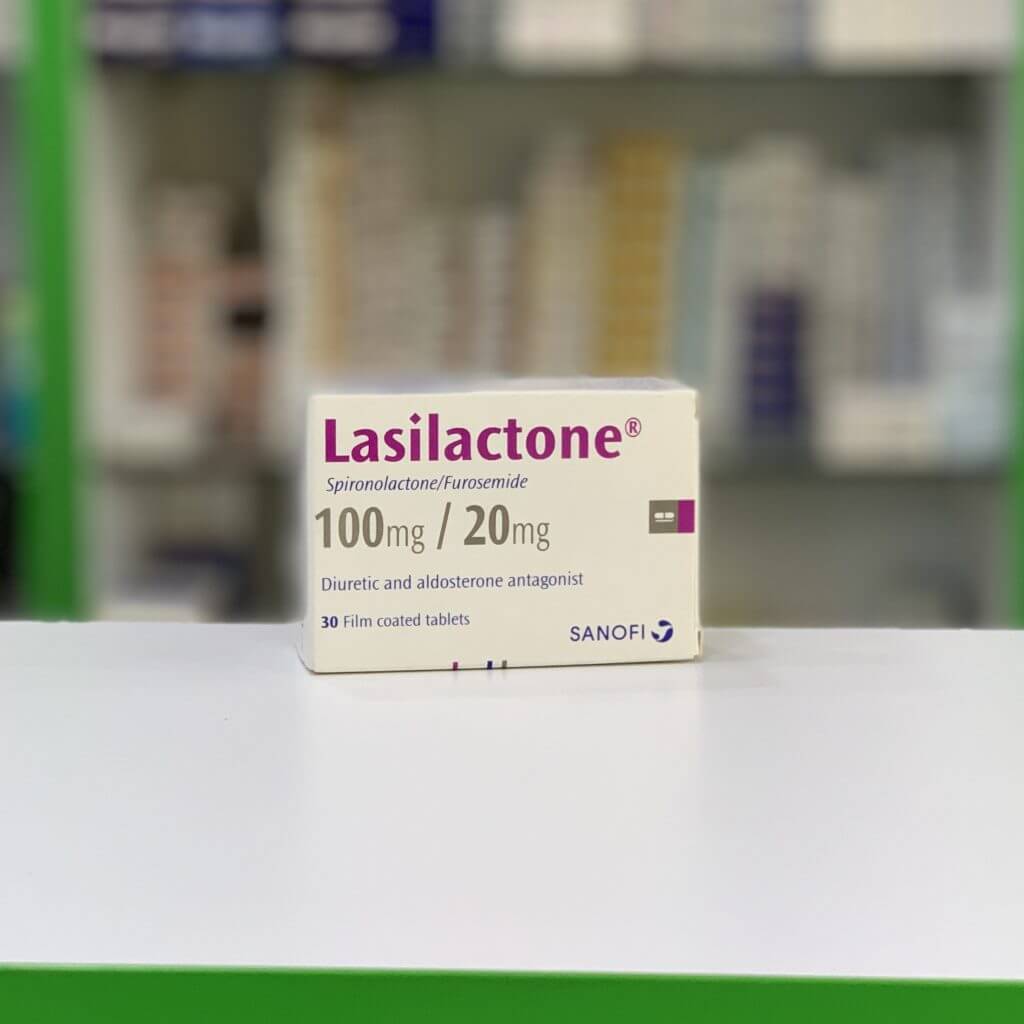
Lasilactone 50/20 mg 30 tablets
Composition:
Each film-coated tablet contains:
- Furosemide 20 mg,
- Spironolactone 50 mg.
Excipients:
Maize starch, lactose monohydrate D80 (75.5 mg), povidone 25000, dioctyl sodium sulfosuccinate, sodium starch glycolate, talc, colloidal anhydrous silica, magnesium stearate.
Product Description:
Lasilactone is a combination diuretic containing the loop diuretic furosemide and the aldosterone antagonist spironolactone.
It provides effective diuresis and helps correct fluid and electrolyte imbalances associated with hyperaldosteronism.
Indications for Use:
Oedema and ascites associated with electrolyte imbalance due to hyperaldosteronism when previous diuretic therapy has been insufficient, including:
- heart failure with oedema and pulmonary congestion;
- ascites due to hepatic disease (e.g. liver cirrhosis);
- oedema in nephrotic syndrome (with treatment of the underlying condition).
Indicated in adults only.
Method of Administration and Dosage:
Tablets should be swallowed whole with sufficient liquid, preferably at breakfast or lunch.
Evening administration is not recommended due to increased nocturnal urination.
Initial dose: Usually 2 tablets daily (40 mg furosemide and 100 mg spironolactone).
In hepatic disease: Up to 4 tablets daily (80 mg furosemide and 200 mg spironolactone).
Maintenance dose: 1–2 tablets daily after 3–6 days (20–40 mg furosemide and 50–100 mg spironolactone).
If required: Up to 3 tablets daily (60 mg furosemide and 150 mg spironolactone).
Maximum daily dose: 4 tablets.
Paediatric population: use in children and adolescents under 18 years of age is not recommended.
Contraindications:
- Hypersensitivity to furosemide, spironolactone, sulphonamides or excipients.
- Renal failure with anuria unresponsive to furosemide.
- Severe renal impairment (CrCl < 30 ml/min/1.73 m²).
- Hepatic encephalopathy, pre-comatose or comatose states.
- Hyperkalaemia or severe hypokalaemia.
- Severe hyponatraemia.
- Hypovolaemia or dehydration.
- Pregnancy and breast-feeding.
- Hereditary galactose intolerance, Lapp lactase deficiency or glucose-galactose malabsorption.
Precautions:
- Regular monitoring of serum electrolytes, renal function, uric acid and blood glucose is required.
- Caution is advised in elderly patients and in those with renal, hepatic or cardiovascular disease.
- Careful dose adjustment is necessary in nephrotic syndrome due to increased risk of adverse reactions and ototoxicity.
- In patients with hepatic cirrhosis and concomitant renal impairment, close monitoring is required.
- Symptomatic hypotension may occur, especially in elderly patients or those receiving other hypotensive medicines.
- Concomitant use with potassium-raising medicinal products may result in severe hyperkalaemia.
- Spironolactone may cause voice changes, which can be irreversible in some cases and should be considered in patients whose profession depends on voice quality.
- Progression of castration-resistant prostate cancer has been observed under spironolactone therapy.
- Long-term furosemide use may require thiamine supplementation.
- This medicine contains lactose and should not be used in patients with rare hereditary disorders of galactose metabolism.
- Body weight loss due to diuresis should not exceed 1 kg per day.
Side Effects:
Most common adverse reactions include:
- electrolyte disturbances, hypovolaemia and dehydration, increased creatinine and triglycerides, hypotension and orthostatic reactions.
Other possible adverse effects include:
- potassium imbalance;
- dizziness, headache;
- gastrointestinal disturbances;
- gynaecomastia, breast tenderness;
- menstrual disorders;
- voice changes;
- allergic skin reactions;
- renal and auditory disorders.
Pregnancy and Lactation:
Lasilactone is contraindicated during pregnancy and breast-feeding.
Furosemide crosses the placenta and is excreted into breast milk.
Storage Conditions:
Store below 30 °C in a dry place.
Keep out of reach of children
Packaging:
Carton box containing 3 blisters of 10 film-coated tablets and a package leaflet.
 Русский
 English
 عربي
عربي