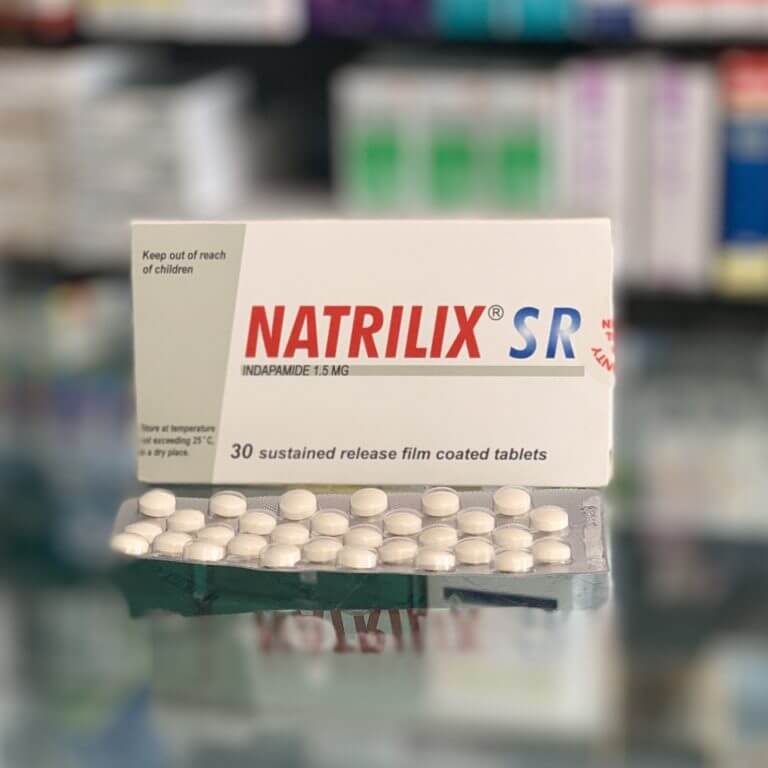
Natrilix SR 1.5 mg 30 tablets
Compound:
Each tablet contains:
Indapamide 1.5 mg
Auxiliary components:
lactose monohydrate, hypromellose, magnesium stearate, colloidal anhydrous silicon dioxide.
Shell composition: titanium dioxide (E171), magnesium stearate, glycerol, macrogol 6000.
Properties:
Antihypertensive agent (diuretic, vasodilator). In terms of pharmacological properties, it is close to thiazide diuretics (impaired reabsorption of sodium ions in the cortical segment of Henle’s loop). Increases urinary excretion of sodium, chlorine and, to a lesser extent, potassium and magnesium ions. With the ability to selectively block the “slow” calcium channels, it increases the elasticity of the arterial walls and reduces the total peripheral vascular resistance. Helps reduce left ventricular hypertrophy. Does not affect the content of lipids in blood plasma
(triglycerides, low density lipoproteins, high density lipoproteins); does not affect carbohydrate metabolism (including in pati with diabetes mellitus). Reduces the sensitivity of the vascular wall to norepinephrine and angiotensin Il, stimulates the synthesis of prostaglandin E2,
The antihypertensive effect develops by the end of the first week and lasts for 24 hours with a single dose.
Indications:
-arterial hypertension.
Method of administration and dosage:
The tablets are taken orally without chewing. The daily dose of the drug is 1 tablet 1 time / day (in the morning) with a sufficient amount of liquid.
Contraindications:
-lactose intolerance;
-galactosemia;
- syndrome of impaired absorption of glucose / galactose;
- severe renal failure (stage of anuria);
-hypokalemia;
- Severe hepatic (including encephalopathy) failure;
-pregnancy;
- lactation period;
- age up to 18 years (efficacy and safety have not been established);
- simultaneous administration of drugs that lengthen the QT interval;
- hypersensitivity to the drug and other sulfonamide derivatives.
Carefully
-It is prescribed for violations of liver and / or kidney function, violation of water-electrolyte balance, hyperparathyroidism, patients with an increased QT interval on an ECG or receivin combined therapy with other antiarrhythmi drugs, diabetes mellitus in the stage of decompensation, hyperuricemia (especially accompanied by gout and urate nephrolithiasis).
Precautions:
In patients taking cardiac glycosides, laxatives, against the background of hyperaldosteronism, as well as in the elderly, regular monitoring of the content of potassium and creatinine ions is shown.
While taking indapamide, one should systematically monitor the concentration of potassium, sodium, and magnesium ions in the blood plasma (electrolyte disturbances may develop), pH, glucose, uric acid and residual nitrogen concentrations.
The most careful monitoring is shown in patients with cirrhosis of the liver (especially with edema or ascites – the risk of metabolic alkalosis, which intensifies the manifestations of hepatic encephalopathy), coronary heart disease, heart failure, as well as in the elderly.
The high risk group also includes patients an increased QT interval on an ECG (congenital or developed against the background of any pathological process).
Side effects:
From the digestive system: nausea, anorexia, dry mouth, gastralgia, vomiting, diarrhea, constipation, abdominal pain, possibly the development of hepatic encephalopathy; rarely – pancreatitis.
From the side of the central nervous system: asthenia, nervousness, headache, dizziness, drowsiness, vertigo, insomnia, depression; rarely – increased fatigue, general weakness, malaise, muscle spasm, tension, irritability, anxiety.
From the respiratory system: cough, pharyngitis, sinusitis; rarely – rhinitis.
From the side of the cardiovascular system: orthostatic hypotension, ECG changes (hypokalemia), arrhythmia, palpitations.
From the urinary system: frequent infections, nocturia, polyuria.
Allergic reactions: rash, urticaria, itching,
hemorrhagic vasculitis.
Laboratory indicators: hyperuricemia, hyperglycemia, hypokalemia, hypochloremia, hyponatremia, hypercalcemia, increased blood plasma urea nitrogen, hypercreatininemia, glucosuria.
From the hematopoietic system: very rarely thrombocytopenia, leukopenia, agranulocytosis, bone marrow aplasia and hemolytic anemia.
Storage method:
At a temperature not higher than 25 degrees. In a dry place.
Packaging:
The cardboard box holds 30 tablets.
 Русский
 English
 عربي
عربي