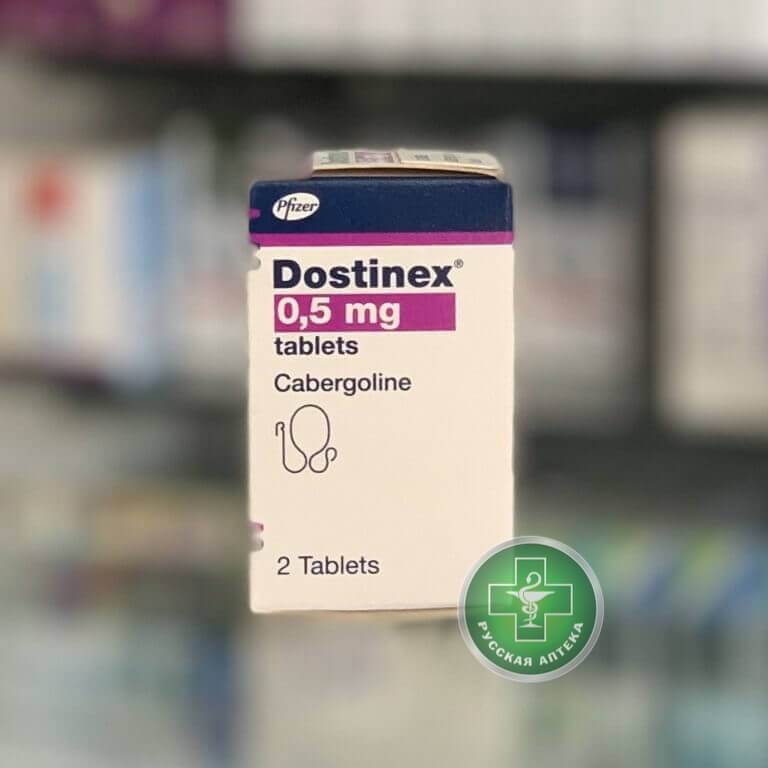
Dostinex 0,5 mg 2 tablets
Composition:
Each tablet contains Cabergoline 0.5 mg.
Excipients include anhydrous lactose and leucine.
Product Description:
Dostinex is a dopaminergic ergoline derivative featuring potent and long-acting prolactin-lowering activity.
It exerts its therapeutic effect by direct stimulation of dopamine D2 receptors on anterior pituitary lactotroph cells, thereby suppressing prolactin secretion.
Due to its long elimination half-life, cabergoline maintains sustained prolactin suppression following a single dose.
Indications for Use:
Inhibition or suppression of physiological postpartum lactation for medical reasons.
Treatment of hyperprolactinemic disorders, including amenorrhea, oligomenorrhea, anovulation, and galactorrhea.
Management of prolactin-secreting pituitary adenomas (micro- and macprolactinomas), idiopathic hyperprolactinemia, or empty sella syndrome associated with hyperprolactinemia.
Method of Administration and Dosage:
The medication is administered orally and should preferably be taken with food to improve gastrointestinal tolerance.
For suppression of established lactation, the recommended dose is 0.25 mg (half tablet) every 12 hours for two days (total dose 1 mg).
For the treatment of hyperprolactinemic disorders, the initial dosage is 0.5 mg per week given in one or two doses (e.g., half a tablet twice weekly), increased gradually by 0.5 mg weekly at monthly intervals until an optimal therapeutic response is achieved.
Contraindications:
- Hypersensitivity to cabergoline, other ergot alkaloids, or any of the excipients.
- History of fibrotic disorders affecting the cardiac, pulmonary, or retroperitoneal tissues.
- Cardiac valvular dysplasia as determined by echocardiography prior to treatment initiation.
- Uncontrolled hypertension or history of pre-eclampsia/eclampsia.
Precautions:
Echocardiographic assessment must be performed prior to starting therapy and regularly during treatment to monitor for cardiac valvular disorders.
Symptomatic postural hypotension may occur, particularly during initial dose titration; caution is advised when driving or operating machinery.
Regular evaluation of blood pressure and monitoring for signs of pulmonary or retroperitoneal fibrosis are required during long-term administration.
Adverse Reactions / Side Effects:
- Nervous System Disorders: headache, dizziness, somnolence, postural hypotension, fatigue.
- Gastrointestinal Disorders: nausea, dyspepsia, abdominal pain, gastritis, constipation, vomiting.
- Cardiac and Vascular Disorders: cardiac valvulopathy, palpitations, peripheral edema, hypotension.
- Psychiatric Disorders: depression, sleep disturbances, hypersexuality, increased libido, compulsive behavior.
Pregnancy and Lactation:
Cabergoline should be used during pregnancy only if clearly needed and after a careful risk-benefit evaluation, as data in pregnant women are limited.
Pregnancy should be excluded prior to treatment, and effective non-hormonal contraception used.
Because cabergoline suppresses prolactin secretion, it should not be administered to mothers who intend to breastfeed.
Storage Conditions:
Store at a temperature not exceeding 30 °C in a dry place.
Keep the container tightly closed to protect from moisture and keep out of reach of children.
Packaging:
The cardboard box contains a amber glass bottle with 2 tablets and a medical instruction insert.
 Русский
 English
 عربي
عربي