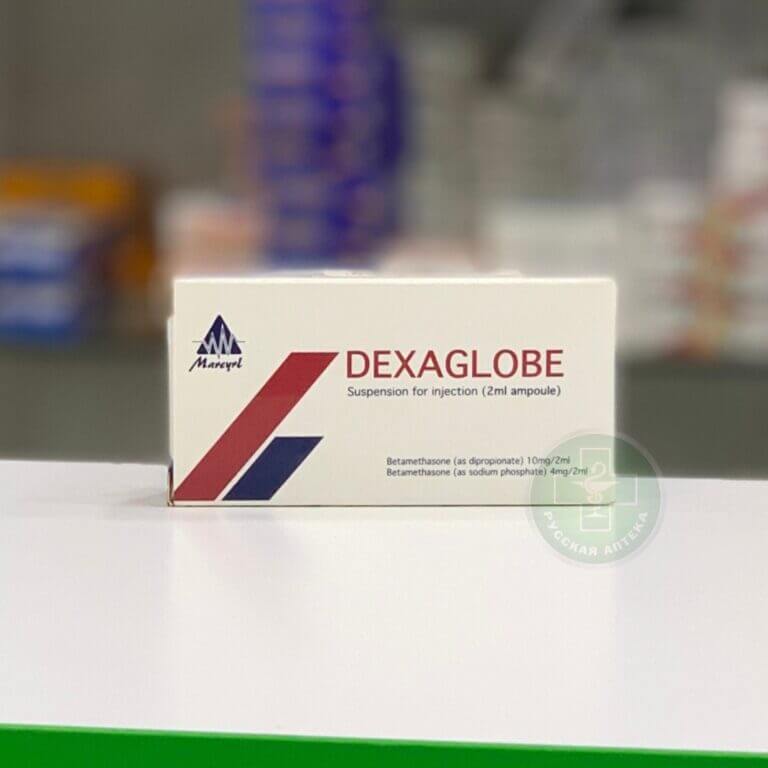
Dexaglobe suspension for injection 2 ml ampoule
Composition:
Each 1 ml contains:
Active ingredients:
Betamethasone Dipropionate 6,43 mg (Eq. to 5 mg Betamethasone),
Betamethasone Sodium Phosphate 2,6mg (Eq. to 2 mg Betamethasone).
Inactive ingredients:
Disodium Phosphate 2 H2O, Monosodium phosphate H2O, Sodium Chloride, Disodium edetate, Polysorbate 80, Benzyl Alcohol, Methyl para-hydroxybenzoate, Propyl para-hydroxybenzoate, Sodium carboxymethyl cellulose, Macrogol 4000, Water for injection
Properties:
Dexaglobe sterile aqueous suspension provides a combination of highly soluble and very slightly soluble esters of betamethasone that produce anti inflammatory, anti rheumatic and anti-allergic effects.
Prompt therapeutic activity is achieved by the soluble ester betamethasone sodium phosphate , which is quickly absorbed after injection.
Sustained activity is provided by betamethasone dipropionate which the only slightly soluble and becomes a repository of slow absorption , thereby controlling symptoms over a prolonged period.
The small crystal size of betamethasone dipropionate permits the use of fine gauge needle ( up to 36g ) for intradermal and intralesional administration.
Indications for Use:
Dexaglobe is indicated for systemic and local ol treatment of acute and chronic corticosteroid responsive disorders, especially in the following conditions:
Musculoskeletal and soft tissue conditions:
As an adjunctive therapy of short term during the acute attacks or exacerbation of the following diseases:
osteoarthritis, rheumatoid arthritis (operial cases may require a lower maintenance dose), bursitis, ankylosing spondylitis, epicondylitis, radiculitis, Coccodynia, sciatica, lumbago, stiff neck , synovial cysts, exostosis, fasciitis.
Collagen diseases:
During exacerbation or as maintenance therapy in some cases of systemic lupus, erythematosus, scleroderma, dermatomiositis, polyarteritis nodosa.
Allergic conditions:
As adjunctive therapy in asthmatic conditions and hypersensitivity reactions to drugs or insect stings.
In severe allergic conditions non responding to conventional methods, in particular acute attacks and exacerbations of the following diseases:
chronic bronchial asthma, seasonal of perinatal allergic rhinitis, severe allergic bronchitis, severe angioedema, serum sickness, atopic dermatitis, neurodermatitis, contact dermatitis, urticaria, severe solar exanthema.
Dermatological disorders:
Atopic dermatitis, neurodermatitis, necrobiosis lipoidica diabeticorum, lupus erythematosus, psoriasis, keloids, pemphigus , dermatitis herpetiformis , urticarial, Hypertrophic lichen planus, necrobiosis lipoidica diabeticorum, alopecia areata, discoid lupus erythematosus, psoriasis, keloids, pemphigus, dermatitis herpetiformis, cystic acne.
Neoplastic diseases:
For palliative treatment of leukemias and lymphomas in adults and acute leukemia of children.
Other conditions:
Adrenogenital syndrome, ulcerative colitis, regional ileitis, podiatric disorders, disorders requiring a subconjunctival injection, corticosteroid responsive blood dyscrasias, nephritis, nephrotic syndrome
Dosage and administration:
- Shake well before use.
- Dosing requirements are variable and must be individualized on the beets of the specific disease, the severity of the condition and the response of the patient.
- The initial dose should be maintained or adjusted until satisfactory reepanes are observed.
- If a satisfactory clinical response does not occur after a reasonable period of time, treatment with Dexaglobe suspension should be discontinued and an appropriate therapy initiated.
Systemic administration:
- For systemic therapy treatment is initiated as 1 to 2 ml in most conditions and repeated as necessary.
- Administration is by deep intramuscular (1M) injection of the gluteal region:
Dosage and frequency of administration will depend on the severity of the patient’s condition and the therapeutic response.
- In a severe illness such as lupus erythematosus or status asthmatics which has been resolved by appropriate life -saving procedures,3 ml might be required initially.
- A wide variety of dermatological conditions respond to IM injection of corticosteroids.
Side effects:
- Common:
Acne; clumsiness; dizziness; facial flushing; general body discomfort; headache; increased appetite; increased sweating; lightheadedness; nausea; nervousness; pain, swelling, or redness at the injection site; sleeplessness; upset stomach.
Seek medical attention right away if any of these SEVERE side effects occur.
- Severe allergic reactions:
(rash; hives; itching; difficulty breathing; tightness in the chest; swelling of the mouth, face, lips, or tongue); black, tarry stools; changes in body fat; changes in menstrual periods; changes in skin color; chest pain; easy bruising or bleeding; irregular heartbeat; mental or mood changes (eg, depression); muscle pain, wasting, or weakness; seizures; severe nausea or vomiting; sudden severe dizziness or headache; swelling of feet or legs; symptoms of infection (eg, chills, fever, sore throat); tendon or bone pain; thinning of the skin; unusual skin sensation; unusual weight gain; vision changes or other eye problems; vomit that looks like coffee grounds.
Contraindications:
Systemic fungal diseases;
Hypersensitivity to betamethasone or other components of the drug.
Warnings and precautions:
Only for intramuscular, intra-articular and intralesional use.
Not for intravenous use.
Storage:
Store at a temperature not exceeding 25°C.
Protect from freezing and temperature below 2°C.
Package:
Carton box holds a plastic container with 1 ampoule of 2 ml of suspension.
 Русский
 English
 عربي
عربي