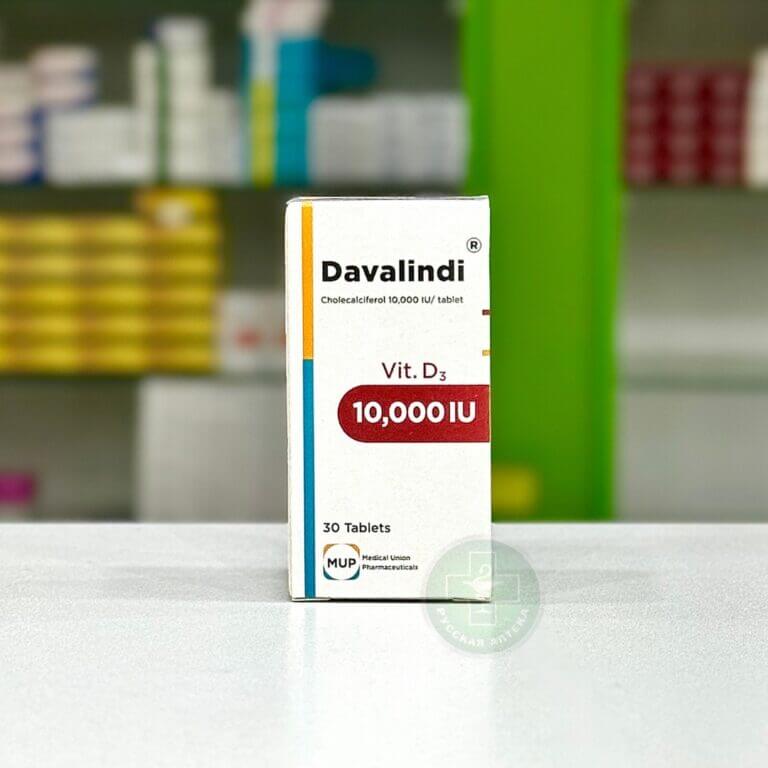
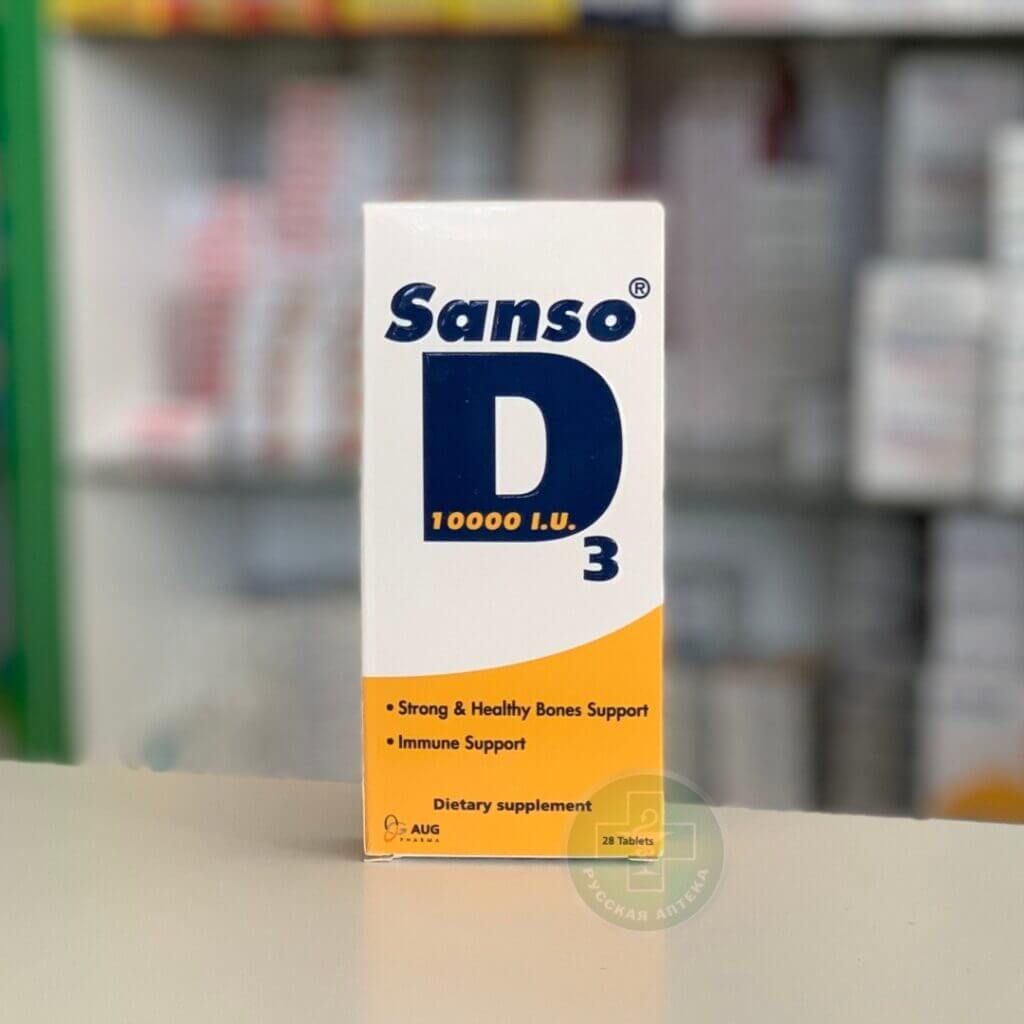
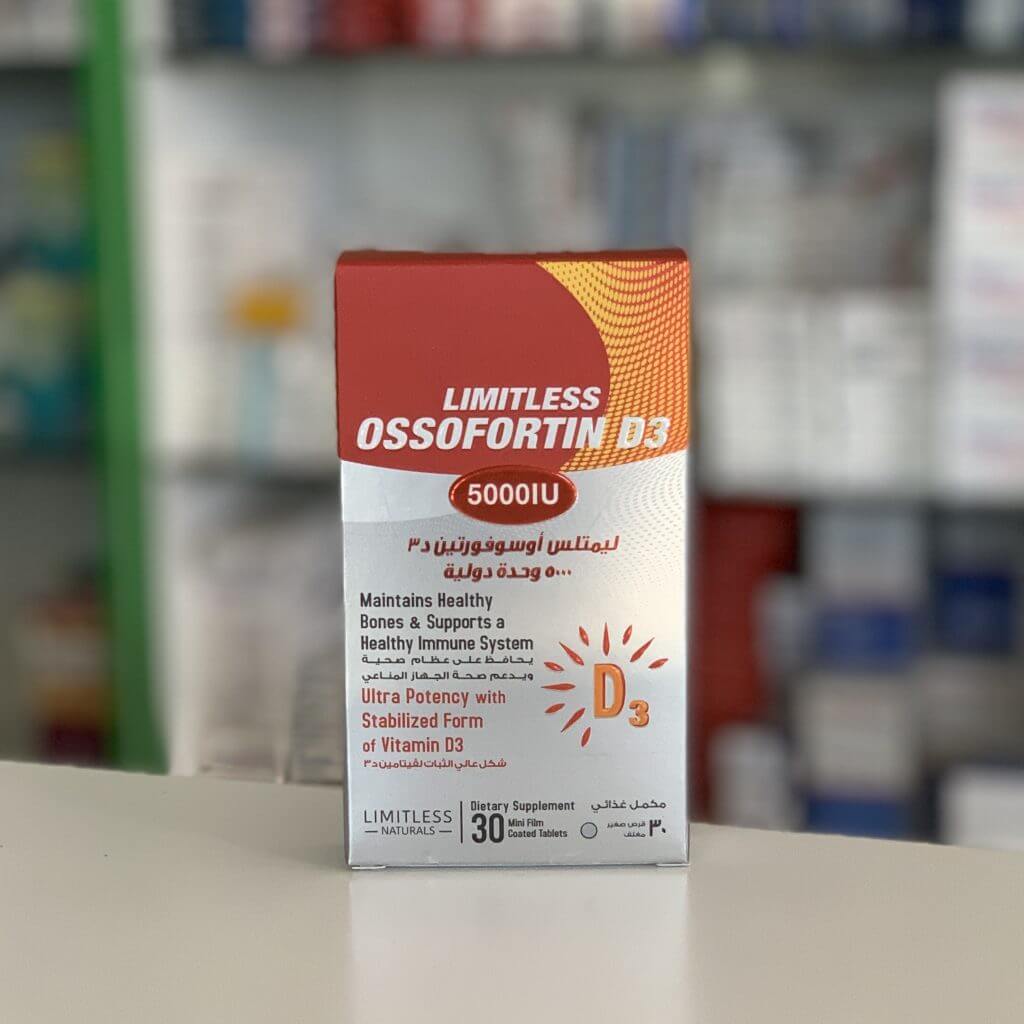
Davalindi 10000 IU 30 tablets
Compound:
Each tablet contains:
Colecalciferol (Vit D3) – 10000 IU/tablet
Auxiliary components:
Lactose monohydrate, colodial silicone dioxide, sodium starch gluconate, magnesium stearate.
Properties:
A remedy that replenishes vitamin D3 deficiency. Participates in the regulation of calcium-phosphorus metabolism, enhances the absorption of calcium and phosphates in the intestine (by increasing the permeability of cellular and mitochondrial membranes of the intestinal epithelium) and their reabsorption in the renal tubules; promotes bone mineralization, the formation of the bone skeleton and teeth in children, enhances the ossification process, and is necessary for the normal functioning of the parathyroid glands.
Indications:
Prevention and treatment of rickets;
Prevention of vitamin D3 deficiency in high-risk groups (malabsorption, chronic diseases of the small intestine, biliary cirrhosis of the liver, condition after resection of the stomach and/or small intestine);
Maintenance therapy for osteoporosis (of various origins);
Treatment of osteomalacia (against the background of mineral metabolism disorders in patients over 45 years of age, prolonged immobilization in case of injury, adherence to a list of refusal to take milk and dairy products);
Treatment of hypoparathyroidism and pseudohypoparathyroidism.
Directions for use and dosage:
Strictly on the doctor’s recommendation.
Contraindications:
hypercalcemia;
hypervitaminosis D3;
renal osteodystrophy with hyperphosphatemia;
calcium nephrourolithiasis;
increased sensitivity (including with thyrotoxicosis).
Carefully:
Atherosclerosis, heart failure, renal failure, pulmonary tuberculosis (active form), sarcoidosis or other granulomatosis, hyperphosphatemia, phosphate nephrolithiasis, organic heart damage, acute and chronic liver and kidney diseases, gastrointestinal diseases, gastric and duodenal ulcers, pregnancy, period lactation, hypothyroidism.
Precautionary measures:
It should be borne in mind that sensitivity to vitamin D3 varies from patient to patient, and in some patients taking even therapeutic doses can cause symptoms of hypervitaminosis. Newborns’ sensitivity to vitamin D3 varies, and some may be sensitive to even very low doses. Children who receive vitamin D3 over a long period of time are at increased risk of stunted growth.
To prevent hypovitaminosis D3, a balanced diet is most preferable.
In old age, the need for vitamin D3 may increase due to a decrease in the absorption of vitamin D3, a decrease in the ability of the skin to synthesize provitamin D3, a decrease in sun exposure, and an increase in the incidence of renal failure.
Since in pseudohypoparathyroidism there may be phases of normal sensitivity to vitamin D3, it is necessary to adjust the dose of the drug.
Side effects:
Allergic reactions, hypercalcemia, hypercalciuria, loss of appetite, polyuria, constipation, flatulence, nausea, abdominal pain, headache, myalgia, arthralgia, increased blood pressure, arrhythmia, impaired renal function, exacerbation of the tuberculosis process in the lungs.
Storage conditions:
At a temperature not higher than 30°C.
Package:
The cardboard box contains a plastic jar that contains 30 tablets.
 Русский
 English
 عربي
عربي