Русский
 English
 عربي
عربي

Bristaflam 100 mg 20 tablets
102£
View analogs- Rheumatoid arthritis, osteoarthritis, ankylosing spondylitis.
- For relief of pain and inflammation: lumbago, scapulohumeral periarthritis, soft tissue rheumatic conditions, toothache.
Buy
Product quantities
Form of Release: Tablets
Product Brand:
Smithkline Beecham
About the brand
Product Categories: Painkillers, anti-inflammatory • Nonsteroidal anti-inflammatory drugs


Bristaflam 100 mg 20 tablets
Composition:
Aceclofenac 100 mg.
Excipients:
microcrystalline cellulose, croscarmellose sodium, povidone K30, sodium stearyl fumarate.
Product Description:
Non‑steroidal anti‑inflammatory drug (NSAID).
Has anti‑inflammatory, analgesic, and antipyretic effects.
Indications for use:
Rheumatoid arthritis, osteoarthritis, ankylosing spondylitis.
For relief of pain and inflammation: lumbago, scapulohumeral periarthritis, soft tissue rheumatic conditions, toothache.
Method of administration and dosage:
100 mg twice daily (morning and evening).
Course without medical supervision — no more than 7 days.
Use the minimum effective dose for the shortest possible duration.
Contraindications:
- Hypersensitivity to NSAIDs.
- Aspirin triad.
- Gastrointestinal ulcers, bleeding.
- Severe liver and kidney diseases.
- Pregnancy, breastfeeding.
- Age under 18 years.
Precautions:
Use with caution in patients with liver, kidney, gastrointestinal diseases, asthma, hypertension, diabetes, elderly patients, and during long‑term NSAID therapy.
Side effects:
Dizziness, nausea, abdominal pain, diarrhea.
Rare — gastrointestinal ulcers, bleeding, liver dysfunction.
Pregnancy and lactation:
Contraindicated.
Storage conditions:
Store at temperatures up to 30°C, in a dry place, protected from light.
Packaging:
Cardboard box containing 20 film‑coated tablets and instructions for use.
Tags, Keywords:
- musculoskeletal pain
- musculoskeletal system
- arthritis
- arthritis pain
- arthritis pain
- Rheumatoid Arthritis Treatment
- rheumatoid arthritis
- Osteoarthritis treatment
- osteoarthritis
- ankylosing spondylitis
- lumbago
- shoulder pain
- lower back pain
- back pain
- toothache
- toothache and headache
- pain
- analgesic
- Analgesic
- anesthetics
- anti-inflammatory
- anti-inflammatory drug
Active Ingredients:
No comments yet. Be the first to write one.
Your comment will be published after moderation.
You’ll receive a notification to your email when someone replies.
Related Products




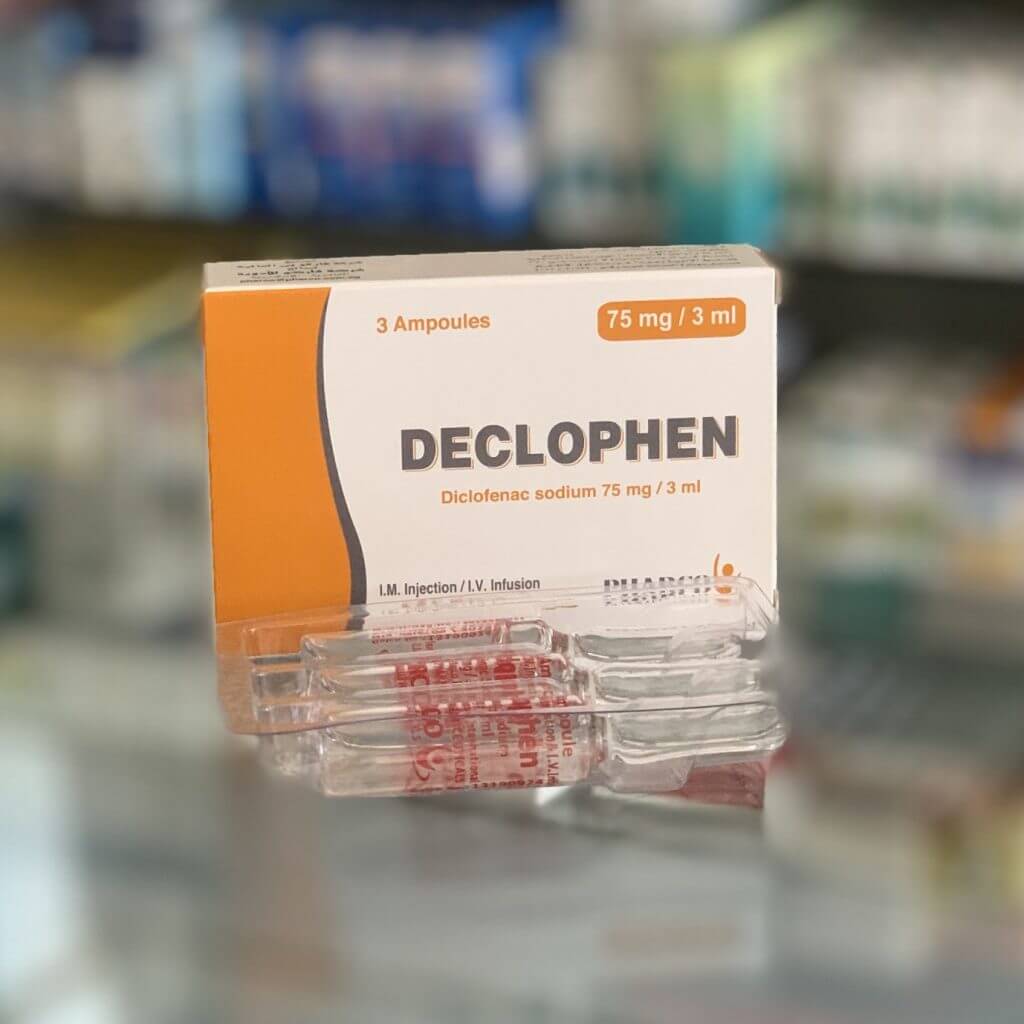
Declophen 75 mg/3 ml solution for intramuscular or intravenous injection 3 ampoules
36£