Русский
 English
 عربي
عربي
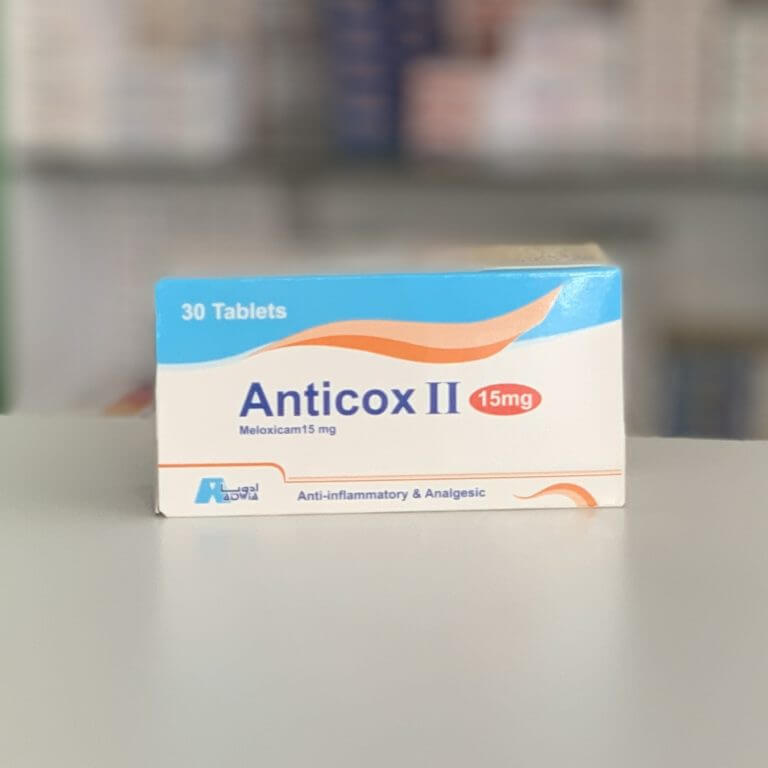
Anticox II 15 mg 30 tablets
111£
View analogsIt has anti-inflammatory, analgesic and antipyretic effects.
Symptomatic treatment:
degenerative joint diseases, incl. with a painful component;
rheumatoid arthritis;
other inflammatory and degenerative diseases of the musculoskeletal system, accompanied by pain.
Buy
Product quantities
Form of Release: Tablets
Product Brand:
ADWIA Pharmaceuticals
About the brand
Product Categories: Painkillers, anti-inflammatory • Nonsteroidal anti-inflammatory drugs


Anticox II 15 mg 30 tablets
Compound:
Each tablet contains:
Meloxicam 15 mg.
Auxiliary components:
Microcrystalline cellulose, starch, sodium, talc, magnesium stearate.
Properties:
- NSAIDs, a derivative of enolic acid, have anti-inflammatory, analgesic and antipyretic effects.
- The mechanism of the anti-inflammatory action of meloxicam is its ability to inhibit the synthesis of prostaglandins, known inflammatory mediators.
- Meloxicam in vivo inhibits the synthesis of prostaglandins at the site of inflammation to a greater extent than in the gastric mucosa or kidneys.
- These differences are associated with more selective inhibition of COX-2 compared to COX-1. Inhibition of COX-2 is thought to mediate the therapeutic effects of NSAIDs, while inhibition of the ubiquitous COX-1 isoenzyme may be responsible for gastric and renal side effects.
- The selectivity of meloxicam for COX-2 has been confirmed in various test systems, both in vitro and in vivo.
- The selective ability of meloxicam to inhibit COX-2 has been shown when used as a test system in human whole blood in vitro.
- It was found that meloxicam (in doses of 7.5 mg and 15 mg) inhibited COX-2 more actively, having a greater inhibitory effect on the production of prostaglandin E2, which stimulates lipopolysaccharide (a reaction controlled by COX-2), than on the production of thromboxane, which is involved in the blood coagulation process ( reaction controlled by COX-1).
- These effects are dose dependent.
Indications:
- Symptomatic treatment: osteoarthritis (arthrosis, degenerative joint diseases), incl. with a painful component;
- rheumatoid arthritis;
- ankylosing spondylitis;
- other inflammatory and degenerative diseases of the musculoskeletal system, such as arthropathy, dorsopathy (eg, sciatica, lower back pain, shoulder periarthritis), accompanied by pain.
Dosage and administration:
- The optimal dosing regimen is determined by the doctor.
- Compliance of the dosage form of a particular drug with indications for use and dosing regimen should be strictly observed.
- Set individually, depending on the intensity of pain and the severity of the inflammatory process.
- Assign inside at a dose of 7.5-15 mg / day; the maximum dose is 15 mg / day.
- The drug should be taken with food.
Contraindications:
- Hypersensitivity to meloxicam;
- hypersensitivity (including to other NSAIDs);
- complete or incomplete combination of bronchial asthma, recurrent polyposis of the nose or paranasal sinuses, angioedema or urticaria caused by intolerance to acetylsalicylic acid or other NSAIDs due to the existing likelihood of cross-sensitivity (including history);
- erosive and ulcerative lesions of the stomach and duodenum in the acute stage or recently transferred;
- inflammatory bowel disease (Crohn’s disease or ulcerative colitis in the acute stage);
- severe liver and heart failure;
- severe renal failure (if hemodialysis is not performed, CC <30 ml / min, as well as with confirmed hyperkalemia);
- active liver disease;
- active gastrointestinal bleeding, recent cerebrovascular bleeding or established diagnosis of diseases of the blood coagulation system;
- concomitant therapy with anticoagulants, tk. there is a risk of intramuscular hematoma formation;
- therapy of perioperative pain during coronary artery bypass surgery;
- pregnancy;
- lactation period (breastfeeding);
- children’s age up to 18 years.
Precautionary measures:
- Patients with gastrointestinal diseases require regular monitoring.
- If ulcerative lesions of the gastrointestinal tract or gastrointestinal bleeding occur, meloxicam should be discontinued.
- Gastrointestinal ulcers, perforation, or bleeding may occur at any time during the use of NSAIDs, whether or not there are warning signs or a history of serious gastrointestinal complications.
- The consequences of these complications are generally more serious for the elderly.
Side effects:
- From the side of the immune system:
infrequently – immediate type hypersensitivity reactions;
frequency not established – anaphylactic shock, anaphylactoid reactions. - From the side of the nervous system:
often – headache;
infrequently – dizziness, drowsiness. - From the digestive system:
often – abdominal pain, dyspepsia, diarrhea, nausea, vomiting;
infrequently – hidden or obvious gastrointestinal bleeding, gastritis, stomatitis, constipation, bloating, belching;
rarely – gastroduodenal ulcers, colitis, esophagitis;
very rarely – perforation of the gastrointestinal tract. - From the side of the liver and biliary tract:
infrequently – transient changes in liver function parameters (for example, increased transaminase activity or bilirubin concentration);
very rarely – hepatitis.
Storage method:
Store at a temperature not exceeding 30 degrees.
Package:
Cardboard box contains 3 blisters of 10 tablets, paper instructions.
Tags, Keywords:
- anti-inflammatory
- anti-inflammatory drug
- anti-inflammatory drugs
- antipyretic
- Joint pain
- joints
- joint pain
- Joint pain
- joint pain
- Joint inflammation
- joint pain
- joint pain
- joint pain syndrome
- rheumatoid arthritis
- arthritis
- osteoarthritis
- Osteoarthritis
- Osteoarthritis
- osteoarthritis prophylaxis
- arthritis
- Rheumatoid arthritis
- osteoarthritis
- rheumatoid arthritis prophylaxis
- Rheumatoid Arthritis Treatment
- arthritis pain
- arthritis pain
- polyarthritis
- acute arthritis
- arthritis
- Symptomatic treatment of rheumatoid arthritis
- severe rheumatoid arthritis
- chronic polyarthritis
- inflammation in arthritis
- pain
- lower back pain
- knee pain
- hand pain
- muscle pain
- back pain
- hand pain
- wrist pain
- musculoskeletal pain
- pain in legs
Active Ingredients:
No comments yet. Be the first to write one.
Your comment will be published after moderation.
You’ll receive a notification to your email when someone replies.
Related Products




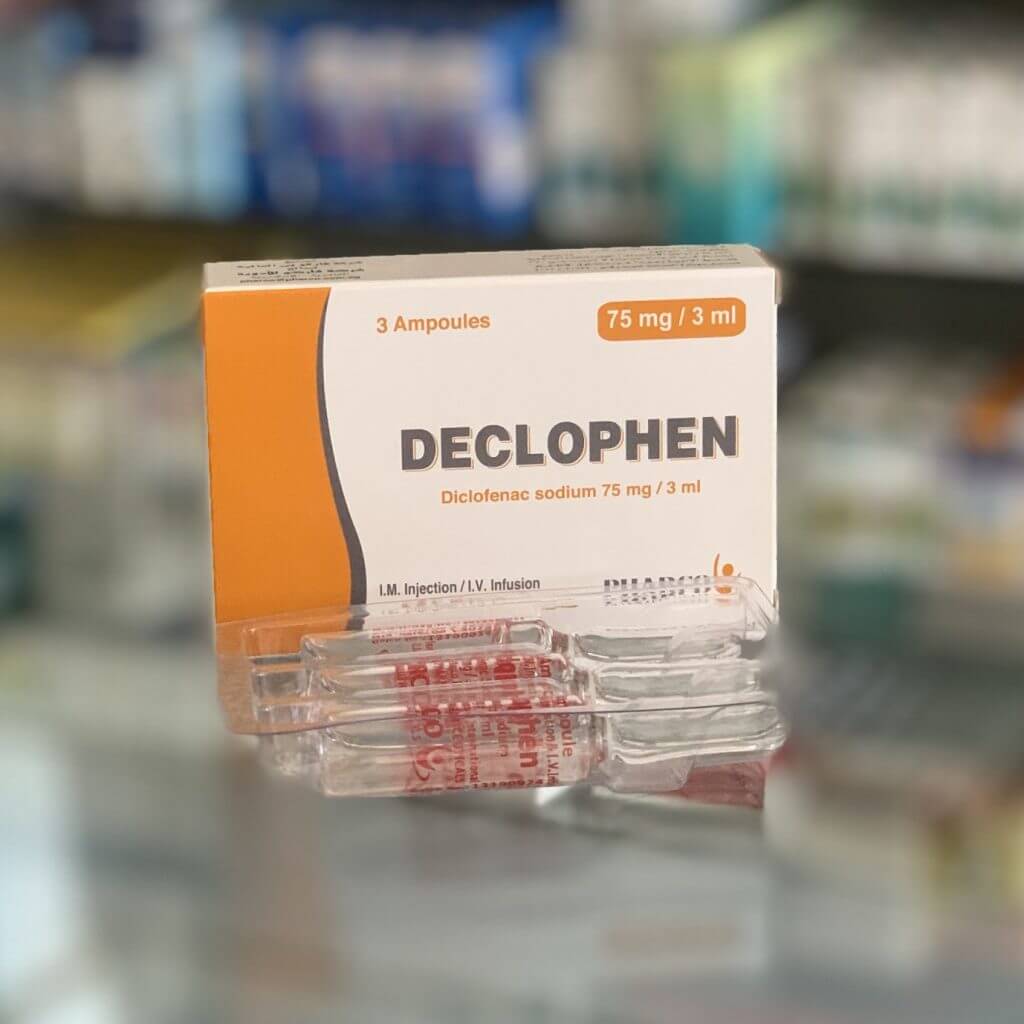
Declophen 75 mg/3 ml solution for intramuscular or intravenous injection 3 ampoules
36£