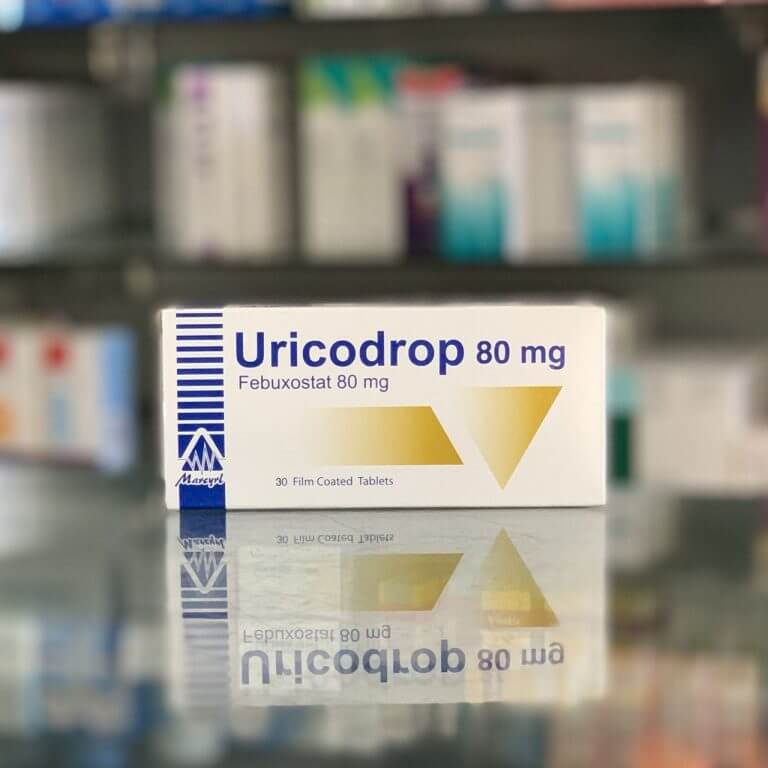
Uricodrop 80 mg 30 tablets
Composition:
Each tablet contains:
80 mg febuxostat
Auxiliary components:
lactose monohydrate – 76.5 mg, hyprolose – 12 mg, microcrystalline cellulose (Avicel PH101) – 129 mg, microcrystalline cellulose (Avicel PH102) – 172.5 mg, croscarmellose sodium – 25 mg, magnesium stearate – 2.5 mg, water colloidal silicon dioxide – 2.5 mg …
Properties:
The enzyme xanthine oxidase catalyzes two stages of purine metabolism: the oxidation of hypoxanthine to xanthine, and then the oxidation of xanthine to uric acid.
The use of febuxostat leads to a more effective reduction in the concentration of uric acid and maintenance of its level in the blood serum compared with allopurinol.
With the use of febuxostat for the prevention and treatment of tumor disintegration syndrome, a more intense and rapid decrease in the concentration of uric acid in the blood serum was observed compared with allopurinol.
Indications:
Chronic hyperuricemia in conditions accompanied by the deposition of urate crystals (in the presence of tophus and / or gouty arthritis, including a history).
Treatment and prevention of hyperuricemia in adult patients during cytostatic therapy of hemoblastoses with a moderate to high risk of tumor disintegration syndrome (only for a dosage of 120 mg).
Febuxostat is intended for use in adults.
Method of administration and dosage:
The method of application and dosage regimen of a particular drug depends on its form of release and other factors. The optimal dosage regimen is determined by the doctor. It is necessary to strictly observe the compliance of the used dosage form of a particular drug with the indications for use and the dosage regimen.
It is taken internally.
The dose is 80-120 mg 1 time / day. The duration of treatment is set individually, depending on the indications.
The goal of treatment is to reduce and maintain serum uric acid concentrations below 6 mg / dL (357 μmol / L).
Contraindications:
Pregnancy, breastfeeding period; children under 18 years of age; hypersensitivity to febuxostat.
Precautionary measures:
Febuxostat should only be started after an acute gout attack has subsided. The use of febcostat can provoke the development of an acute attack of gout due to the release of urate from tissue depots and a subsequent increase in the concentration of uric acid in the blood serum. For the prevention of gout attacks, the simultaneous use of NSAIDs or colchicine is recommended for at least 6 months.
At the beginning of the use of febuxostat and periodically in the presence of clinical manifestations, it is recommended to monitor liver function.
Influence on the ability to drive vehicles and mechanisms
When using febuxostat, drowsiness, dizziness, paresthesia and blurred vision may appear, and, as a result, a decrease in reaction and ability to concentrate, therefore, during the treatment period, care should be taken when driving vehicles and engaging in other potentially hazardous activities that require concentration and the speed of psychomotor reactions.
Side effects:
From the nervous system: often – headache; infrequently – dizziness, paresthesia, hemiparesis, drowsiness, change in taste, hypesthesia, hyposmia (weakening of the sense of smell).
Respiratory system: cough, bronchitis. Hematopoietic system: leukopenia, anemia, thrombocytopenia.
Cardiovascular system: angina pectoris, arrhythmias, arterial hypertension.
Digestive system: nausea, diarrhea.
Musculoskeletal system: arthralgia, myalgia.
Dermatological reactions: dermatitis, urticaria, alopecia.
Urinary system: hematuria, polyuria, renal failure, nephrolithiasis.
Reproductive system: erectile dysfunction, gynecomastia, mastalgia.
Allergic reactions.
Storage method:
In a cool dry place at a temperature not exceeding 30 degrees.
Package:
The cardboard box contains 1 blister of 10 tablets
 Русский
 English
 عربي
عربي