Русский
 English
 عربي
عربي
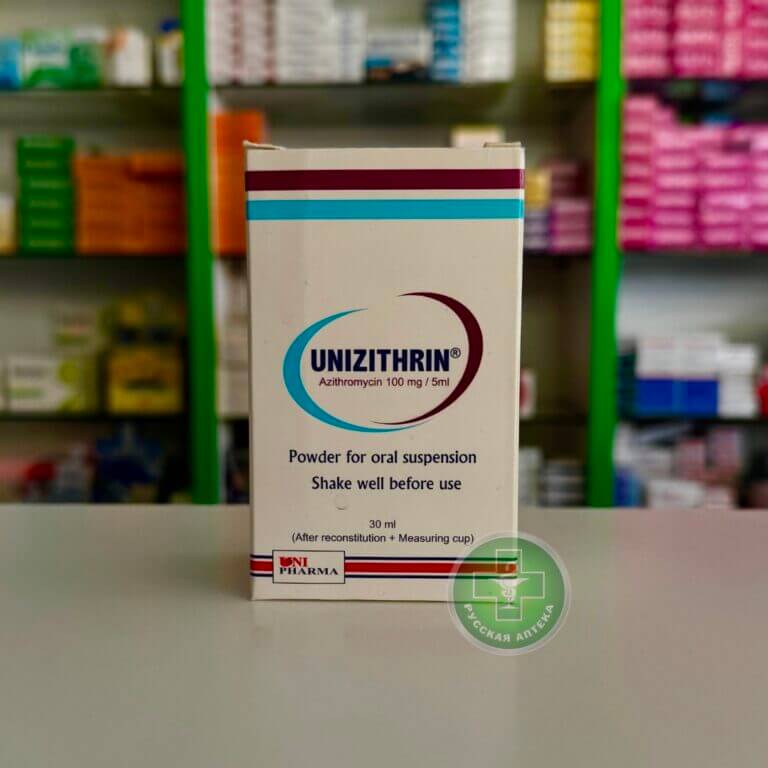

Unizithrine 100 mg/5 ml Suspension 30 ml
18£
View analogsAzithromycin is indicated for the treatment of the following infections when known or likely to be due to one or more susceptible microorganisms:
- bronchitis
- sinusitis
- otitis media
- skin and soft tissue infections
- community-acquired pneumonia
- pharyngitis/tonsillitis
- uncomplicated genital infections due to Chlamydia trachomatis and Neisseria gonorrhoeae.
Form of Release: Suspension
Product Brand:
UNIPHARMA CO.
About the brand
Product Categories: Antibiotics • Broad spectrum antibiotics • Antibiotics for bronchitis • Antibiotics for otitis


Unizithrine 100 mg/5 ml Suspension 30 ml
Composition:
When reconstituted:
Each 5 ml contains :
Azithromycin dihydrate 104.8 mg equivalent to 100 mg Azithromycin
Indications:
Azithromycin is indicated for the treatment of the following infections when known or likely to be due to one or more susceptible microorganisms:
- bronchitis
- sinusitis
- otitis media
- skin and soft tissue infections
- community-acquired pneumonia
- pharyngitis/tonsillitis
- uncomplicated genital infections due to Chlamydia trachomatis and Neisseria gonorrhoeae.
Posology and method of administration:
Method of administration:
Unizithin should be given as a single daily dose.
Unizithin Suspension can be taken with or without food Children over 45 kg body weight and adults, including elderly patients: The total dose of azithromycin is 1500 mg which should be given over three days (500 mg once daily).
In uncomplicated genital infections due to Chlamydia trachomatis, the dose is 1000 mg as a single oral dose.
For susceptible Neisseria gonorrhea the recommended dose is 1000 mg or 2000 mg of azithromycin in combination with 250 mg or 500 mg ceftriaxone according to local clinical treatment guidelines.
For patients who are allergic to penicillin and/or cephalosporins, prescribers should consult local treatment guidelines.
Paediatric population:
Unizithrin Suspension should be used for children under 45 kg. The dose in children is 10 mg/kg as a single daily dose for 3 days: Up to 15 kg (less than 3 years): Measure the dose as closely as possible using the 10 ml. For children weighing more than 15 kg, Unizithin Suspension should be administered using the measuring cup provided according to the following guidance:
15-25 kg (3-7 years): 10 ml (200 mg) given as 1 x 10 ml, once daily for 3 days.
26-35 kg (8-11 years): 15 ml (300 mg) given as 1 x 15 ml, once daily for 3 days.
36-45 kg (12-14 years): 20 ml (400 mg) given as 1 x 20 ml, once daily for 3 days.
Over 45 kg: Dose as per adults.
Hepatic impairment:
Since azithromycin is metabolized in the liver and excreted in the bile, the drug should not be given to patients suffering from severe liver disease.
Reconstitution direction:
Add distilled water to 30 ml ( to arrow)
Shake well till you get a suspension
Contraindications:
-Unizithin is contraindicated in patients with a known hypersensitivity to azithromycin or any macrolide or ketolide antibiotics, erythromycin, or to any excipients.
-Unizithin are contraindicated in patients with a history of cholestatic jaundice/hepatic dysfunction associated with prior use of Unizithin 500mg capsules and Unizithin 600 mg suspension.
Special warnings and precautions for use:
Hypersensitivity
-As with erythromycin and other macrolides, serious allergic reactions including angioneurotic oedema and anaphylaxis (rarely fatal), Acute Generalized Exanthematous Pustulosis (AGEP) and Drug Reaction with Eosinophilia and Systemic Symptoms (DRESS) have been reported.
-Hepatotoxicity (Abnormal Liver Function) Hepatitis, Cholestatic Juandice, Hepatic necrosis. And hepatic failure have been reported, some of which have resulted in death. Discontinue (Unizithin capsules and suspension are for oral administration only) immediately if signs and symptoms of. hepatitis occur.
-because of the theoretical possibility of ergotism, azithromycin and ergot derivatives should not be co-administrated.
-caution is required when treating patients:
• With congenital or documented QT prolongation.
• Currently receiving treatment with other active substance known to prolong QT interval such as antiarrhythmics of Classes la and III, cisapride and terfenadine
• With electrolyte disturbance, particularly in case of hypokalaemia and hypomagnesemia
• With clinically relevant bradycardia, cardiac arrhythmia or severe cardiac insufficiency.
-Superinfection: As with any antibiotic preparation, observation for signs of superinfection with non-susceptible organisms including fungi is recommended.
-Clostridium difficult associated diarrhoea:
Clostridium difficult associated diarrhea (CDAD) has been reported with the use of nearly all antibacterial agents, including azithromycin, and may range in severity from mild diarrhoea to fatal colitis.
-Renal impairment:
In patients with severe renal impairment (GFR <10 ml/min) a 33% increase in systemic exposure to azithromycin was observed Myasthenia gravis: Exacerbations of the symptoms of myasthenia gravis and new onset of myasthenia syndrome have been reported in patients receiving azithromycin therapy.
Pregnancy and lactation:
Pregnancy: Azithromycin should be used during pregnancy only if clearly needed.
Breast-feeding: As many drugs are excreted in human milk, azithromycin should not be used in the treatment of a lactating woman unless the physician feels that the potential benefits justify the potential risks tothe infant.
Side effects:
Liver/ Biliary: adverse reactions related to hepatic dysfunction have
Uncommon: Candidiasis, oral candidiasis, vaginal infection
Blood and Lymphatic System Disorders
Uncommon: Leukopenia, neutropenia
Immune System Disorders
Angioedema, hypersensitivity
Metabolism and Nutrition Disorders
Common: Anorexia
Psychiatric Disorders
Uncommon: Nervousness
Nervous System Disorders
Common: Dizziness, headache, paraesthesia, dysgeusia
Eye Disorders
Common: Visual impairment
Ear and Labyrinth Disorders
Common: Deafness
Cardiac Disorders
Uncommon: Palpitations
Gastrointestinal Disorders
Very common: Diarrhoea, abdominal pain, nausea, flatulence
Common: Vomiting, dyspepsia
Hepatobiliary Disorders
Uncommon: Hepatitis
Skin and Subcutaneous Tissue Disorders
Common: Pruritus and rash
Uncommon: SUS, photosensitivity reaction, urticaria
Musculoskeletal, Connective Tissue Disorders
Common: Arthralgia
General disorders and Administration Site Conditions
Common: Fatgue
Uncommon: Chest pain, oedema, malaise, asthenia
Storage Method:
- Store at a temperature not exceeding 30 °C
- Used after reconstitution for 5 days
- Keep out of reach of children
Package:
Carton box contains a glass bottle 13.4gm powder for oral suspension + Plastic Measuring Cup and a insert leaflet.
Tags, Keywords:
Active Ingredients:
No comments yet. Be the first to write one.
Your comment will be published after moderation.
You’ll receive a notification to your email when someone replies.