Русский
 English
 عربي

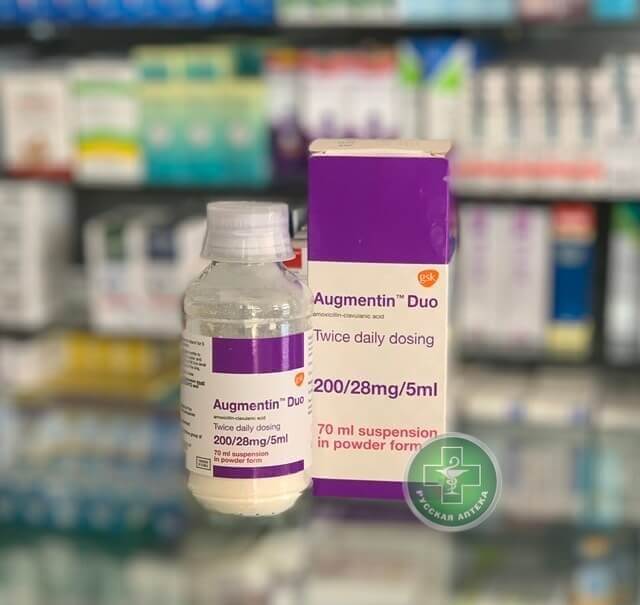
Augmentin Duo 200/28 mg in 5 ml Powder for oral suspension 70 ml
107£
View analogsTreatment of infectious and inflammatory diseases caused by sensitive pathogens: lower respiratory tract infections (bronchitis, pneumonia, pleural empyema, lung abscess); ENT infections (sinusitis, tonsillitis, otitis media); infections of the genitourinary system and pelvic organs (pyelonephritis, pyelitis, cystitis, urethritis, prostatitis, cervicitis, salpingitis, salpingo-oophoritis, tubo-ovarian abscess, endometritis, bacterial vaginitis, septic abortion, postpartum sepsis, pelvioperitonitis, soft chancre); infections of the skin and soft tissues (erysipelas, impetigo, secondarily infected dermatoses, abscess, phlegmon, wound infection); osteomyelitis; postoperative infections.
Prevention of infections in surgery.
Buy
Product quantities
Form of Release: Powder
Product Brand:
GlaxoSmithKline
About the brand
Product Categories: Antibiotics • Antibiotics for tonsillitis • Antibiotics for bronchitis • Antibiotics for sinusitis • Broad spectrum antibiotics


Augmentin Duo 200/28 mg in 5 ml Powder for oral suspension 70 ml
Composition:
Active Ingredients: Each 5 mL of prepared suspension contains
Amoxicillin (as trihydrate) — 200 mg and Clavulanic Acid (as potassium salt) — 28.5 mg.
Excipients:
Colloidal silicon dioxide, succinic acid, hypromellose, xanthan gum, strawberry flavor, aspartame, silicon dioxide.
Product Description:
- Augmentin Duo is a broad-spectrum combined antibacterial medication consisting of a semi-synthetic penicillin antibiotic (amoxicillin) and a beta-lactamase inhibitor (clavulanic acid) in a 7:1 ratio.
- Its mechanism of action relies on the bactericidal inhibition of bacterial cell wall synthesis by amoxicillin.
- Clavulanic acid inactivates a wide spectrum of beta-lactamases, preventing the enzymatic degradation of amoxicillin and broadening its spectrum of antibacterial activity.
- The medication is active against Gram-positive and Gram-negative aerobic and anaerobic bacteria (including golden staphylococcus, colon bacillus, Haemophilus influenzae, Klebsiella species, Moraxella catarrhalis, pneumococcus, pyogenic streptococcus, fecal enterococcus, Clostridium species, Peptostreptococcus species, Proteus species, Salmonella species, Shigella species, and Bacteroides fragilis).
- Clavulanic acid is less effective against class I chromosomal beta-lactamases produced by Pseudomonas aeruginosa, Serratia species, and Acinetobacter species.
Indications for Use:
- Treatment of bacterial infectious and inflammatory diseases caused by susceptible microorganisms:
- Upper Respiratory Tract and ENT Infections: Recurrent tonsillitis, sinusitis, otitis media.
- Lower Respiratory Tract Infections: Acute and chronic bronchitis, pneumonia, pleural empyema, lung abscess.
- Genitourinary and Pelvic Infections: Pyelonephritis, pyelitis, cystitis, urethritis, prostatitis, cervicitis, salpingitis, endometritis, bacterial vaginosis, septic abortion, chancroid, gonorrhea.
- Skin and Soft Tissue Infections: Erysipelas, impetigo, secondarily infected dermatoses, abscesses, phlegmons, wound infections.
- Bone and Joint Infections: Osteomyelitis.
- Surgical Infection Prophylaxis and Treatment: Postoperative wound infections.
Method of Administration and Dosage:
- Administered orally.
- To optimize absorption and minimize gastrointestinal side effects, it is recommended to take the medication at the start of a meal.
- Shake the bottle thoroughly before each use.
- Directions for Reconstitution: Add cooled boiled water to the powder up to the line on the label in two portions, shaking vigorously each time until fully dissolved.
The final volume of the prepared suspension equals 70 mL. - Pediatric Patients Aged 3 Months to 12 Years (Weight Under 40 kg):
The dosing regimen is established individually based on body weight, age, and severity of infection.
Dosing frequency is 2 times daily (every 12 hours).
Low Doses (25 mg / 3.6 mg per kg body weight per day based on amoxicillin): Used for skin and soft tissue infections, as well as recurrent tonsillitis.
High Doses (45 mg / 6.4 mg per kg body weight per day based on amoxicillin): Used for otitis media, sinusitis, lower respiratory tract infections, urinary tract infections, and bone/joint infections. - Duration of Therapy: The minimum treatment duration is 5 days.
- Treatment should not exceed 14 days without medical re-evaluation.
Contraindications:
- Hypersensitivity to amoxicillin, clavulanic acid, penicillins, cephalosporins, or other beta-lactam antibiotics.
- Infectious mononucleosis (high risk of developing a rubelliform skin rash).
- History of jaundice or hepatic dysfunction associated with amoxicillin/clavulanic acid therapy.
- Phenylketonuria (contains aspartame).
- Infants under 3 months of age.
- Severe renal impairment (creatinine clearance less than 30 mL/min).
Precautions:
- Administration with Food: Take at the start of meals to reduce gastrointestinal discomfort.
- Allergy Monitoring: Prior to initiating therapy, obtain a detailed history regarding previous hypersensitivity reactions to beta-lactam antibiotics. Discontinue immediately if an allergic reaction occurs.
- Laboratory Monitoring: During prolonged therapy, monitor hepatic, renal, and hematopoietic functions periodically.
- Risk of Superinfection: Extended use may result in the overgrowth of non-susceptible microorganisms or fungal pathogens (candidiasis).
- Diagnostic Testing: May cause false-positive results in urine glucose tests (enzymatic glucose oxidase methods are recommended).
Adverse Reactions / Side Effects:
- Infections: Frequently — mucocutaneous candidiasis.
- Gastrointestinal System: Frequently — diarrhea, nausea, vomiting; uncommonly — indigestion, stomatitis; very rarely — pseudomembranous and hemorrhagic colitis, tooth discoloration.
- Hepato-biliary System: Uncommonly — moderate elevation of liver enzymes (ALT/AST); very rarely — hepatitis, cholestatic jaundice.
- Allergic Reactions: Uncommonly — skin rash, pruritus, urticaria; very rarely — angioedema, anaphylactic shock, erythema multiforme, Stevens-Johnson syndrome.
- Hematopoietic System: Rarely — reversible leukopenia, thrombocytopenia; very rarely — agranulocytosis, hemolytic anemia, prolonged prothrombin time.
- Nervous System: Uncommonly — dizziness, headache; very rarely — convulsions, hyperactivity, anxiety.
- Urinary System: Very rarely — interstitial nephritis, crystalluria, hematuria.
Pregnancy and Lactation:
Because this formulation is intended for pediatric use, administration in adults is limited.
When used in adolescents or adults, use during pregnancy and lactation is permissible only when the expected benefit to the mother outweighs the potential risk to the fetus or child, strictly under medical supervision.
Storage Conditions:
Store the dry powder at a temperature not exceeding 30 °C in a dry place.
Store the reconstituted suspension in a refrigerator and use within 10 days.
Keep out of reach of children.
Packaging:
Cardboard box containing a glass bottle of powder for oral suspension (70 mL reconstituted volume), a dosing device (measuring cup or dosing syringe), and a patient information leaflet.
Tags, Keywords:
Active Ingredients:
No comments yet. Be the first to write one.
Your comment will be published after moderation.
You’ll receive a notification to your email when someone replies.