Русский
 English
 عربي

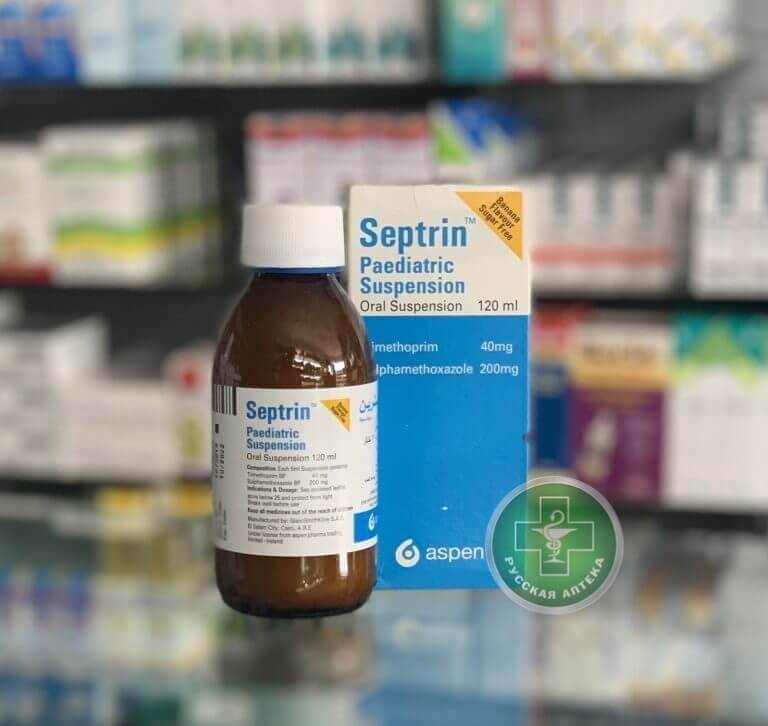
Septrin Paediatric Suspension Banana Flavour, Sugar Free 120 ml
32£
View analogs- Treatment of infectious and inflammatory diseases caused by microorganisms sensitive to co-trimoxazole:
- Respiratory tract infections (including bronchitis, pneumonia, bronchiectasis, and otitis media).
- Urogenital tract infections (including pyelonephritis, cystitis, and urethritis).
- Gastrointestinal tract infections (including bacterial gastroenteritis, typhoid fever, and paratyphoid).
- Skin and soft tissue infections (including pyoderma, furunculosis, and abscesses).
Buy
Product quantities
Form of Release: Suspension
Product Brand:
Aspen Pharma Trading Limited
About the brand
Product Categories: Antibiotics


Septrin Paediatric Suspension Banana Flavour, Sugar Free 120 ml
Composition:
Active Ingredients: Trimethoprim BP 40 mg and Sulfamethoxazole BP 200 mg per 5 ml of suspension.
Excipients: Glycerol, dispersible cellulose, polysorbate 80, banana flavor, purified water, and other auxiliary suspension components.
Product Description:
- Combined broad-spectrum antibacterial agent with bactericidal activity formulated for pediatric use.
- Sulfamethoxazole, structurally similar to para-aminobenzoic acid, impairs dihydrofolic acid synthesis in bacterial cells by inhibiting the incorporation of para-aminobenzoic acid into its molecule.
- Trimethoprim enhances the effect of sulfamethoxazole by inhibiting the reduction of dihydrofolic acid to tetrahydrofolic acid — the active form of folic acid responsible for protein metabolism and microbial cell division.
- The drug is active against Gram-positive and Gram-negative microorganisms: streptococcal species (including Streptococcus pneumoniae and hemolytic strains), staphylococcal species, Neisseria meningitidis, Neisseria gonorrhoeae, Escherichia coli (including enterotoxigenic strains), Salmonella species (including Salmonella typhi and Salmonella paratyphi), Vibrio cholerae, Bacillus anthracis, Haemophilus influenzae (including ampicillin-resistant strains), Listeria species, Nocardia asteroides, Bordetella pertussis, Enterococcus faecalis, Klebsiella species, Proteus species, Pasteurella species, Francisella tularensis, Brucella species, Mycobacterium species (including Mycobacterium leprae), Citrobacter species, Enterobacter species, Legionella pneumophila, Providencia species, certain Pseudomonas species (excluding Pseudomonas aeruginosa), Serratia marcescens, Shigella species, Yersinia species, Morganella species, Pneumocystis jirovecii, Chlamydia species; protozoa — Plasmodium species, Toxoplasma gondii; Actinomyces israelii; pathogenic fungi — Coccidioides immitis and Histoplasma capsulatum; Leishmania species.
- Resistant to the drug: Corynebacterium species, Pseudomonas aeruginosa, Mycobacterium tuberculosis, Treponema species, Leptospira species, and viruses.
Indications for Use:
- Treatment of infectious and inflammatory diseases caused by microorganisms sensitive to co-trimoxazole:
- Respiratory tract infections (including bronchitis, pneumonia, bronchiectasis, and otitis media).
- Urogenital tract infections (including pyelonephritis, cystitis, and urethritis).
- Gastrointestinal tract infections (including bacterial gastroenteritis, typhoid fever, and paratyphoid).
- Skin and soft tissue infections (including pyoderma, furunculosis, and abscesses).
Method of Administration and Dosage:
- Administered orally.
Shake well before use. - Standard pediatric dosage (administered twice daily every 12 hours):
Children aged 6 weeks to 5 months: 2.5 ml twice daily.
Children aged 6 months to 5 years: 5 ml twice daily.
Children aged 6 to 12 years: 10 ml twice daily.
Children over 12 years and adults: 20 ml twice daily. - Treatment duration typically ranges from 5 to 14 days depending on infection severity.
Contraindications:
- Known hypersensitivity to trimethoprim, sulfamethoxazole, co-trimoxazole, sulfonamides, or any excipients.
- Severe hepatic parenchymal damage.
- Severe renal failure (creatinine clearance less than 15 ml/min).
- Severe hematological disorders (including aplastic anemia, agranulocytosis, and megaloblastic anemia).
- Glucose-6-phosphate dehydrogenase deficiency.
- Infants under 6 weeks of age.
- Pregnancy and lactation.
Precautions:
- At the first appearance of skin rash or any severe adverse reaction, discontinue use immediately.
- Use with caution in patients with bronchial asthma, severe allergic history, or folate deficiency.
- Maintain adequate fluid intake during treatment to prevent crystalluria.
- Regular blood counts should be monitored if treatment exceeds 14 days.
Adverse Reactions / Side Effects:
- Gastrointestinal System: Nausea, vomiting, diarrhea, loss of appetite, glossitis, and stomatitis.
- Allergic Reactions: Skin rash, urticaria, pruritus; rarely, Stevens-Johnson syndrome and toxic epidermal necrolysis.
- Hematopoietic System: Leukopenia, neutropenia, thrombocytopenia, and megaloblastic anemia.
- Nervous System: Headache, dizziness, and fatigue.
- Urinary System: Crystalluria and impaired renal function.
Pregnancy and Lactation:
The use of this medication during pregnancy and lactation is contraindicated due to potential fetal risks and excretion of active components into breast milk.
Storage Conditions:
Store below 25 °C and protect from light.
Keep out of the sight and reach of children.
Packaging:
Cardboard box containing a 120 ml amber glass bottle.
Tags, Keywords:
Active Ingredients:
No comments yet. Be the first to write one.
Your comment will be published after moderation.
You’ll receive a notification to your email when someone replies.