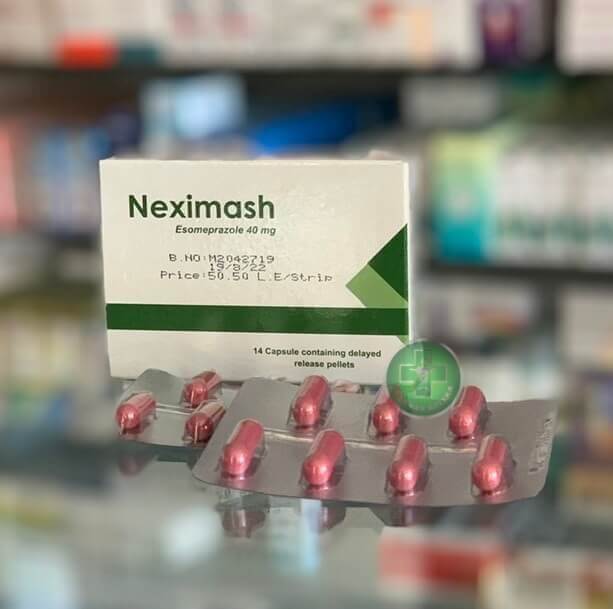
Neximash 40 mg 28 capsules
Composition:
Active ingredient:
Esomeprazole (as esomeprazole magnesium trihydrate) - 40 mg (44.42 mg of esomeprazole magnesium trihydrate equivalent to 40 mg of esomeprazole).
Excipients (enteric-coated granules):
Sucrose, Povidone (PVP K30), Titanium dioxide, Kaolin, Cellulose acetate phthalate, Purified talc, Maize starch.
Product Description:
Neximash is a proton pump inhibitor that reduces gastric acid secretion by inhibiting the gastric H⁺/K⁺-ATPase enzyme system.
By decreasing acid production, the product helps relieve acid-related symptoms and promotes healing of acid-induced damage to the esophagus, stomach, and duodenum.
Neximash is used for the treatment of gastroesophageal reflux disease (GERD), heartburn, erosive esophagitis, gastric and duodenal ulcers, prevention of NSAID-associated gastric ulcers, eradication of Helicobacter pylori (in combination therapy), and pathological conditions associated with excessive gastric acid secretion.
Indications for Use:
- Gastroesophageal Reflux Disease (GERD):
Short-term treatment (4 to 8 weeks) for healing and symptom relief of diagnostically confirmed erosive esophagitis.
- Maintenance of healing of erosive esophagitis (controlled studies up to 6 months).
- Short-term treatment (4 to 8 weeks) of heartburn and other symptoms associated with GERD in adults and children aged 1 year and older.
- Risk Reduction of NSAID-Associated Gastric Ulcer:
Reduction in the occurrence of gastric ulcers in patients receiving continuous NSAID therapy who are at risk due to age (≥ 60 years) and/or a documented history of gastric ulcers.
- Helicobacter pylori Eradication:
In combination with amoxicillin and clarithromycin for the treatment of patients with H. pylori infection and duodenal ulcer disease (active or history within the past 5 years) to reduce the risk of duodenal ulcer recurrence.
- Pathological Hypersecretory Conditions:Long-term treatment of pathological hypersecretory conditions, including Zollinger-Ellison Syndrome.
Method of Administration and Dosage:
For oral use.
Neximash should be taken at least one hour before meals.
Recommended Dosages:
- Healing of erosive esophagitis: 20 mg or 40 mg once daily for 4 to 8 weeks.
- Maintenance of healing of erosive esophagitis: 20 mg once daily.
- Symptomatic GERD: 20 mg once daily for 4 weeks.
- NSAID-associated gastric ulcer risk reduction: 20 mg or 40 mg once daily (up to 6 months).
- Pathological hypersecretory conditions (including Zollinger-Ellison Syndrome): 40 mg twice daily (individualized dosing; doses up to 240 mg daily have been administered).
- Hepatic Impairment:
Severe impairment (Child-Pugh C): dose should not exceed 20 mg daily.
Contraindications:
Known hypersensitivity to substituted benzimidazoles or to any component of the formulation.
Hypersensitivity reactions may include anaphylaxis, anaphylactic shock, angioedema, bronchospasm, acute interstitial nephritis, and urticaria.
For contraindications related to amoxicillin and clarithromycin used in combination therapy, refer to their respective prescribing information.
Precautions:
- Presence of Gastric Malignancy.
- Acute Interstitial Nephritis:
Acute interstitial nephritis has been reported in patients receiving proton pump inhibitors, including Neximash. Discontinue treatment if this condition develops.
- Clostridium difficile-Associated Diarrhea:
PPI therapy may be associated with an increased risk of Clostridium difficile-associated diarrhea, particularly in hospitalized patients.
- Bone Fracture:
Long-term or high-dose PPI therapy may increase the risk of osteoporosis-related fractures of the hip, wrist, or spine.
- Subacute Cutaneous Lupus Erythematosus (SCLE):
Cases of cutaneous and systemic lupus erythematosus have been reported. Discontinue NEXIMASH if symptoms occur.
- Interaction with Clopidogrel:
Avoid concomitant use, as esomeprazole may reduce the antiplatelet effect of clopidogrel by inhibiting CYP2C19.
- Cyanocobalamin (Vitamin B-12) Deficiency:
Long-term acid suppression may lead to malabsorption of vitamin B-12.
- Hypomagnesemia:
Hypomagnesemia has been reported, particularly with prolonged use or in combination with diuretics or digoxin.
- Interaction with St. John’s Wort or Rifampin:
Avoid concomitant use due to reduced esomeprazole plasma concentrations.
- Interference with Diagnostic Tests:
Esomeprazole may increase serum chromogranin A levels; discontinue at least 14 days before testing for neuroendocrine tumors.
- Interaction with Methotrexate:
Concomitant use with high-dose methotrexate may increase methotrexate levels; temporary withdrawal of the PPI may be considered.
Adverse Reactions (Side Effects):
Common:
- headache, diarrhea, nausea, abdominal pain, flatulence, somnolence.
Rare and serious:
- acute interstitial nephritis, severe skin reactions, hypomagnesemia, vitamin B-12 deficiency, bone fractures, pancreatitis, anaphylactic reactions.
Pregnancy and Lactation:
There are no adequate and well-controlled studies in pregnant women.
Neximash should be used during pregnancy only if the potential benefit justifies the potential risk.
Limited data suggest that omeprazole may be present in human milk.
The benefits of breastfeeding should be weighed against the mother’s clinical need for Neximash.
Storage Conditions:
Store at a temperature not exceeding 30 °C, in a dry place.
Keep out of the reach of children.
Packaging:
Carton box containing 4 strips of 7 capsules and a package leaflet.
 Русский
 English
 عربي
عربي