Русский
 English
 عربي
عربي
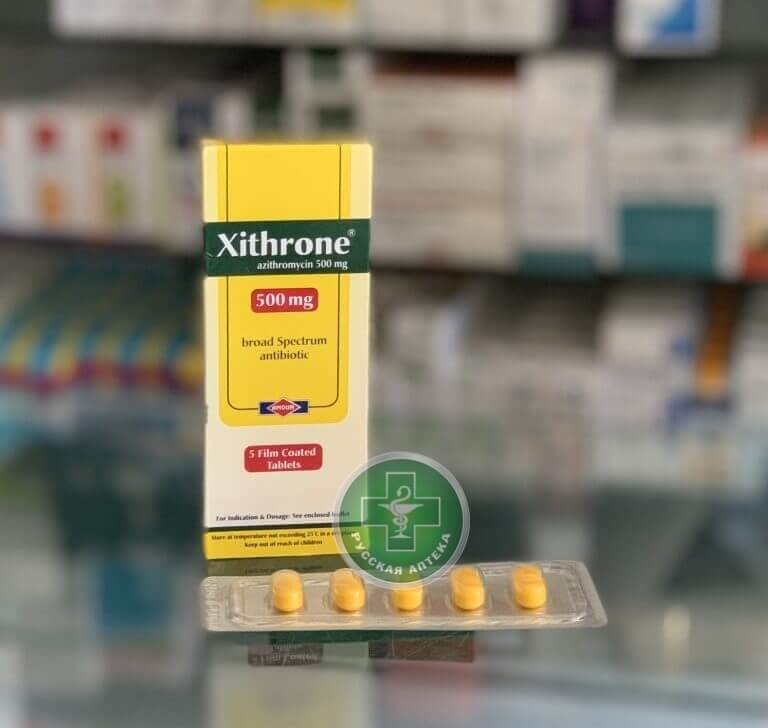
Xithrone 500 mg 5 tablets
86£
View analogsInfectious and inflammatory diseases caused by microorganisms sensitive to the drug:
- infections of the upper respiratory tract and ENT organs: pharyngitis, tonsillitis, sinusitis, otitis media;
- infections of the lower respiratory tract: acute bronchitis, exacerbation of chronic bronchitis, pneumonia, incl. caused by atypical pathogens; -infections of the skin and soft tissues:
- common acne of moderate severity, erysipelas, impetigo, secondary infected dermatoses;
- the initial stage of Lyme disease (borreliosis)
- erythema migrans (erythema migrans);
- infections of the urinary tract caused by Chlamydia trachomatis (urethritis, cervicitis).
Buy
Product quantities
Form of Release: Tablets
Product Brand:
Amoun Pharmaceutical Co.S.A.E
About the brand
Product Categories: Antibiotics • Antibiotics for tonsillitis • Antibiotics for bronchitis • Antibiotics for sinusitis


Xithrone 500 mg 5 tablets
Composition:
Each tablet contains:
Azithromycin 500 mg
Auxiliary components:
Methyl cellulose, magnesium stearate, talc, croscarmellose sodium, sodium sterilized fumorate.
Properties:
A broad-spectrum antibacterial drug from the group of macrolides-azalides, acts bacteriostatically. By binding to the 50S subunit of ribosomes, it inhibits peptide translocase at the translation stage, inhibits protein synthesis, slows down the growth and reproduction of bacteria, and has a bactericidal effect in high concentrations. Acts on extraand intracellular pathogens. Microorganism may be initially resistant to antibiotic action may acquire resistance to it.
Indications:
Infectious and inflammatory diseases caused by microorganisms sensitive to the drug; e infections of the upper respiratory tract and ENT organs: pharyngitis, tonsillitis, sinusitis, otitis media; e lower respiratory tract infections: acute bronchitis, exacerbation of chronic bronchitis, pneumonia, incl. caused by atypical pathogens; infections of the skin and soft tissues:
common acne of moderate severity, erysipelas, impetigo, secondary infected dermatoses;
the initial stage of Lyme disease (borreliosis) erythema migrans (erythema migrans); e urinary tract infections caused by Chlamydia trachomatis (urethritis, cervicitis).
Method of administration and dosage:
Azithromycin is taken orally 1 time / day, 50 mg, regardless of food intake. Adults (inclu the elderly) and children over 12 years of age weighing over 45 k . For infections of the
upper and lower respiratory tract, ENT organs, skin and soft tissues: 500 mg 1 time / day for 3 days (course dose – 1.5 g). With erythema migrans: on the first day at the same time 2 tab. 500 mg, then from the 2nd to the 5th day, 500 mg daily. Heading dose 3.0 g. For urinary tract infections caused by Chlamydia trachomatis (urethritis, cervicitis): 2 tab. 500 mg each.
Contraindications:
- severe hepatic and / or renal failure;
- children under 12 years of age with a body weight of less than 45 kg (for this dosage form);
-breast-feeding;
- simultaneous reception with ergotamine and dihydroergotamine;
- hypersensitivity to antibiotics of the macrolide group.
Carefully:
- Moderate impairment of liver and kidney function;
- with arrhythmias or a predisposition to arrhythmias and prolongation of the QT interval;
-with the combined use of terfenadine, warfarin, digoxin.
Precautions:
If the antibiotic is missed, the missed dose should be taken as early as possible, and subsequent doses should be taken at intervals of 24 hours. After discontinuation of azithromycin therapy, hypersensitivity reactions in some patients may persist for a long time and may require specific therapy under medical supervision.
Influence on the ability to drive vehicles and control mechanisms: Given the likelihood of side effects from the central nervous system, caution should be exercised when driving and operating mechanisms.
Side effects:
From the digestive system: nausea, vomiting, diarrhea, abdominal pain, loose stools, flatulence, indigestion, anorexia, constipation, discoloration of the tongue, pseudomembranous colitis, cholestatic jaundice, hepatitis, changes in laboratory parameters of liver function, liver failure, liver necrosis (possibly fatal).
Allergic reactions: itching, skin rashes, angioedema, urticaria, photosensitivity, anaphylactic reaction (in rare cases fatal), erythema multiforme, Stevens-Johnson syndrome, toxic epidermalnscrolysis.
From the side of the cardiovascular system: palpitations, arrhythmias, ventricular tachycardia, increased QT interval, bidirectional ventricular tachycardia.
From the nervous system: dizziness / vertigo, headache, convulsions, drowsiness, paresthesia, asthenia, insomnia, hyperactivity, aggressiveness, anxiety, nervousness.
From the senses: tinnitus, reversible hearin impairment up to deafness (when taking high doses for a long time), impaired perception of taste and smell.
From the circulatory and lymphatic systems:
thrombocytopenia, neutropenia, eosinophilia.
From the musculoskeletal system: arthralgia.
From the genitourinary system: interstitial nephritis, acute renal failure.
Others:
vaginitis, candidiasis.
Storage method:
At a temperature not higher than 25 degrees. In a dry place.
Packaging:
The cardboard box contains 1, 2 or 3 blisters of 3 or 5 tablets.
Tags, Keywords:
Active Ingredients:
No comments yet. Be the first to write one.
Your comment will be published after moderation.
You’ll receive a notification to your email when someone replies.