Русский
 English
 عربي

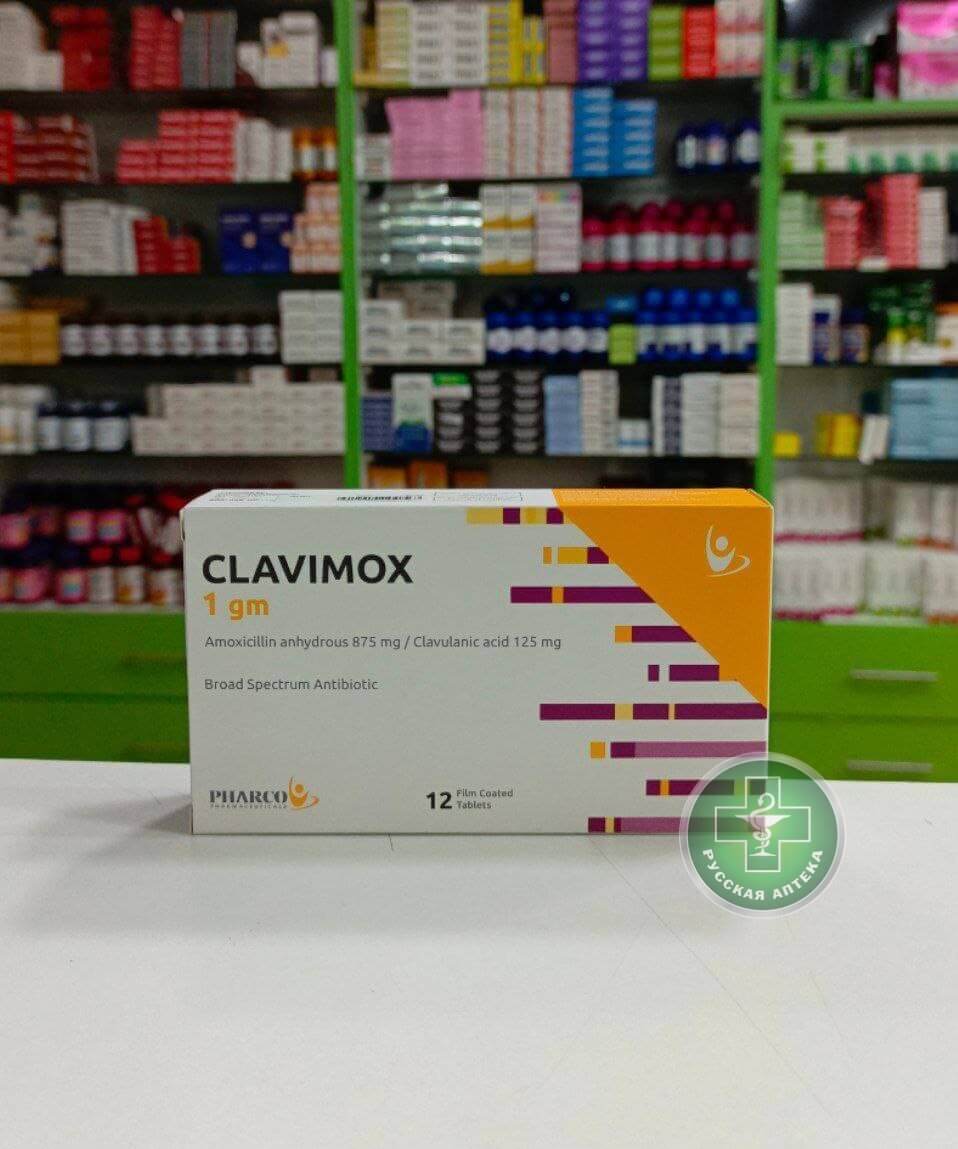
Clavimox 1 g 12 tablets
130£
View analogsTreatment of infectious and inflammatory diseases caused by susceptible microorganisms:
ENT Infections: Sinusitis, tonsillitis, otitis media.
Lower Respiratory Tract Infections: Acute and chronic bronchitis, pneumonia, pleural empyema, lung abscess.
Genitourinary & Pelvic Infections: Pyelonephritis, pyelitis, cystitis, urethritis, prostatitis, cervicitis, salpingitis, salpingo-oophoritis, endometritis, septic abortion, chancroid, gonorrhea.
Skin and Soft Tissue Infections: Erysipelas, impetigo, secondarily infected dermatoses, abscesses, phlegmon, wound infections.
Other Infections: Osteomyelitis, postoperative infections, and surgical infection prophylaxis.
Buy
Product quantities
Form of Release: Tablets
Product Brand:
Pharco Pharmaceuticals Inc.
About the brand
Product Categories: Antibiotics • Broad spectrum antibiotics


Clavimox 1 g 12 tablets
Composition:
Each tablet contains:
Active Ingredients:
Amoxicillin (as trihydrate) 875 mg, Clavulanic acid (as potassium clavulanate) 125 mg.
Excipients:
Colloidal silicon dioxide, crospovidone, croscarmellose sodium, magnesium stearate, microcrystalline cellulose.
Film Coating:
Hypromellose, ethylcellulose, polysorbate 80, triethyl citrate, titanium dioxide, talc.
Product Description:
Clavimox is a broad-spectrum combination antibacterial agent containing amoxicillin (a semisynthetic penicillin) and clavulanic acid (a beta-lactamase inhibitor).
It exhibits bactericidal action by inhibiting bacterial cell wall synthesis.
Clavulanic acid inactivates type II, III, IV, and V beta-lactamases, preventing the enzymatic degradation of amoxicillin and restoring its activity against beta-lactamase-producing strains of Staphylococcus aureus, Enterobacter spp., Escherichia coli, Haemophilus influenzae, Klebsiella spp., Moraxella catarrhalis, Bacteroides spp., and other aerobic and anaerobic pathogens.
Indications for Use:
Treatment of infectious and inflammatory diseases caused by susceptible microorganisms:
ENT Infections: Sinusitis, tonsillitis, otitis media.
Lower Respiratory Tract Infections: Acute and chronic bronchitis, pneumonia, pleural empyema, lung abscess.
Genitourinary & Pelvic Infections: Pyelonephritis, pyelitis, cystitis, urethritis, prostatitis, cervicitis, salpingitis, salpingo-oophoritis, endometritis, septic abortion, chancroid, gonorrhea.
Skin and Soft Tissue Infections: Erysipelas, impetigo, secondarily infected dermatoses, abscesses, phlegmon, wound infections.
Other Infections: Osteomyelitis, postoperative infections, and surgical infection prophylaxis.
Method of Administration and Dosage:
- Administered orally.
- To minimize gastrointestinal intolerance, take at the start of a meal:
- Adults and Children Over 12 Years (or Body Weight ≥40 kg):
For severe infections and respiratory tract infections: 1 tablet (875 mg/125 mg) twice daily. - Maximum Daily Dosages:
Amoxicillin — 6 g for adults (45 mg/kg body weight for children); Clavulanic acid — 600 mg for adults (10 mg/kg body weight for children). - Treatment Duration: Usually up to 14 days (up to 10 days for acute otitis media).
Contraindications:
- Hypersensitivity to amoxicillin, clavulanic acid, cephalosporins, other beta-lactam antibiotics, or any excipients.
- History of amoxicillin/clavulanic acid-associated jaundice or hepatic dysfunction.
- Infectious mononucleosis (due to high risk of developing a morbilliform rash).
- Phenylketonuria.
- Severe renal impairment (creatinine clearance less than 30 ml/min).
Precautions:
- Periodic monitoring of hematopoietic, hepatic, and renal functions is recommended during prolonged therapy.
- Consider the potential for fungal or bacterial superinfections (e.g., candidiasis) during prolonged treatment.
- Cross-reactivity may occur in patients with known penicillin hypersensitivity when exposed to cephalosporins.
- May yield false-positive results when testing for urinary glucose using copper reduction methods (use of enzymatic glucose oxidase tests is recommended).
- Use with caution in patients with severe hepatic impairment or history of gastrointestinal disease (including penicillin-associated colitis).
Adverse Reactions / Side Effects:
- Gastrointestinal: Nausea, vomiting, diarrhea, dyspepsia, gastritis, stomatitis, glossitis, elevated liver enzymes, cholestatic jaundice, hepatitis, pseudomembranous or hemorrhagic colitis.
- Hematologic: Reversible prolongation of prothrombin time, thrombocytopenia, leukopenia, eosinophilia, agranulocytosis, hemolytic anemia.
- Central Nervous System: Dizziness, headache, hyperactivity, anxiety, seizures.
- Allergic Reactions: Urticaria, erythematous rash, angioedema, anaphylactic shock, erythema multiforme, Stevens-Johnson syndrome, toxic epidermal necrolysis.
- Other: Mucocutaneous candidiasis, interstitial nephritis, crystalluria.
Pregnancy and Lactation:
Pregnancy:
Use only if clearly needed and when the expected maternal benefit outweighs potential fetal risks (exercise caution, especially during the first trimester).
Lactation:
Amoxicillin and clavulanic acid are excreted in human milk in small amounts.
If the nursing infant develops diarrhea or mucocutaneous candidiasis, consider discontinuing breastfeeding.
Storage Conditions:
Store at temperatures not exceeding 25°C in a dry, light-protected place.
Keep out of reach of children.
Packaging:
Cardboard box containing 3 blisters with 4 film-coated tablets each (12 tablets total) and patient information leaflet.
Tags, Keywords:
Active Ingredients:
No comments yet. Be the first to write one.
Your comment will be published after moderation.
You’ll receive a notification to your email when someone replies.