Русский
 English
 عربي
عربي
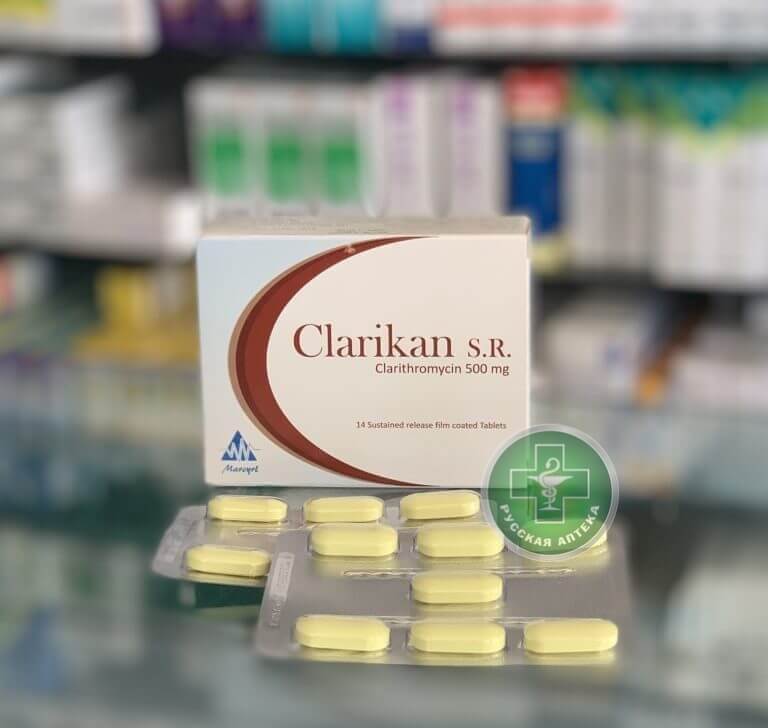
Clarikan SR 500 mg 14 tablets
158£
View analogsTreatment of infectious and inflammatory diseases caused by pathogens sensitive to clarithromycin: infections of the upper respiratory tract and ENT organs (tonsillopharyngitis, otitis media, acute sinusitis); infections of the lower respiratory tract (acute bronchitis, exacerbation of chronic bronchitis, community-acquired bacterial and atypical pneumonia); odontogenic infections; infections of the skin and soft tissues; mycobacterial infections (M.avium complex, M.kansasii, M.marinum, M.leprae) and their prevention in AIDS patients; eradication of Helicobacter pylori in patients with peptic ulcer of the duodenum or stomach (only in combination therapy).
Buy
Product quantities
Form of Release: Tablets
Product Brand:
Marcyrl Pharmaceutical Industries
About the brand


Clarikan SR 500 mg 14 tablets
Composition:
Each tablet contains:
Clarithromycin 500 mg
Auxiliary components:
corn starch, microcrystalline cellulose, sodium starch glycolate, purified talc, povidone K-30, magnesium stearate; sheath: Opadry Il pink.
Properties:
Semi-synthetic antibiotic of the macrolide group. Suppresses the synthesis of proteins in the microbial cell, interacting with the 50S ribosomal subunit of bacteria. Acts mainly bacteriostatic and bactericidal.
Active against gram-positive aerobic microorganisms – Staphylococcus aureus,
Streptococcus pyogenes, Streptococcus pneumonia, Listeria monocytogenes; aerobic gram-negative microorganisms – Haemophilus influenzae, Haemophilus parainfluenzae, Moraxella (Branhamella) catarrhalis, Neisseria gonorrhoea, Legionella pneumophila, Helicobacter pylori; mainly intracellular microorganisms – Mycoplasma pneumonia, Chlamydia pneumonia (TWAR),
Mycobacterium leprae, Mycobacterium kansaii, Mycobacterium chelonae, Mycobacterium fortitum, Mycobacterium avium complex (MAC) – a complex including Mycobacterium avium, Mycobacterium.
Indications:
Treatment of infectious and inflammatory diseases caused by pathogens sensitive to clarithromycin: infections of the upper respiratory tract and ENT organs (tonsillopharyngitis, otitis media, acute sinusitis); infections of the lower respiratory tract (acute bronchitis, exacerbation of chronic bronchitis, community-acquired bacterial and atypical pneumonia); odontogenic infections; infections of the skin and soft tissues; mycobacterial infections (M.avium complex, M.kansasii, M.marinum, M.leprae) and their prevention in AIDS patients; eradication of Helicobacter pylori in patients with peptic ulcer of the duodenum or stomach (only in combination therapy).
Method of administration and dosage:
The optimal dosage regimen is determined by the doctor. The compliance of the used dosage form of a particular drug with indications for use and dosage regimen should be strictly observed.
Individual. When administered orally for adults and children over 12 years of age, a single dose is 0.25-1 g, the frequency of administration is 2 times / day.
For children under 12 years of age, the daily dose is 7.5-15 mg / kg / day in 2 divided doses.
In children, clarithromycin should be used in the appropriate dosage form for this patient category.
The duration of treatment depends on the indications.
For patients with impaired renal function (CC
less than 30 ml / min or serum creatinine level more than 3.3 mg / dL), the dose should be halved or the interval between doses should be doubled.
Maximum daily doses: for adults – 2 g, for children – 1 g.
History of prolongation of the QT interval, ventricular arrhythmia or ventricular tachycardia of the “pirouette” type; hypokalemia (risk of lengthening the QT interval); severe liver failure, concurrent with renal failure; a history of cholestatic jaundice / hepatitis with clarithromycin; porphyria; I trimester of pregnancy; lactation period
(breastfeeding); simultaneous administration of clarithromycin with astemizole, cisapride, pimozide, terfenadine; with ergot alkaloids, for example, ergotamine, dihydroergotamine; with oral midazolam; with inhibitors of HMG-CoA reductase (statins), which are largely metabolized by the CYP3A4 isoenzyme (lovastatin, simvastatin), with colchicine; with ticagrelor or ranolazine; hypersensitivity to clarithromycin and other macrolides.
Precautions:
Cross-resistance is observed between antibiotics from the macrolide group.
Antibiotic treatment alters the normal intestinal flora, so superinfection with resistant organisms may develop.
It should be borne in mind that severe persistent diarrhea may be due to the development of pseudomembranous colitis.
Prothrombin time should be monitored periodically in patients receiving clarithromycin concomitantly with warfarin or other oral anticoagulants.
Side effects:
From the digestive system: often – diarrhea, vomiting, indigestion, nausea, pain in the abdomen.
Allergic reactions: often – rash; infrequently anaphylactoid reaction, hypersensitivity, bullous dermatitis, pruritus, urticaria, maculopapular rash.
On the part of the skin: often – intense sweating; frequency unknown – acne, hemorrhage.
From the senses: often – dysgeusia; infrequently – vertigo, hearing impairment, ringing in the ears; the frequency is unknown deafness, ageusia, parosmia, anosmia.
From the side of the cardiovascular system: often – vasodilation.
Local reactions: very often – phlebitis at the injection site, often – pain at the injection site, inflammation at the injection site.
On the part of the body as a whole:
infrequently – malaise, hyperthermia, asthenia, chest pain, chills, fatigue.
Storage method:
At a temperature not higher than 30 degrees. In a dry place.
Packaging:
The cardboard box holds 1 or 2 blisters of 7.
Tags, Keywords:
Active Ingredients:
No comments yet. Be the first to write one.
Your comment will be published after moderation.
You’ll receive a notification to your email when someone replies.