Русский
 English
 عربي
عربي
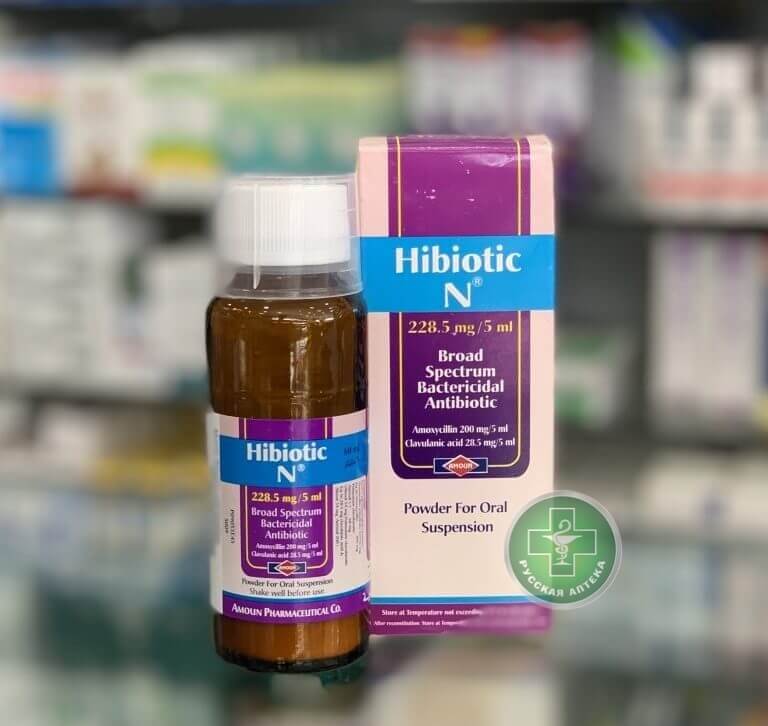
Hibiotic N 228.5 mg/5 ml Powder for suspension 60 ml
53£
View analogsTreatment of infectious and inflammatory diseases caused by sensitive pathogens: lower respiratory tract infections (bronchitis, pneumonia, pleural empyema, lung abscess); ENT infections (sinusitis, tonsillitis, otitis media); infections of the genitourinary system and pelvic organs (pyelonephritis, pyelitis, cystitis, urethritis, prostatitis, cervicitis, salpingitis, salpingo-oophoritis, tubo-ovarian abscess, endometritis, bacterial vaginitis, septic abortion, postpartum sepsis, pelvioperitonitis, soft chancre); infections of the skin and soft tissues (erysipelas, impetigo, secondarily infected dermatoses, abscess, phlegmon, wound infection); osteomyelitis; postoperative infections. Prevention of infections in surgery.
Buy
Product quantities
Form of Release: Powder
Product Brand:
Amoun Pharmaceutical Co.S.A.E
About the brand
Product Categories: Antibiotics • Antibiotics for tonsillitis • Antibiotics for bronchitis • Antibiotics for sinusitis • Broad spectrum antibiotics


Hibiotic N 228.5 mg/5 ml Powder for suspension 60 ml
Composition:
Each 5 ml of the finished suspension contains:
Amoxicillin 200 mg
Clavulanic acid 28.5 mg
Auxiliary components:
colloidal silicon dioxide, succinic acid, hypromellose, xanthan gum, strawberry flavor, aspartame, silicon dioxide.
Properties:
A combined preparation of amoxicillin and clavulanic acid – a beta-lactamase inhibitor. Acts bactericidal, inhibits the synthesis of the bacterial wall.
Active against aerobic gram-positive bacteria
(including strains producing beta-lactamase): Staphylococcus aureus; aerobic gram-negative bacteria: Enterobacter spp., Escherichia coli, Haemophilus influenzae, Klebsiella spp.,
Moraxella catarrhalis. The following pathogens are sensitive only in vitro: Staphylococcus epidermidis, Streptococcus pyogenes, Streptococcus anthracis, Streptococcus pneumoniae, Streptococcus viridans,
Enterococcus faecalis, Corynebacterium spp., Listeria monocytogenes; anaerobic Clostridium spp., Peptococcus spp., Peptostreptococcus spp .; as well as aerobic gram-negative bacteria (including strains producing betalactamases): Proteus mirabilis, Proteus vulgaris, Salmonella spp., Shigella spp., Bordetella pertussis, Yersinia enterocolitica,
Gardnerella vaginalis, Neisseria meningitidis,
Neisseria gonorrhoeae, Haemophilus ducreyi,
Yersinia multocida (formerly Pasteurella),
Campylobacter jejuni; anaerobic gram-negative bacteria (including strains producing betalactamases): Bacteroides spp., including Bacteroides fragilis.
Clavulanic acid inhibits types Il, Ill, IV and V beta-lactamases, is inactive against type I beta-lactamases produced by Pseudomona aeruginosa, Serratia spp., Acinetobacter spp.
hiah trooism for
Ran penicillinases, due to which it forms a stable complex with the enzyme, which prevents the enzymatic degradation of amoxicillin under the influence of beta-lactamases.
Indications:
Treatment of infectious and inflammatory diseases caused by sensitive pathogens: lower respiratory tract infections (bronchitis, pneumonia, pleural empyema, lung abscess); ENT infections (sinusitis, tonsillitis, otitis media); infections of the genitourinary system and pelvic organs (pyelonephritis, pyelitis, cystitis, urethritis, prostatitis, cervicitis, salpingitis, salpingo-oophoritis, tubo-ovarian abscess, endometritis, bacterial vaginitis, septic abortion, postpartum sepsis, pelvioperitonitis, soft chancre); infections of the skin and soft tissues (erysipelas, impetigo, secondarily infected dermatoses, abscess, phlegmon, wound infection); osteomyelitis; postoperative infections. Prevention of infections in surgery.
Method of administration and dosage:
The drug is taken orally.
The dosage regimen is set individually, depending on the age, body weight, renal
function of the patient, as well as the severity of the infection.
For optimal absorption and to reduce possible side effects from the digestive system, Hibiotic@ is recommended to be taken at the beginning of a meal.
The minimum course of antibiotic therapy is 5 days.
Treatment should not continue for more than
14 days without revising the clinical situation.
For children from 3 months to 12 years old:
Frequency rate of admission – 2 times / day
Suspension of 200 mg / 28.5 mg in 5 ml:
Low doses of 25 mg / 3.6 mg / kg / day
High doses 45 mg / 6.4 mg / kg / day
Low doses of Hibiotic@ are used to treat infections of the skin and soft tissues, as well as recurrent tonsillitis.
High doses of Hibiotic@ are used to treat diseases such as otitis media, sinusitis, infections of the lower respiratory tract and urinary tract, infections of bones and joints.
Contraindications:
Hypersensitivity to drug components (including cephalosporins and other betalactam antibiotics); infectious mononucleosis (including when a measles-like rash appears); phenylketonuria; episodes of jaundice or liver dysfunction as a result of amoxicillin / clavulanic acid use in history; CC less than 30 ml / min (for tablets 875 mg / 125 mg).
Carefully:
Pregnancy, lactation period, severe liver failure, gastrointestinal diseases (including a history of colitis associated with the use of penicillins), chronic renal failure.
Precautions:
During the course of treatment, it is necessary to monitor the state of the function of the hematopoietic organs, liver and kidneys.
In order to reduce the risk of side effects from the gastrointestinal tract, the drug should be taken with meals.
It is possible to develop superinfection due to the growth of microflora insensitive to it, which requires a corresponding change in antibiotic therapy.
May give false positive results for urine glucose. In this case, it is recommended to use the glucose oxidant method for determining the concentration of glucose in urine.
In patients with hypersensitivity to penicillins, cross-allergic reactions with cephalosporin antibiotics are possible.
Side effects:
From the digestive system: nausea, vomiting, diarrhea, gastritis, stomatitis, glossitis, increased activity of hepatic transaminases, in isolated cases – cholestatic jaundice, hepati liver failure (more often in the elderly, men, with prolonged therapy), pseudomembranous and hemorrhagic colitis ( can also develop after therapy), enterocolitis, black “hairy” tongue, darkening of tooth enamel.
From the side of hematopoietic organs: a reversible increase in prothrombin time and bleeding time, thrombocytopenia, thrombocytosis, eosinophilia, leukopenia, agranulocytosis, hemolytic anemia.
From the nervous system: dizziness, headache, hyperactivity, anxiety, change in behavior, seizures.
Local reactions: in some cases – phlebitis at the intravenous injection site.
Allergic reactions: urticaria, erythematous rash, rarely – exudative erythema multiforme, anaphylactic shock, angioedema, extremely rarely – exfoliative dermatitis, malignant exudative erythema (Stevens-Johnson syndrome), serous allergic vasculitis, pustular syndrome, similar to acute exothermic …
Others: candidiasis, development of superinfection, interstitial nephritis, crystalluria,
Storage method:
At a temperature not higher than 30 degrees. After opening and reconstitution, refrigerate and use within 7 days.
Packaging:
The carton contains the suspension powder and glass bottle, paper instructions.
Tags, Keywords:
Active Ingredients:
No comments yet. Be the first to write one.
Your comment will be published after moderation.
You’ll receive a notification to your email when someone replies.