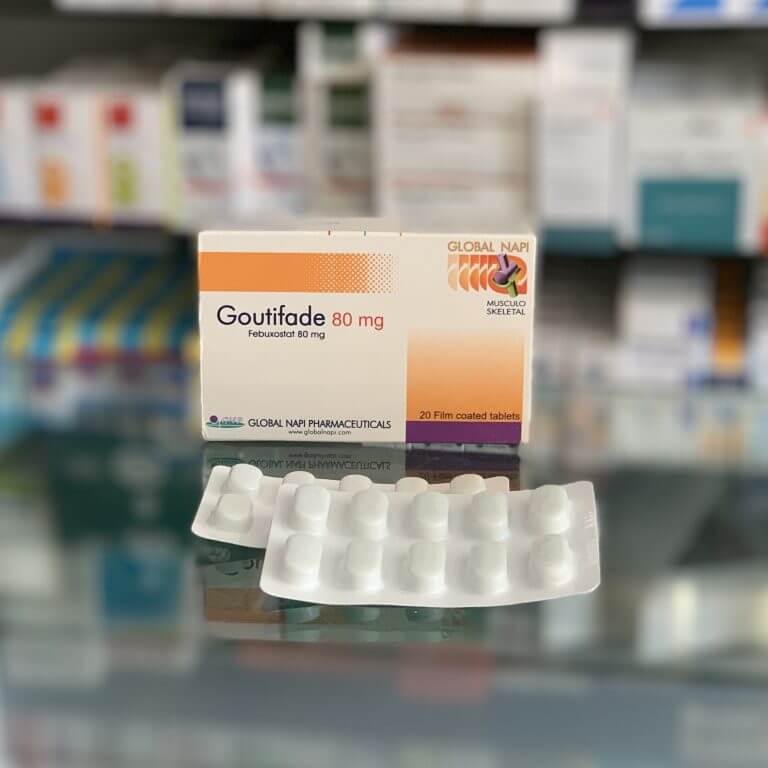
Goutifade 80 mg 20 tablets
Tradename:
Goutifade
Composition:
Each tablet contains:
Febuxostat 80 mg
Auxiliary components: lactose monohydrate, hyprolose, microcrystalline cellulose (Avicel PH 101), microcrystalline cellulose (Avicel PH 102), croscarmellose sodium, magnesium stearate, water colloidal silicon dioxide.
Properties:
Selective non-purine xanthine oxidase inhibitor, 2-arylthiazole derivative. The enzyme xanthine oxidase catalyzes two stages of purine metabolism: the oxidation of hypoxanthine to xanthine, and then the oxidation of xanthine to uric acid. As a result of febuxostat selective inhibition of xanthine oxidase (oxidized and reduced forms), the concentration of uric acid in the blood serum decreases. The in vitro inhibition constant is less than 1 nM. At therapeutic concentratiofebuxostat does not inhibit other enzymes involved in the metabolism of purines or pyrimidines, such as guanine deaminase, hypoxanthine guanine phosphoribosyltransferase, orotatephosphoribosyltransferase, orotidine monophosphate decarboxylase or purine nucleosylase. The use of febuxostat leads to a more effective reduction in the concentration of uric acid and maintenance of its level in the blood serum compared with allopurinol. There were no clinically significant differences in the degree of decrease in the concentration of uric acid in the blood serum compared with healthy volunteers (the decrease in the concentration of uric acid in the group of patients with normal renal function is 58%, in the group with severe renal failure – 55%). When using febuxostat for the prevention and treatment of tumor disintegration syndrome, a more intense and rapid decrease in serum uric acid concentration was observed compared with allopurinol. There were no clinically significant differences in the degree of decrease in the concentration of uric acid in the blood serum compared with healthy volunteers (the decrease in the concentration of uric acid in the group of patients with normal renal function is 58%, in the group with severe renal failure 55%). When using febuxostat for the prevention and treatment of tumor disintegration syndrome, a more intense and rapid decrease in serum uric acid concentration was observed compared with allopurinol. There were no clinically significant differences in the degree of decrease in the concentration of uric acid in the blood serum compared with healthy volunteers (the decrease in the concentration of uric acid in the group of patients with normal renal function is 58%, in the group with severe renal failure – 55%). When using febuxostat for the prevention and treatment of tumor disintegration syndrome, a more intense and rapid decrease in serum uric acid concentration was observed compared with allopurinol.
Indications:
Treatment of chronic hyperuricemia in conditions accompanied by the deposition of urate crystals (in the presence of tophus and / or gouty arthritis, including a history).
Treatment and prevention of hyperuricemia in adult patients during cytostatic therapy of hemoblastosis with a moderate to high risk of tumor disintegration syndrome (only for a dose of 120 mg).
Method of administration and dosage:
The optimal dosage regimen is determined by the doctor. It is necessary to strictly observe the compliance of the used dosage form of a particular drug with the indications for use and the dosage regimen. Is taken internally. The dose is 40 mg or 80 mg 1 time / day. The duration of treatment is set individually, depending on the indications. The goal of treatment is to reduce and maintain serum uric acid concentrations below 6 mg / dL (357 pmol / L). The drug is taken regardless of food intake.
Contraindications:
Pregnancy, breastfeeding period; children up to age 18; hypersensitivity to febuxostat.
Precautions:
Use with caution in the following diseases and conditions: severe renal failure (CC ml / min) (efficacy and safety have not been studied enough); liver failure; a history of serious allergic reactions (hypersensitivity reactions); Ischemic heart disease; congestive heart failure; thyroid disease; simultaneous use with mercaptopurine / azathioprine (it is possible to increase the concentration of these substan in the blood plasma and increase their toxic conditions after organ transplantation
(experience with febuxostat is limited); LeschNihan syndrome (experience with febuxostat is limited). Febuxostat should only be started after an acute gout attack has subsided. The use of febucostat can provoke the development of an acute attack of gout due to the release of urates from tissue depots and a subsequent increase in the concentration of uric acid in the blood serum. For the prevention of gout attacks, the simultaneous use of NSAlDs or colchicine is recommended for at least 6 months. Patients should be informed of the possible signs and symptoms of allergic reactions (hypersensitivity reactions), and should be closely monitored for the development of symptoms of allergic / hypersensitivity reactions. In case of severe allergic / hypersensitivity reactions, including Stevens-Johnson syndrome, the use of febuxostat should be discontinued immediately (earlier withdrawal is associated with a better prognosis).
Side effects:
From the nervous system: often – headache;
From the side of metabolism: often – gout attacks; infrequently – diabetes mellitus, hyperlipidemia, decreased appetite, weight
gain, increased concentration of urea in blood plasma;
From the digestive system: often – diarrhea (more often with the simultaneous use of colchicine), nausea; infrequently – abdominal pain, bloating;
From the liver and biliary tract: often – liver dysfunction (more often with the simultaneous use of colchicine);
From the reproductive system: infrequently erectile dysfunction.
General reactions: often – edema; infrequently increased fatigue, chest pain, discomfort in the chest area.
Storage method:
At a temperature not higher than 30 degrees. In a dry place.
Packaging:
The cardboard box holds 2 or 3 blisters of 1 tablets.
 Русский
 English
 عربي
عربي