Русский
 English
 عربي
عربي
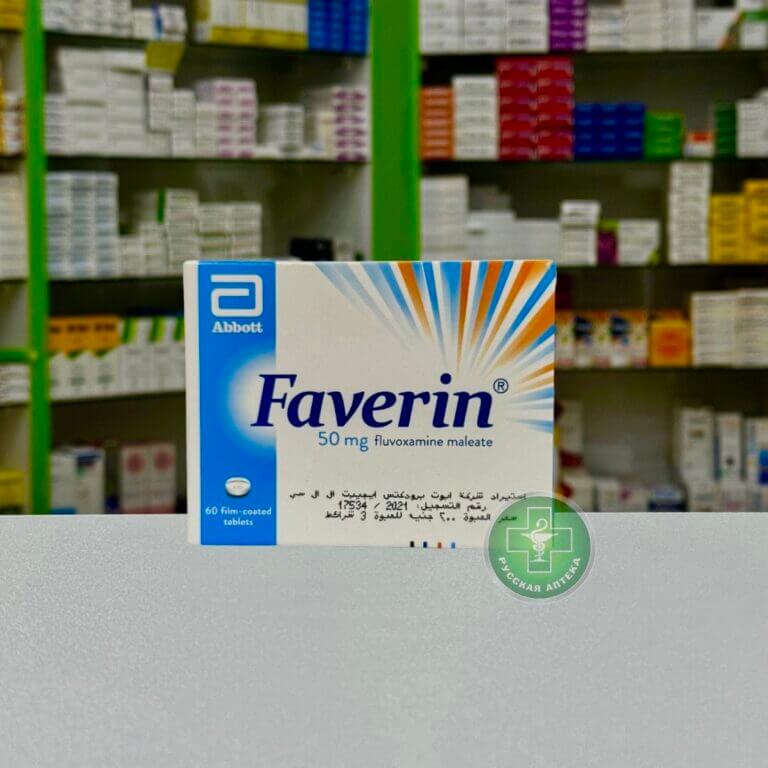
Faverin 50 mg 60 tablets
262£
View analogs- Major depressive episode
- Obsessive Compulsive Disorder (OCD).
Buy
Product quantities
Form of Release: Tablets
Product Brand:
Abbott Laboratories
About the brand
Product Categories: Mental disorders


Faverin 50 mg 60 tablets
Composition:
Each film-coated tablet contains 50 mg fluvoxamine maleate.
Indications:
- Major depressive episode
- Obsessive Compulsive Disorder (OCD)
Posology and method of administration:
Depression:
Adults: The recommended dose is 100 mg daily. The starting dose is 50 or 100 mg, taken once a day, preferably in the evening.
Children /young people aged up to 18 years
Faverin must not be used in children and young people aged up to 18 years to treat major depressive episodes.
Obsessive-compulsive disorder (OCD)
Adults: The recommended dosage is between 100 and 300 mg daily. The starting dose is 50 mg daily.
Children / young people aged up to lo years
There are limited data available on the treatment of children aged over 8 years and young people aged up to 18 years with a dose of up to 100 mg twice a day for 10 weeks. The initial dose is 25 mg per day. This dose is increased every 4-7 days by 25 mg, if tolerated, until an effective dose is reached. In children a maximum dose of 200 mg/day must not be exceeded.
Liver or kidney insufficiency:
In patients with liver or kidney insufficiency the treatment with a low dose should be started under careful supervision.
Method of administration:
The fluvoxamine tablets must be taken without chewing and with water.
Contraindications
-Faverin tablets may not be taken in combination with tizanidine and MAO inhibitors.
-Faverin tablets should not be used in combination with pimozide.
-Hypersensitivity to fluvoxamine maleate or to any of the excipients.
Special warnings and precautions for use:
-Suicide/suicidal thoughts or clinical worsening
Depression is associated with an increased risk of suicidal thoughts, self-harm and suicide (suicide-related events). This risk persists until significant remission occurs. As improvement may not occur during the first few weeks or more of treatment, patients should be closely monitored until such improvement occurs.
-Pediatric population
Fluvoxamine should not be used in the treatment of children and adolescents under the age of 18 years, except for patients with Obsessive Compulsive Disorder.
-Renal and hepatic impairment
Patients suffering from hepatic or renal insufficiency should start on a low dose and be carefully monitored.
-Psychiatric Disorders
Fluvoxamine should be used with caution in patients with a history of mania/hypomania. Fluvoxamine should be discontinued in any patient entening a manic phase.
-Eye Disorders:
Mydriasis has been reported in association with SSRis such as fluvoxamine. Therefore, caution should be used when prescribing fluvoxamine in patients with raised intraocular pressure or those at risk of acute narrow angle glaucoma.
-Hematological disorders:
There have been reports of the following haemorrhagic disorders: gastrointestinal bleeding, gynecological hemorrhage, SSRIs/SNRIs may increase the risk of postpartum hemorrhage, and other cutaneous or mucous bleeding with SSRis. Caution is advised in patients taking SSRis particularly in elderly patients and in patients who concomitantly use drugs known to affect platelet function (e.g. atypical antipsychotics and phenothiazines, most TCAs, acetylsalicylic acid, NSAIDs) or drugs that increase risk of bleeding, as well as in patients with a history of bleeding and in those with predisposing conditions (e.g. thrombocytopenia or coagulation disorders).
-Cardiac disorders
Fluvoxamine should not be co-administered with terfenadine, astemizole or cisapride as plasma concentrations may be increased resulting in a higher risk for QT prolongation/Torsade de Pointes.
-Dermatological effects
Serious skin reactions, some of them fatal, including erythema multiforme, Stevens-Johnson syndrome and toxic epidermal necrolysis, have been reported in association with fluvoxamine.
-Sexual dysfunction
Selective serotonin reuptake inhibitors (SSRIs) / serotonin noradrenaline reuptake inhibitors (SNRIs) may cause symptoms of sexual dysfunction.
Pregnancy and lactation:
Faverin should not be used during pregnancy, unless the clinical condition of the woman requires treatment with fluvoxamine.
Lactation:
Fluvoxamine is excreted via human milk in small quantities. Therefore, the drug should not be used by women who breastfeed.
Side Effects:
Anorexia
Agitation, nervousness, anxiety, insomnia, somnolence, tremor, headache, dizziness
Palpitations / tachycardia
Abdominal pain, constipation, diarrhea,
dry mouth, dyspepsia, nausea, vomiting
Hyperhidrosis, sweating
Asthenia, malaise
Hallucination, confusional stage, aggression
Extrapyramidal disorder, ataxia
Storage Method:
Do not store above 25°C
Store in the original package in order to protect from direct sunlight and in dry place
Keep this medicine out of the reach and sight of children.
Package:
Carton box contains blisters 10 tablets each, a total 60 tablets, and a leaflet.
Tags, Keywords:
Active Ingredients:
No comments yet. Be the first to write one.
Your comment will be published after moderation.
You’ll receive a notification to your email when someone replies.