Русский
 English
 عربي
عربي
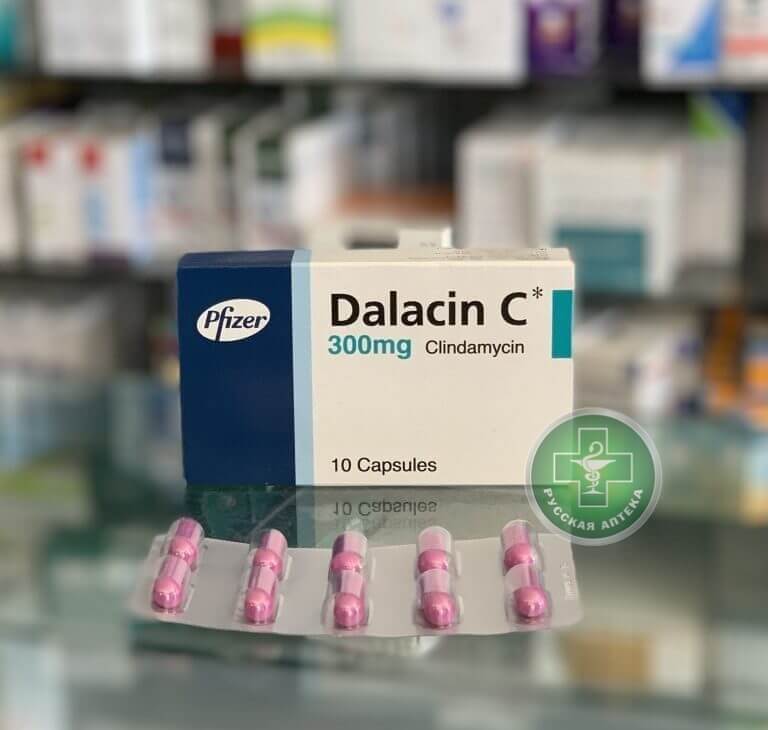
Dalacin C 300 mg 10 capsules
114£
View analogs- infectious and inflammatory diseases caused by microorganisms sensitive to clindamycin;
- infections of the upper respiratory tract and infections of the ENT organs (pharyngitis, tonsillitis, sinusitis, otitis media), lower respiratory tract infections (pneumonia, including aspiration, lung abscess, pleural empyema, bronchitis), scarlet fever, diphtheria;
- infection of the urogenital tract (chlamydia, endometritis, vaginal infections, tubo-ovarian inflammation);
- infections of the skin and soft tissues (infected wounds, abscesses, boils, panaritium), abdominal cavity (peritonitis, abscess), oral cavity;
- acute and chronic osteomyelitis; -septicemia (primarily anaerobic);
- bacterial endocarditis;
- prevention of peritonitis and intra-abdomi abscesses after intestinal perforation or as result of traumatic infection (in combination with aminoglycosides).
Buy
Product quantities
Form of Release: Capsules
Product Brand:
Pfizer
About the brand
Product Categories: Antibiotics • Antibiotics for tonsillitis • Antibiotics for otitis


Dalacin C 300 mg 10 capsules
Composition:
Each capsule contains:
Clindamycin hydrochloride 300 mg
Auxiliary components:
Starch, lactose monohydrate, talc, magnesium age.
Properties:
Clindamycin is a drug from the group of antibiotics – lincosamides, has a broad spectrum of action, bacteriostatic, binds to the 50S ribosome subunit and inhibits protein synthesis in microorganisms. Active against Staphylococcus spp. (including Staphylococcus epidermidis, producing penicillinase),
Streptococcus spp. (excluding Enterococcus spp.), Streptococcus pneumoniae, anaerobic and microaerophilic gram-positive cocci (including Peptococcus spp. and
Peptostreptococcus spp.), Corynebacteriumdiphtheriae, Clostridium perfringens, Clostridium tetani., Bspp. spp. (including Bacteroidesfragilis and Bacteroidesmelaningenicus), anaerobic gram-positive,
non-spore-forming bacilli (including Propionibacterium spp., Eubacterium spp., Actinomyces spp.).
Indications:
-infectious and inflammatory diseases caused by microorganisms sensitive to clindamycin;
- infections of the upper respiratory tract and infections of the ENT organs (pharyngitis, tonsillitis, sinusitis, otitis media), lower respiratory tract infections (pneumonia, including aspiration pneumonia, lung abscess, pleural empyema, bronchitis), scarlet fever, diphtheria;
-infection of the urogenital tract (chlamydia, endometritis, vaginal infections, tubo-ovarian inflammation);
-infections of the skin and soft tissues (infected wounds, abscesses, boils, panaritium), abdominal cavity (peritonitis, abscess), oral cavity;
- acute and chronic osteomyelitis;
-septicemia (primarily anaerobic);
- bacterial endocarditis;
- Prevention of peritonitis and intra-abdominal abscesses after intestinal perforation or as a result of traumatic infection (in combination with aminoglycosides).
Method of administration and dosage:
Inside, adults and children over 15 years old (average child weight 50 kg and above) with diseases of moderate severity are prescribed 1 capsule (150 mg) 4 times / day (every 6 hours).
For severe infections, adults and children over 15 years of age, a single dose can be increased to 2-3 capsules (300-450 mg).
-myasthenia gravis;
-bronchial asthma;
- ulcerative colitis (history);
- rare hereditary diseases, such as: – galactose intolerance, lactase deficiency or glucosegalactose malabsorption (for capsules);
-pregnancy;
- lactation period;
-Children up to 3 years old – for a solution for i / v and i / m administration (due to the lack of data on the safety of benzyl alcohol use);
-Children up to 8 years old for capsules (average child weight less than 25 kg);
-increased sensitivity.
Clindamycin is used with caution in patients with severe hepatic and / or renal insufficiency, in elderly patients.
Precautions:
Pseudomembranous colitis can appear both while taking clindamycin and 2-3 weeks aft stopping treatment (3-15% of cases); manifested by diarrhea, leukocytosis, fever,
abdominal pain (sometimes accompanied by the release of blood and mucus with feces).
If these phenomena occur in mild cases, it is sufficient to discontinue treatment and use ion-exchange resins (colestyramine, colestipol), in severe cases, it is shown to compensate for the loss of fluid, electrolytes and protein, the appointment ofvancomycin by mouth or metronidazole.
Do not use drugs that inhibit intestinal peristalsis.
Side effects:
From the digestive system: dyspepsia
(abdominal pain, nausea, vomiting, diarrhea), esophagitis, jaundice, liver dysfunction, hyperbilirubinemia, dysbiosis, pseudomembranous enterocolitis.
From the side of the musculoskeletal system: rarely – impaired neuromuscular conduction.
From the side of hematopoiesis: leukopenia neutropenia, agranulocytosis, thrombocytopenia.
Allergic reactions: rarely – maculopapular rash, urticaria, itching; in some cases, exfoliative and vesiculobullous dermatitis, eosinophilia, anaphylactoid reactions.
From the side of the cardiovascular system: with rapid intravenous administration – a decrease in blood pressure, up to collapse; dizziness, weakness.
Local reactions: irritation, soreness (at the place of i / m injection), thrombophlebitis (at the place of i / v injection).
Others: development of superinfection.
Storage method:
Store at a temperature not exceeding 30 degrees.
Packaging:
The cardboard box holds a blister of 10 capsules.
Tags, Keywords:
Active Ingredients:
No comments yet. Be the first to write one.
Your comment will be published after moderation.
You’ll receive a notification to your email when someone replies.