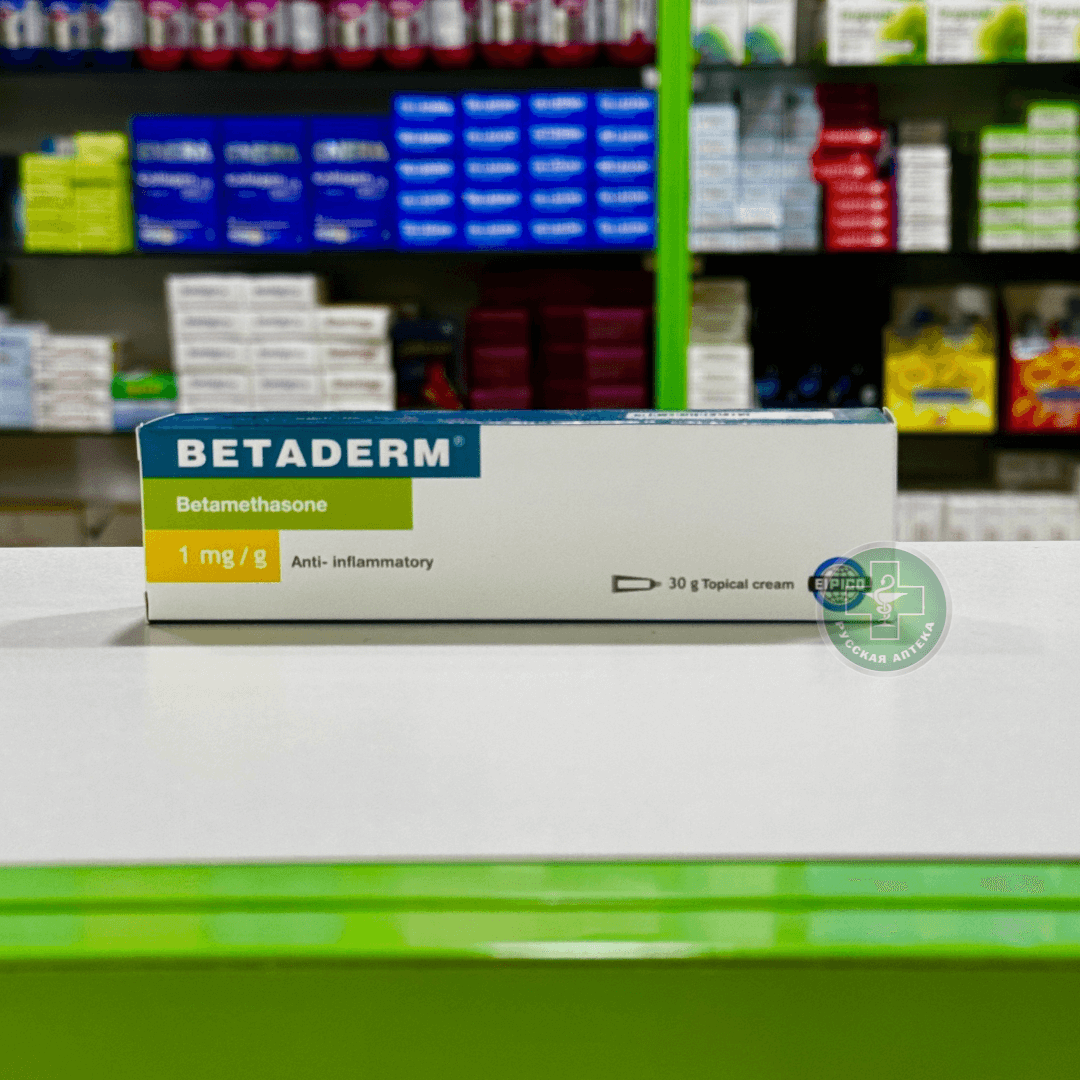
Betaderm 1 mg Cream 30 g
Composition:
Each 100 g of cream contains betamethasone 0.1 g.
Excipients include cetostearyl alcohol, sodium lauryl sulfate, white soft paraffin, sodium phosphate monobasic, chlorocresol, propylene glycol, purified water, and liquid paraffin.
Product Description:
- Betamethasone is a synthetic fluorinated corticosteroid for dermatological use with strong anti‑inflammatory, antipruritic, and vasoconstrictive effects.
- The mechanism of anti‑inflammatory action is not fully understood.
- It is believed that the drug reduces inflammatory processes by inhibiting the production of prostaglandins and leukotrienes through suppression of phospholipase A2 activity and reduction of arachidonic acid release from membrane phospholipids.
- As a result, erythema and exudation at the site of inflammation are reduced.
Indications for Use:
- Treatment of skin diseases responsive to corticosteroid therapy in the presence of secondary bacterial infection or risk of its development.
- Eczema.
- Atopic dermatitis.
- Neurodermatitis.
- Contact dermatitis including occupational dermatitis.
- Allergic dermatitis.
- Psoriasis.
- Lichen planus.
- Seborrheic dermatitis.
- Exfoliative dermatitis.
- Radiation dermatitis.
- Infected dermatoses resulting from insect bites, scabies, and intertrigo.
Method of Administration and Dosage:
- The cream is applied externally.
- Apply a thin layer to the affected area of skin once or twice daily, gently rubbing in.
- On areas with thicker skin such as elbows, palms, and soles, or on sites where the cream is easily removed, more frequent application is possible but not more than four times daily.
- The frequency of use should be determined by the physician depending on the severity of the condition. In mild cases once daily application is usually sufficient, while in more severe cases more frequent use may be required.
- The duration of treatment depends on the severity, localization, and patient response.
- In chronic conditions therapy should continue for three to seven days after disappearance of symptoms.
- The duration of treatment should not exceed two to four weeks.
Contraindications:
- Hypersensitivity to betamethasone, excipients, or corticosteroids.
- Varicella.
- Fungal skin infections.
- Viral skin infections including herpes simplex and herpes zoster.
- Open wounds.
- Acne and rosacea.
- Perioral dermatitis.
- Skin atrophy.
- Perianal and genital pruritus.
- Pregnancy during prolonged treatment of large skin areas.
Precautions:
If signs of hypersensitivity or skin irritation occur during treatment, the patient should discontinue use and consult a physician.
Side Effects:
Skin and subcutaneous tissue reactions may include burning, itching, irritation, dryness, folliculitis, hypertrichosis, steroid acne, hypopigmentation, perioral dermatitis, allergic contact dermatitis, telangiectasia, skin maceration, skin atrophy, striae, miliaria, secondary skin infections, changes in pigmentation, and hair depigmentation.
Rash, itching, swelling, erythema, and other signs of skin irritation may also occur.
Pregnancy and Lactation:
Use is permitted only under medical supervision.
Storage Conditions:
Store in a dry, cool place at a temperature not exceeding 30°C.
Keep out of the reach of children.
Packaging:
Carton box containing an aluminum tube of 30 g and a paper insert.
 Русский
 English
 عربي
عربي