Русский
 English
 عربي

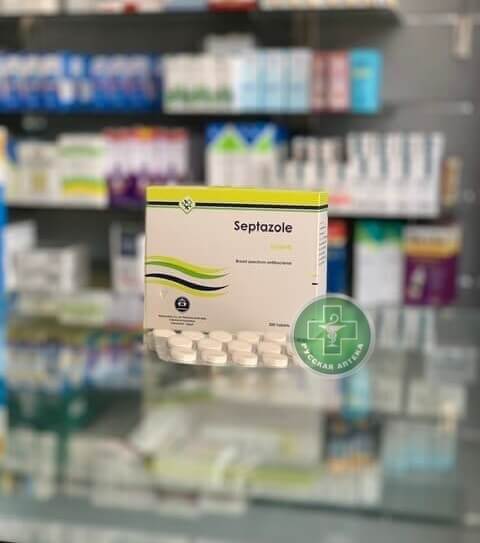
Septazole 200 tablets
340£
View analogsTreatment of infectious and inflammatory diseases caused by microorganisms sensitive to the drug: – respiratory tract infections (including bronchitis, pneumonia, lung abscess, pleural empyema); -otitis, sinusitis; -infections of the genitourinary system (including pyelonephritis, urethritis, salpingitis, prostatitis); -gonorrhea; – gastrointestinal tract infections (including typhoid fever, paratyphoid fever, bacterial dysentery, cholera, diarrhea); infections of the skin and soft tissues (including furunculosis, pyoderma).
Buy
Product quantities
Form of Release: Tablets
Product Brand:
Alexandria Pharmaceutical Company
About the brand
Product Categories: Antibiotics


Septazole 200 tablets
Composition:
Active Ingredients:
Each tablet contains Sulfamethoxazole 400 mg and Trimethoprim 80 mg.
Excipients:
Potato starch, talc, magnesium stearate, polyvinyl alcohol.
Product Description:
- Septazol (co-trimoxazole) is a broad-spectrum, combination antibacterial medication containing sulfamethoxazole and trimethoprim in a 5:1 ratio.
- Its mechanism of action relies on a sequential dual blockade of bacterial folic acid synthesis:
Sulfamethoxazole inhibits the synthesis of dihydrofolic acid by competing with para-aminobenzoic acid (PABA).
Trimethoprim potentiates the activity of sulfamethoxazole by inhibiting the enzyme dihydrofolate reductase, preventing the conversion of dihydrofolic acid to tetrahydrofolic acid (the active form required for bacterial cell division). - The synergistic action of these components provides a bactericidal effect.
- Septazol is active against a wide range of Gram-positive and Gram-negative bacteria (including Escherichia coli, Klebsiella species, Proteus species, Salmonella species, Shigella species, Haemophilus influenzae, Streptococcus pneumoniae, Pneumocystis jirovecii), as well as certain protozoa (Toxoplasma gondii).
- It is not active against Pseudomonas aeruginosa, Treponema pallidum, Mycobacterium tuberculosis, or viruses.
Indications for Use:
- Treatment of infectious and inflammatory diseases caused by susceptible microorganisms:
- Respiratory Tract and ENT Infections: Acute and chronic bronchitis, pneumonia (including Pneumocystis pneumonia), lung abscess, pleural empyema, otitis media, sinusitis.
- Genitourinary Infections: Acute and chronic pyelonephritis, urethritis, cystitis, prostatitis, salpingitis, gonorrhea.
- Gastrointestinal Infections: Typhoid fever, paratyphoid fever, bacillary dysentery, cholera, gastroenteritis.
- Skin and Soft Tissue Infections: Furunculosis, pyoderma, wound infections.
Method of Administration and Dosage:
- Administered orally after meals with an adequate amount of fluid.
- Adults and Children over 12 Years:
Standard Dosage: 2 tablets (960 mg) twice daily (every 12 hours).
Long-term Therapy (longer than 14 days): 1 tablet (480 mg) twice daily.
Severe Infections: Single doses may be increased by 30–50%. - Treatment Duration: Typically 5 to 14 days.
- Monitoring of peripheral blood counts is required if treatment extends beyond 5 days.
Contraindications:
- Known hypersensitivity or allergic reaction to sulfamethoxazole, trimethoprim, sulfonamides, or any product excipients.
- Severe hepatic parenchymal damage or severe liver failure.
- Severe renal impairment (creatinine clearance less than 15 mL/min) where plasma concentration monitoring is unavailable.
- Blood disorders (aplastic, B12-deficiency, or megaloblastic anemia, leukopenia, agranulocytosis).
- Glucose-6-phosphate dehydrogenase (G6PD) deficiency (risk of hemolysis).
- Concomitant use with dofetilide, paclitaxel, amiodarone, or clozapine.
- Pregnancy and breastfeeding (lactation) period.
- Children under 3 years of age (for this dosage form).
Precautions:
- Allergic Reactions: Discontinue treatment immediately at the first sign of skin rash or any other hypersensitivity reaction.
- Pulmonary Reactions: If cough or shortness of breath appears or worsens, evaluate the patient for pulmonary infiltrates or allergic alveolitis and consider discontinuing treatment.
- Fluid Intake: Ensure adequate fluid consumption during therapy to prevent crystalluria and kidney stone formation.
- Sunlight Exposure: Avoid prolonged sun exposure and UV radiation due to the risk of photosensitivity.
- Use with Caution: In patients with folate deficiency, bronchial asthma, thyroid disorders, or elderly patients.
Adverse Reactions / Side Effects:
- Gastrointestinal System: Nausea, vomiting, diarrhea, abdominal pain, loss of appetite, stomatitis; rarely, elevated liver enzymes, hepatitis, cholestatic jaundice, pancreatitis.
- Hematopoietic System: Leukopenia, neutropenia, thrombocytopenia; rarely, agranulocytosis, megaloblastic or hemolytic anemia.
- Nervous System: Headache, dizziness; rarely, apathy, depression, tremor, peripheral neuritis.
- Urinary System: Crystalluria, blood in urine (hematuria), interstitial nephritis, elevated blood urea/creatinine levels.
- Allergic Reactions: Skin itching, rash, hives, photosensitivity; very rarely, Stevens-Johnson syndrome, toxic epidermal necrolysis, angioedema.
- Metabolic System: Hyperkalemia, hyponatremia, hypoglycemia.
Pregnancy and Lactation:
Strictly contraindicated during pregnancy and breastfeeding.
Breastfeeding must be discontinued if therapy is required during lactation.
Storage Conditions:
Store at a temperature not exceeding 30 °C in a dry place protected from light.
Keep out of reach of children.
Packaging:
Cardboard box containing 20 blisters of 10 tablets each (total of 200 tablets) and a patient information leaflet.
Tags, Keywords:
- respiratory tract infections
- respiratory tract infection
- treatment of respiratory diseases
- Treatment of respiratory tract infections
- bronchitis
- pneumonia
- Abscess
- lung abscess
- pleural empyema
- otitis
- sinusitis
- Sinusitis treatment
- Genitourinary tract infections
- Genitourinary tract infection
- pyelonephritis
- urethritis
- salpingitis
- prostatitis treatment
- gonorrhea
- gastrointestinal infections
- gastrointestinal infection
- typhoid fever
- paratyphoid
- bacterial dysentery
- cholera
- diarrhea
- diarrhea remedy
- diarrhea pills
- what to drink for diarrhea
- skin infections
- skin infections
- furunculosis
- pyoderma
Active Ingredients:
No comments yet. Be the first to write one.
Your comment will be published after moderation.
You’ll receive a notification to your email when someone replies.