Русский
 English
 عربي
عربي
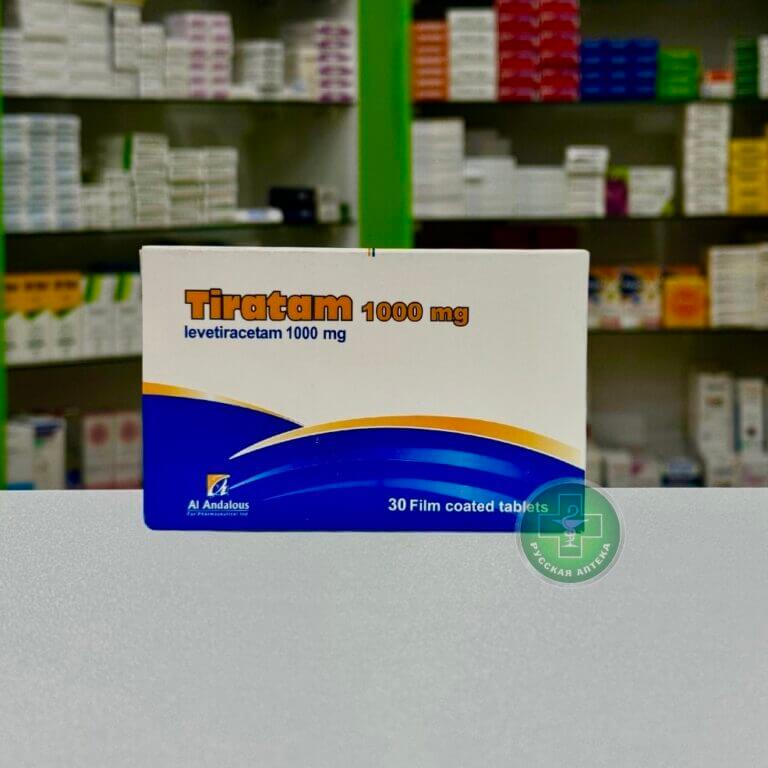
Tiratam 1000 mg 30 tablets
288£
View analogs- Tiratam is indicated for the treatment of partial-onset seizures in patients 1 month of age and older.
- TIRATAM is indicated as adjunctive therapy for the treatment of myoclonic seizures in patients 12 years of age and older with juvenile myoclonic epilepsy.
- TIRATAM is indicated as adjunctive therapy for the treatment of primary generalized tonic-clonic seizures in patients 6 years of age and older with idiopathic generalized epilepsy.
Buy
Product quantities
Form of Release: Tablets
Product Brand:
ِAlandalous pharmaceutical
About the brand
Product Categories: Brain and cerebral circulation • Epilepsy


Tiratam 1000 mg 30 tablets
Indications:
Tiratam is indicated for the treatment of partial-onset seizures in patients 1 month of age and older.
TIRATAM is indicated as adjunctive therapy for the treatment of myoclonic seizures in patients 12 years of age and older with juvenile myoclonic epilepsy.
TIRATAM is indicated as adjunctive therapy for the treatment of primary generalized tonic-clonic seizures in patients 6 years of age and older with idiopathic generalized epilepsy.
Dosage and Method of Administration:
TIRATAM is given orally with or without food. The TIRATAM dosing regimen depends on the indication, age group, dosage form (tablets or oral solution), and renal function.
TIRATAM tablets should be swallowed whole without division. TIRATAM tablets should not be chewed or crushed.
Dosing for Partial-Onset Seizures
The recommended dosing for monotherapy and adjunctive therapy is the same; as outlined below. Adults 16 Years of Age and Older
Initiate treatment with a daily dose of 1000 mg/day, given as twice-daily dosing (500 mg twice daily). Additional dosing increments may be given (1000 mg/day additional every 2 weeks to a maximum recommended daily dose of 3000 mg.
Dosing for Myoclonic Seizures in Patients 12 Years of Age and Older with Juvenile Myoclonic Epilepsy:
Initiate treatment with a dose of 1000 mg/day, given as twice-daily dosing (500 mg twice daily. Increase the dosage by 1000 mg/day every 2 weeks to the recommended daily dose of 3000 mg.
Dosing for Primary Generalized Tonic-Clonic Seizures Adults 16 Years of Age and Older:
nitiate treatment with a dose of 1000 mg/day, given as twice-daily dosing 500 mg twice daily. Increase dosage by 1000 mg/day every 2 weeks to the recommended daily dose of 3000 mg. The effectiveness of doses lower than 3000 mg/day has not been adequately studied.
Pediatric Patients 6 to <16 Years of Age
Initiate treatment with a daily dose of 20 mg/kg in 2 divided doses (10 mg/kg twice daily).
Increase the daily dose every 2 weeks by increments of 20 mg/kg to the recommended daily dose of 60 mg/kg (30 mg/kg twice daily).
Dosage Adjustments in Adult Patients with Renal Impairment:
TRATAM dosing must be individualized according to the patient's renal function status.
Contraindications:
TIRATAM is contraindicated in patients with a hypersensitivity to levetiracetam. Reac tions have included anaphylaxis and angioedema.
Precautions:
-Behavioral Abnormalities and Psychotic Symptoms:
TIRATAM may cause behavioral abnormalities and psychotic symptoms. Patients treated with TIRATAM should be monitored for psychiatric signs and symptoms.
-Suicidal Behavior and Ideation:
Antiepileptic drugs (AEDs), including TIRATAM, increase the risk of suicidal thoughts or behavior in patients taking these drugs for any indication.
-Somnolence and Fatigue
TIRATAM may cause somnolence and fatigue. Patients should be monitored for these signs and symptoms and advised not to drive or operate machinery until they have gained sufficient experience on TIRATAM to gauge whether it adversely affects their ability to drive or operate machinery.
Somnolence and asthenia occurred most frequently within the first 4 weeks of treatment.
-Anaphylaxis and Angioedema:
TIRATAM can cause anaphylaxis or angioedema after the first dose or at any time during treatment. Signs and symptoms in cases reported in the postmarketing setting have included hypotension, hives, rash, respiratory distress, and swelling of the face, lip, mouth, eye, tongue, throat, and feet. In some reported cases, reactions were life- threatening and required emergency treatment.
-Serious Dermatological Reactions:
Serious dermatological reactions, including Stevens-Johnson syndrome (SUS) and toxic epidermal necrolysis (TEN), have been reported in both pediatric and adult patients treated with levetiracetam.
-Coordination Difficulties:
TIRATAM may cause coordination difficulties.
Patients should be monitored for these signs and symptoms and advised not to drive or operate machinery until they have gained sufficient experience on levetiracetam to gauge Whether it could adversely affect their ability to drive or operate machinery,
-Withdrawal Seizures:
As with most antiplleptic drugs, TIRATAM should generally be withdrawn gradually bes gause of the risk of Increased seizure frequency and status epilepticus. If withdrawal is needed because ea serious adverse reaction, rapid discontinuation can be considered.
-Hematologic Abnormalitles:
TIRATAM can cause hematologic abnormalies. Hematologic abnormalities occurred in clinical trials and included decreases in white blood cell (WBC), neutrophil, and red blood cel (RBC) counts; decreases in hemoglobin and hematocrit; and increases in eosinophil ported, Cases of agranule tosis, pancytopenla, and thrombocytopenia have beenents ported in the postmarketing setting. A complete blood count is recommended in patiens.
Increase in Blood Pressure:
QT Interval prolongation
Electrocardiogram QT interval prolongation Rare enaeke ting SCOT interval prolongation have been observed during the post-marketing surveillance.
Worsening of seizures
As with other types of antiepileptic drugs, levetiracetam may rarely exacerbate seizure severity. This paradoxical effect was mostly reported within the first frequency or month after levetiracetam initiation or increase of the dose, and was reversible upon drug discontinuation or dose decrease.
Side Effects:
• Behavior Abnormalities and Psychotic Symptoms
• Suicidal Behavior and Ideation
• Somnolence and Fatigue
• Anaphylaxis and Angioedema
• Serious Dermatological Reactions
• Coordination Difficulties
• Hematologic Abnormalities
• Cardiac disorders: Electrocardiogram QT prolonged
• Increase in Blood Pressure
Some possible sides effects:
-Fatigue, dizziness, somnolence and drowsiness, hypersensitivity reactions, hallucinations, and behavioral problems (including aggressive behavior, agitation, anger, anxiety, apathy, confusion, depersonalization, depression, emotional lability, hostility, dyskinesia, irritability, nervousness
-Increased blood pressure, vomiting, headache, nasopharyngitis, anorexia, constipation, decreased appetite, diarrhea, gastroenteritis, nausea, upper abdominal pain, bruise, eosinophilia, amnesia, anxiety, ataxia, confusion, depression, dizziness, arthralgia, joint sprain, neck pain, conjunctivitis, otalgia, cough, nasal congestion, pharyngitis, pharyngolaryngeal pain, rhinitis and sinusitis.
Pregnancy
Reporting suspected adverse reactions after marketing authorisation of the medicinal product is important. It allows constant monitoring of the benefit/risk balance of the medicinal product.
Warnings and Precautions
Physiological changes during pregnancy may affect levetiracetam concentration. Decrease in levetiracetam plasma concentrations has been observed during pregnancy.
This decrease is more pronounced during the third trimester. Dose adjustments may be necessary to maintain clinical response.
Lactation
Levetiracetam is excreted in human milk. There are no data on the effects of levetiracetam on the breastfed infant, or the effects on milk production.
The developmental and health benefits of breastfeeding should be considered along with the mother's clinical need for TIRATAM and any potential adverse effects on the breastfed infant from TIRATAM or from the underlying maternal condition.
Storage Method:
Store at temperature not exceeding 30 C.
Keep out from reach of children.
Package:
A carton box contains 3 blisters, 10 tablets in each and insert leaflet.
Tags, Keywords:
Active Ingredients:
No comments yet. Be the first to write one.
Your comment will be published after moderation.
You’ll receive a notification to your email when someone replies.