Русский
 English
 عربي
عربي

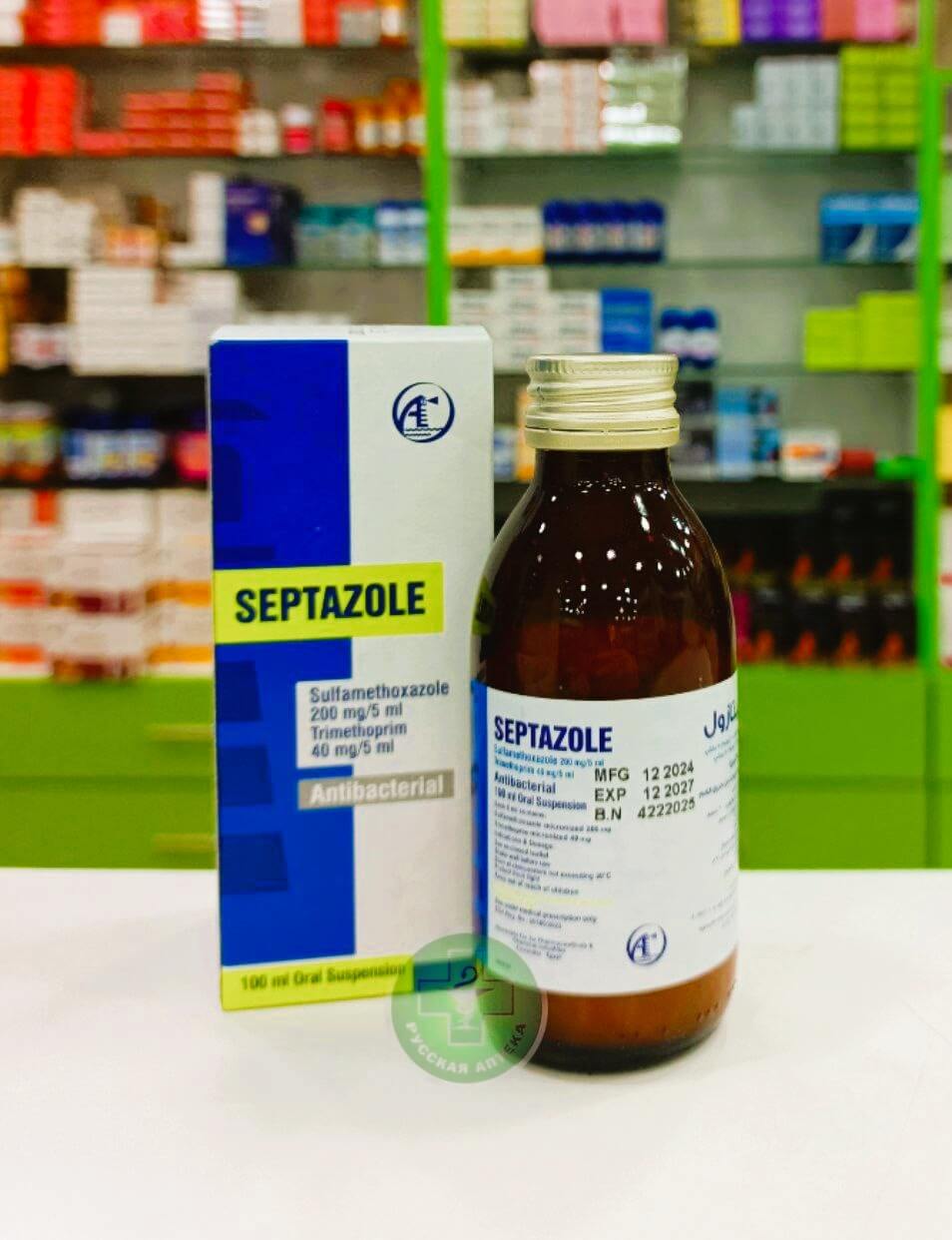
Septazole Suspension 100 ml
36£
View analogsTreatment of infectious and inflammatory diseases caused by microorganisms sensitive to the drug: – respiratory tract infections
(including bronchitis, pneumonia, lung abscess, pleural empyema); -otitis, sinusitis; -infections of the genitourinary system (including pyelonephritis, urethritis, salpingitis, prostatitis); -gonorrhea; – gastrointestinal tract infections (including typhoid fever, paratyphoid fever, bacterial dysentery, cholera, diarrhea); infections of the skin and soft tissues (including furunculosis, pyoderma).
Buy
Product quantities
Form of Release: Syrup
Product Brand:
Alexandria Pharmaceutical Company
About the brand
Product Categories: Antibiotics


Septazole Suspension 100 ml
Composition:
Each 5 ml of syrup contains:
Sulfamethoxazole 200 mg
Trimethoprim 40 mg
Auxiliary components:
macrogol glyceryl hydroxystearate, magnesium aluminosilicate, sodium carmellose, citric acid monohydrate, methyl parahydroxybenzoate, propyl parahydroxybenzoate, sodium saccharinate, sodium hydrogen phosphate dodecahydrate, maltitol liquid, strawberry flavor, propylene glycol, purified water.
Properties:
Combined antibacterial drug containing sulfamethoxazole and trimethoprim.
Sulfamethoxazole, similar in structure to PABA, disrupts the synthesis of dihydrofolic acid in bacterial cells, preventing the incorporation of PABA into its molecule.
Trimethoprim enhances the effect of sulfamethoxazole, disrupting the reduction of dihydrofolic acid to tetrahydrofolic acid, the active form of folic acid, which is responsible for protein metabolism and microbial cell division.
It is a broad-spectrum bactericidal drug.
Active against the following microorganisms: Streptococcus spp. (hemolytic strains are more sensitive to penicillin), Staphylococcus spp., Streptococcus pneumoniae, Neisseria meningitidis, Neisseria gonorrhoeae, Escherichia coli (including enterotoxogenic strains), Salmonella spp. (including Salmonella typhi and Salmonella paratyphi), Vibrio cholerae, Bacillus anthracis, Haemophilus influenzae (including ampicillin-resistant strains), Listeria spp., Nocardia asteroides, Bordetella pertussis, Enterococcus faecalis,
Klebsiella spp. , Brucella spp., Mycobacterium
spp. (including Mycobacterium leprae),
Citrobacter spp., Enterobacter spp., Legionella pneumopbila, Providencia, some Pseudomonas species (except Pseudomonas aeruginosa), Serratia marcescens, Shigella spp., Yersinia spp., Morganella spp., Pneumocystis carinii, Chlamydia spp. (including Chlamydia trachomatis, Chlamydia psittaci); protozoa Plasmodium spp., Toxoplasma gondii;
Actinomyces israelii; pathogenic fungi –
Coccidioides immitis, Histoplasma capsulatum; Leishmania spp.
Resistant to the drug: Corynebacterium spp., Pseudomonas aeruginosa, Mycobacterium tuberculosis, Treponema spp., Leptospira spp., Viruses.
It inhibits the vital activity of Escherichia coli, which leads to a decrease in the synthesis of thiamine, riboflavin, niacin and other B vitamins in the intestine.
The duration of the therapeutic action is 7 hours.
Indications:
Treatment of infectious and inflammatory
diseases caused by microorganisms sensitive to the drug: – respiratory tract infections
(including bronchitis, pneumonia, lung abscess, pleural empyema); -otitis, sinusitis; -infections of the genitourinary system (including pyelonephritis, urethritis, salpingitis, prostatitis); -gonorrhea; – gastrointestinal tract infections (including typhoid fever, paratyphoid fever, bacterial dysentery, cholera, diarrhea); infections of the skin and soft tissues (including furunculosis, pyoderma).
Method of administration and dosage:
The drug is taken orally after meals with a sufficient amount of liquid. The dose is set individually.
Children from 6 months to 5 years: – 240 mg, from 6 to 12 years – 480 mg every 12 hours, which approximately corresponds to a dose of 36 mg / kg per day.
In acute infections, the minimum duration of treatment is 5 days; after the disappearance of symptoms, therapy is continued for 2 days. If after 7 days of therapy clinical improvemen does not occur, the patient’s condition shou be re-evaluated for possible correction of treatment.
The duration of the course of treatment is from 5 to 14 days. In severe cases of the disease and / or in chronic infections, a single dose may be increased by 30-50%.
If the duration of the course of therapy is more than 5 days and / or an increase in the dose of the drug, it is necessary to control the picture of peripheral blood; when pathological changes appear, folic acid should be prescribed at a dose of 5-10 mg / day.
Contraindications:
- an established diagnosis of damage to the liver parenchyma;
- severe renal dysfunction in the absence of the ability to control the concentration of the drug in the blood plasma;
- severe renal failure (CC less than 15 ml / min);
-severe blood diseases (aplastic anemia, B deficiency anemia, agranulocytosis, leukopenia, megaloblastic anemia, anemia, hyperbilirubinemia in children associated with folic acid deficiency);
-deficiency of glucose-6-phosphate dehydrogenase (risk of hemolysis);
- simultaneous use with dofetelide, paclitaxel and amiodarone;
- simultaneous use with clozapine due to the ability of the latter to cause agranulocytosis;
-pregnancy;
-lactation;
-Children up to 3 years old (for this dosage form);
-increased sensitivity to drug components;
- hypersensitivity to co-trimoxazole, trimethoprim, sulfonamides.
The drug is prescribed with caution for folic acid deficiency in the body, bronchial asthma, thyroid diseases.
Precautions:
The drug should be prescribed only in cases where the advantage of such combination therapy over other antibacterial monopreparations outweighs the possible risk. Since the sensitivity of bacteria to antibacterial drugs in vitro varies in different geographic areas and over time, local characteristics of bacterial sensitivity should be taken into account when choosing a drug.
Hypersensitivity and allergic reactions:
At the first appearance of a skin rash or any other severe adverse reaction, the drug should be discontinued. Patients with a tendency to allergic reactions and with bronchial asthma should be prescribed Septazol@ with caution.
Infiltrates in the lungs (like eosinophilic or allergic alveolitis) can present with symptoms such as coughing or shortness of breath. If these symptoms appear or suddenly increa it is necessary to re-examine the patient an consider stopping treatment with Septazol@.
Side effects:
The drug is generally well tolerated.
From the nervous system: headache, dizziness; in some cases – aseptic meningitis, depression, apathy, tremor, peripheral neuritis.
From the respiratory system: bronchospasm, dyspnea, cough, pulmonary infiltrates.
From the digestive system: nausea, vomiting, decreased appetite, diarrhea, gastritis, abdominal pain, glossitis, stomatitis, cholestasis, increased activity of hepatic transaminases, hepatitis, sometimes with cholestatic jaundice, hepatonecrosis, pseudomembranous enterocolitis, pancreatitis.
From the hematopoietic system: leukopenia, neutropenia, thrombocytopenia, agranulocytosis, megaloblastic anemia, aplastic and hemolytic anemia, eosinophilia, hypoprothrombinemia, methemoglobinemia.
From the urinary system: polyuria, interstiti nephritis, renal impairment, crystalluria, hematuria, increased urea concentration,
hypercreatininemia, toxic nephropathy with oliguria and anuria.
From the musculoskeletal system: arthralgia, myalgia.
Allergic reactions: itching, photosensitivity, urticaria, drug fever, rash, exudative erythema multiforme (including Stevens-Johnson syndrome), toxic epidermal necrolysis (Lyell’s syndrome), exfoliative dermatitis, allergic myocarditis, fever from angioedema, hyperemia of the sclera.
From the side of metabolism: hypoglycemia, hyperkalemia, hyponatremia.
Storage method:
At a temperature not higher than 30 degrees. In a dark and dry place.
Packaging:
The cardboard box holds a 100 ml or 120 ml or 125 ml bottle.
Tags, Keywords:
- respiratory tract infections
- respiratory tract infection
- Treatment of respiratory tract infections
- treatment of respiratory diseases
- bronchitis
- pneumonia
- Abscess
- lung abscess
- abscesses
- pleural empyema
- otitis
- sinusitis
- Sinusitis treatment
- Genitourinary tract infections
- Genitourinary tract infection
- pyelonephritis
- urethritis
- salpingitis
- prostatitis
- prostatitis remedy
- gonorrhea
- gastrointestinal infections
- gastrointestinal infection
- typhoid fever
- paratyphoid
- bacterial dysentery
- cholera
- diarrhea
- diarrhea in adults
- skin infections
- skin infections
- furunculosis
- pyoderma
Active Ingredients:
No comments yet. Be the first to write one.
Your comment will be published after moderation.
You’ll receive a notification to your email when someone replies.