Русский
 English
 عربي
عربي
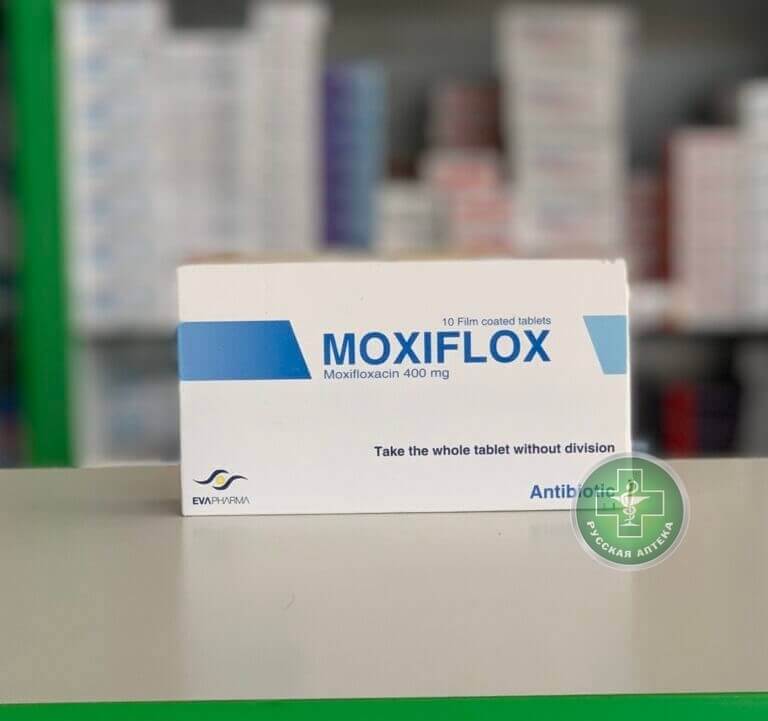
Moxiflox 400 mg 10 tablets
180£
View analogsMoxifloxacin should only be used to treat this infection when the usual antibiotics cannot be used or have not worked such as:
- Sinusitis
- Long-term bronchitis
- Out-of-hospital injury to the lungs (pneumonia) (except in severe cases)
- Mild to moderate infections of the female reproductive system
Buy
Product quantities
Form of Release: Tablets
Product Brand:
Eva Pharma
About the brand
Product Categories: Antibiotics • Antibiotics for bronchitis • Antibiotics for skin infections • Antibiotics for otitis • Broad spectrum antibiotics


Moxiflox 400 mg 10 tablets
Description:
Antibiotic belongs to Fluoroquinolone group used in the treatment of bacterial meningitis, pneumonia, rhinosinusitis, sexually transmitted infections, endophthalmitis, diabetic foot infection, chronic obstructive pulmonary disease and anthrax.
Active Ingredients:
Moxifloxacin hydrochloride 436,37 mg (equivalent to Moxifloxacin
400 mg)
Medical Uses:
Moxifloxacin should only be used to treat this infection when the usual antibiotics cannot be used or have not worked such as:
- Sinusitis
- Long-term bronchitis
- Out-of-hospital injury to the lungs (pneumonia) (except in severe cases)
- Mild to moderate infections of the female reproductive system
Indication & Usage:
- Bacterial meningitis: IV: 400 mg once daily as part of an appropriate combination regimen. Treatment duration is 7 to 21 days, depending on causative pathogen(s) and clinical response.
- Community-acquired pneumonia, outpatients with comorbidities and inpatients: Oral, IV: 400 mg once daily. For inpatients with severe pneumonia or risk factors for methicillin-resistant Staphylococcus aureus, use as part of an appropriate combination regimen. Duration is for a minimum of 5 days; patients should be clinically stable with normal vital signs prior to discontinuation.
- Acute bacterial rhinosinusitis: Oral: 400 mg once daily for 5 to 7 days.
- Sexually transmitted infections:
1- Mycoplasma genitalium: Oral: 400 mg once daily for 7 days.
2- Pelvic inflammatory disease: Oral: 400 mg once daily for 14 days.
- Tuberculosis:
1-Drug-susceptible tuberculosis: Oral, IV: 400 mg once daily in combination with additional appropriate antituberculosis agents.
2-Drug-resistant tuberculosis: Oral, IV: 400 mg once daily in combination with additional appropriate antituberculosis agents; doses of 600 or 800 mg once daily have been used in select cases. Duration: Individualize based on rapidity of culture conversion, extent of disease, and patient-specific factors, including clinical response and toxicity.
- Severe acute bacterial endophthalmitis(postcataract): Oral: 400 mg once daily for 5 to 7 days.
- Diabetic foot infection: Oral, IV: 400 mg once daily; for moderate to severe infections, use as part of an appropriate combination regimen. Duration of therapy should be tailored to individual clinical circumstances. Most patients with infection limited to skin and soft tissue respond to 1 to 2 weeks of therapy; for infections requiring surgical debridement, duration is usually 2 to 4 weeks.
- Chronic obstructive pulmonary disease: Oral, IV: 400 mg once daily for 5 to 7 days.
- Anthrax:
1-Inhalational (postexposure prophylaxis): Oral: 400 mg once daily. For those who have not previously received an anthrax vaccine, duration ranges from 42 to 60 days.
2-Cutaneous (without systemic involvement), treatment: Oral: 400 mg once daily; duration is 60 days following exposure.
3-Systemic infection (with or without meningitis): IV: 400 mg once daily as part of an appropriate combination regimen for 2 to 3 weeks or until clinically stable, whichever is longer.
- Prophylaxis of high-risk bite wound infection and treatment (animal or human bite): Oral, IV: 400 mg once daily. For prophylaxis, duration is 3 to 5 days; for treatment of established infection, duration is typically 5 to 14 days and varies based on clinical response and patient-specific factors.
- Pediatric dosing: In pediatric patients, fluoroquinolones are not routinely first-line therapy, but after assessment of risks and benefits, can be considered a reasonable alternative for situations where no safe and effective substitute is available.
- Multidrug resistant tuberculosis: In case of infants, children, and adolescents <15 years: IV, Oral: 10 mg/kg/dose every 24 hours; maximum dose: 400 mg/dose, while in case of adolescents 15 years: IV, Oral: 400 mg every 24 hours.
- Community-acquired pneumonia: Adolescents with skeletal maturity: Oral: 400 mg once daily.
Dosage & Administration:
Oral: Administer at least 4 hours before or 8 hours after products containing magnesium, aluminum, iron, or zinc, including antacids, sucralfate, multivitamins.
If you miss a dose: Administer as soon as possible if 8 hours until next scheduled dose; otherwise, wait until next scheduled dose.
Side Effects:
Headache, dizziness, insomnia, decreased serum glucose, hyperchloremia, increased serum albumin, hypokalemia, nausea, diarrhea, decreased amylase, constipation, vomiting, abdominal pain, dyspepsia, decreased basophils, decreased red blood cells, eosinopenia, increased MCH, increased neutrophils, leukocytosis, prolonged prothrombin time, anemia, decreased serum bilirubin, increased serum bilirubin, increased serum alanine aminotransferase, increased serum globulins, increased ionized serum calcium, hypoxia and fever.
Safety Advice:
-Should not be given to patients suffering from hypersensitivity to moxifloxacin.
-Fluoroquinolones may prolong QTc interval; so, avoid use in patients with known QTc prolongation, ventricular arrhythmias, hypokalemia, hypomagnesemia, or concurrent administration of other medications known to prolong the QT interval.
-Fluoroquinolones should not be used in patients with a known history of aortic aneurysm.
-Fluoroquinolones have been associated with disturbances in glucose regulation, including hyperglycemia and hypoglycemia.
-May cause hepatotoxicity.
-May cause severe hypersensitivity reactions.
-May rarely cause moderate to severe phototoxicity reactions.
-Fluoroquinolones may cause tendinopathy, tendon rupture and peripheral neuropathy. -Fluoroquinolones have been associated with an increased risk of seizures.
-Prolonged use may result in fungal or bacterial superinfection.
-Use with caution in patients with significant bradycardia or acute myocardial ischemia. -Use with caution in patients with mild, moderate, or severe hepatic impairment.
-May exacerbate muscle weakness related to myasthenia gravis; avoid use in patients with known history of myasthenia gravis.
-Use with caution in patients with renal failure.
-Use with caution in patients with rheumatoid arthritis.
-Adverse effects may be increased in elderly patients.
-Hemolytic reactions may (rarely) occur with fluoroquinolone use in patients with G6PD deficiency.
-In case of over dose be ready to tell or show what was taken, how much and when it happened, and seek immediate medical attention.
Pregnancy & Lactation
-Moxifloxacin crosses the placenta, based on susceptibility testing, moxifloxacin may be used to treat multidrug-resistant tuberculosis during pregnancy when needed, moxifloxacin is not the preferred fluoroquinolone for the prophylaxis or treatment of anthrax in pregnant and postpartum patients.
-It is not known if moxifloxacin is present in breast milk, the decision to breastfeed during therapy should consider the risk of infant exposure, the benefits of breastfeeding to the infant, and the benefits of treatment to the mother.
-Ask your physician before taking any medication during pregnancy and lactation.
Storage:
Store at room temperature.
Store below 25°C
Do not refrigerate the medicine in the refrigerator
Keep this medicine out of the sight and reach of children.
It should be stored in the original can to protect it from moisture.
Do not use this medicine after the expiration date stated on the can/strip/label. The expiration date indicates the last day of the month.
Package:
A Carton box contains 10 f.c. tablets
Tags, Keywords:
- Abscess
- lung abscess
- bacterial vaginitis
- secondary infected dermatoses
- gonorrhea
- impetigo
- soft chancre
- pelvio-peritonitis
- pyelitis
- pyelonephritis
- pneumonia
- postpartum sepsis
- prostatitis
- wound infection
- rye
- salpingitis
- salpingoophoritis
- septic abortion
- sinusitis
- otitis media
- tonsillitis
- tuboovarian abscess
- urethritis
- phlegmon
- cervicitis
- cystitis
- pleural empyema
- endometritis
Active Ingredients:
No comments yet. Be the first to write one.
Your comment will be published after moderation.
You’ll receive a notification to your email when someone replies.