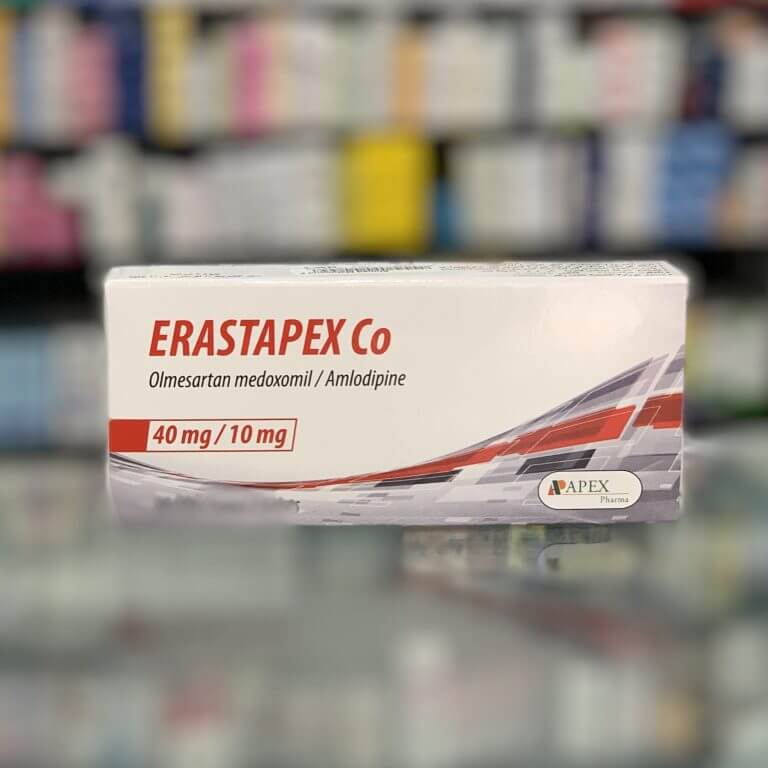
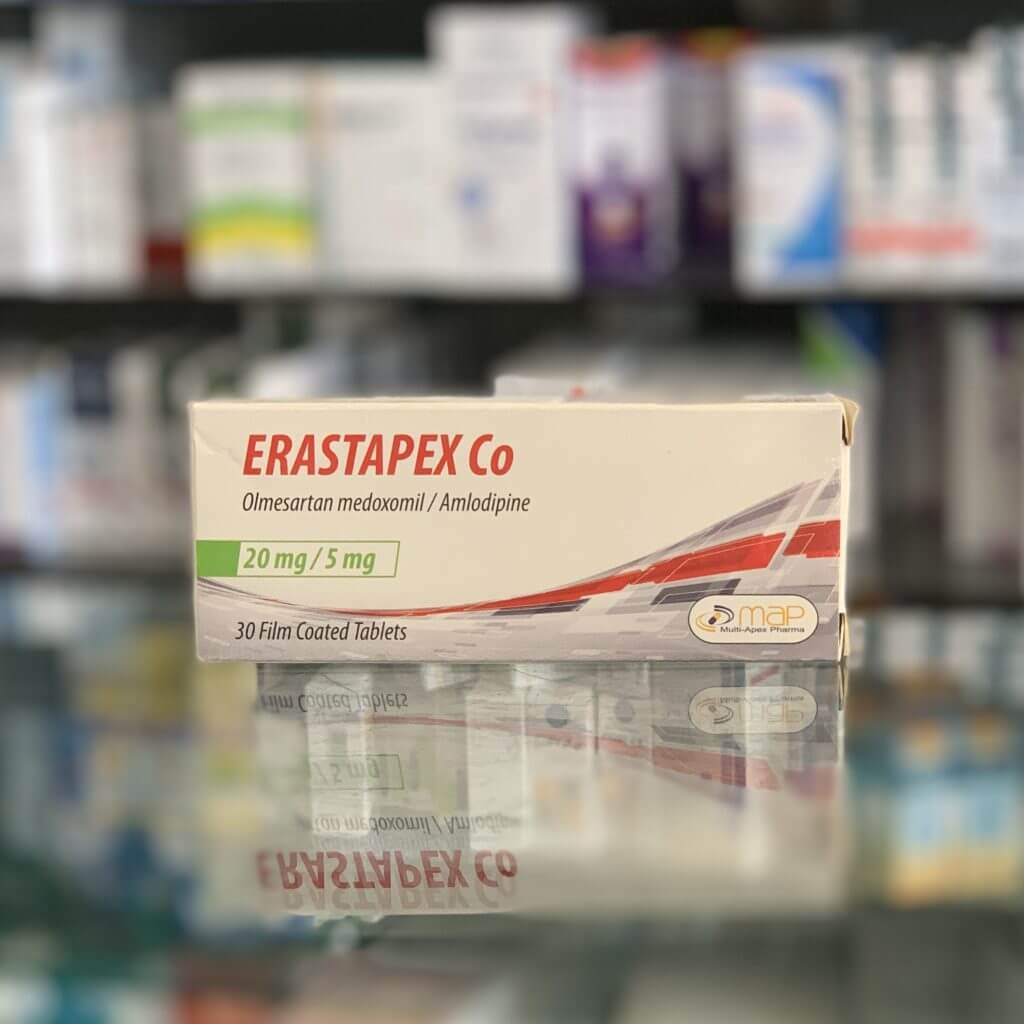
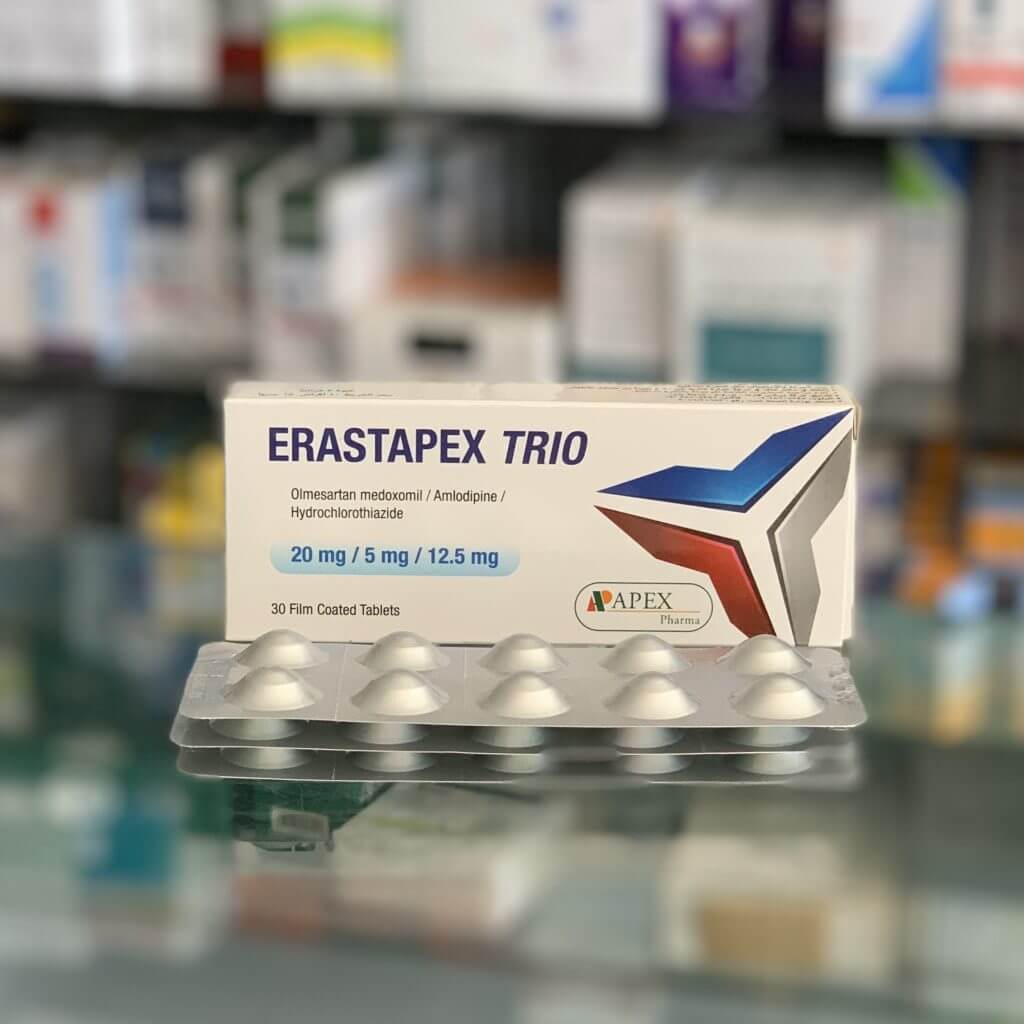
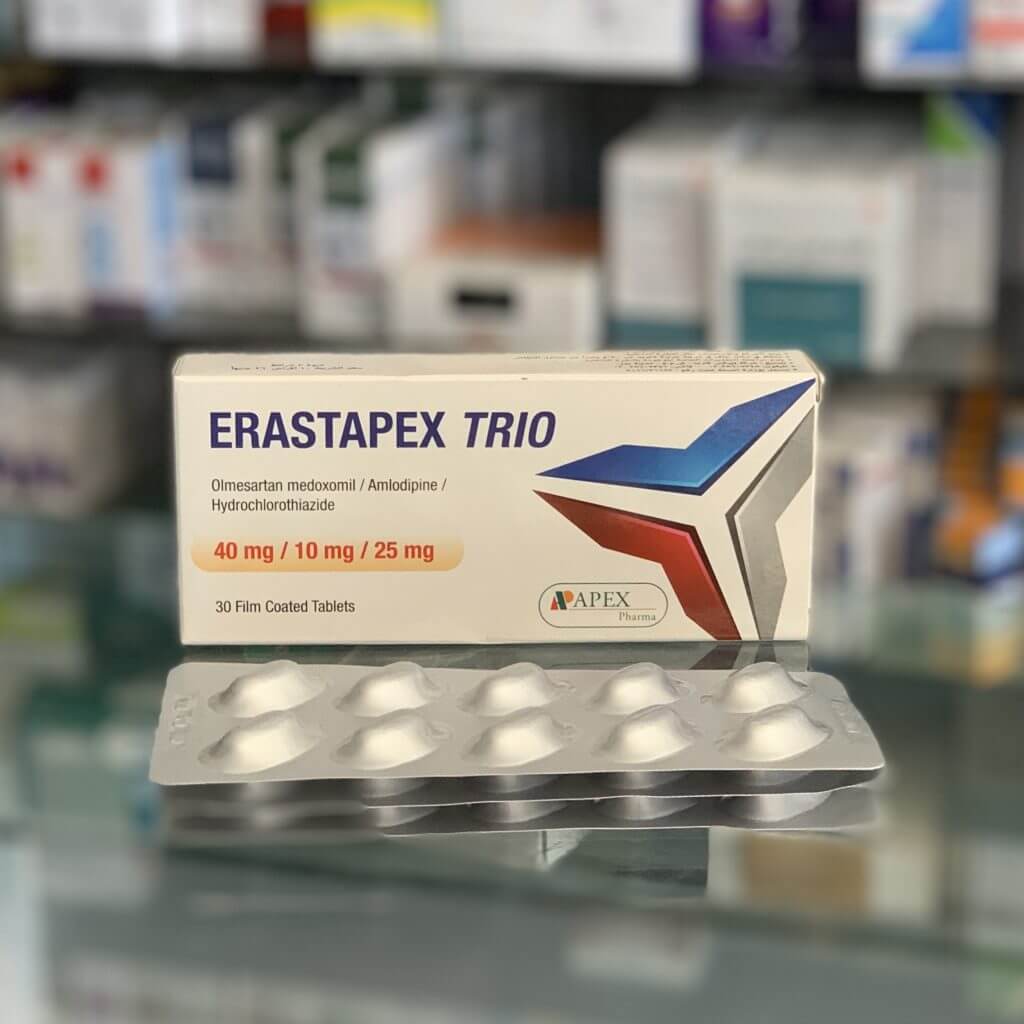
Erastapex Co 40/10 mg 30 tablets
Composition:
Each tablet contains:
Olmesartan medoxomil 40 mg.
Amlodipine 10 mg.
Excipients: pregelatinized starch, silicified microcrystalline cellulose, croscarmellose sodium, magnesium stearate.
Product Description:
Erastapex Co is a combined antihypertensive agent containing an angiotensin II receptor antagonist (olmesartan medoxomil) and a calcium channel blocker (amlodipine).
The combination provides synergistic antihypertensive action, resulting in greater blood pressure reduction compared to monotherapy.
Indications for Use:
Essential hypertension in patients not adequately controlled by monotherapy with olmesartan medoxomil or amlodipine.
Method of Administration and Dosage:
- Oral, once daily, at the same time, regardless of meals, swallowed with water.
- Recommended dose: 1 tablet containing 5 mg amlodipine + 20 mg olmesartan medoxomil.
- If blood pressure reduction is insufficient, 1 tablet containing 10 mg amlodipine + 40 mg olmesartan medoxomil may be used once daily.
- Maximum daily dose: olmesartan 40 mg, amlodipine 10 mg.
Contraindications:
- Severe hepatic impairment (> 9 Child‑Pugh score).
- Biliary obstruction, cholestasis.
- Severe renal impairment (CrCl < 20 ml/min).
- Post‑renal transplant (no clinical experience).
- Severe left ventricular outflow obstruction (e.g., severe aortic stenosis).
- Severe arterial hypotension (SBP < 90 mmHg).
- Shock (including cardiogenic).
- Hemodynamically unstable heart failure after myocardial infarction.
- Concomitant use with aliskiren in patients with diabetes or renal impairment (eGFR < 60 ml/min/1.73 m²).
- Pregnancy, lactation.
- Age under 18 years.
- Hypersensitivity to olmesartan, amlodipine, dihydropyridine derivatives, or excipients.
Precautions:
- Use with caution in:
Aortic/mitral valve stenosis.
Hypertrophic obstructive cardiomyopathy.
Concomitant lithium therapy.
Hyperkalemia, hyponatremia, hypovolemia.
Mild to moderate renal impairment (CrCl 20–60 ml/min).
Primary aldosteronism.
Renovascular hypertension (bilateral renal artery stenosis or stenosis of a solitary kidney).
Conditions with RAAS activation.
Chronic heart failure (NYHA III–IV).
Ischemic heart disease (acute or chronic).
Sick sinus syndrome, hypotension, cerebrovascular disease.
Mild to moderate hepatic impairment (< 9 Child‑Pugh score).
Elderly patients, patients of African descent.
Adverse Effects:
- Immune system: rare — hypersensitivity, urticaria.
- Nervous system: common — dizziness, headache; uncommon — hypoesthesia, paresthesia, somnolence; rare — syncope.
- Psychiatric: uncommon — decreased libido.
- Cardiovascular: uncommon — palpitations, tachycardia, marked hypotension, orthostatic hypotension; rare — flushing.
- Respiratory: uncommon — cough, dyspnea.
- Ear/vestibular: uncommon — vertigo.
- Gastrointestinal: uncommon — dry mouth, abdominal pain, constipation, diarrhea, dyspepsia, nausea, vomiting.
- Urinary system: uncommon — pollakiuria.
- Reproductive system: uncommon — erectile dysfunction/impotence.
- Skin: uncommon — rash.
- Musculoskeletal: uncommon — back pain, muscle cramps, limb pain.
- Other: common — fatigue, peripheral edema; uncommon — asthenia; rare — facial edema.
- Laboratory: uncommon — changes in potassium, uric acid, creatinine, increased GGT activity.
Pregnancy and Lactation:
Contraindicated.
Storage Conditions:
Store at temperatures not exceeding 30 °C, in a dry place.
Packaging:
Carton box containing 3 blisters of 10 tablets and paper insert.
 Русский
 English
 عربي
عربي