Русский
 English
 عربي
عربي
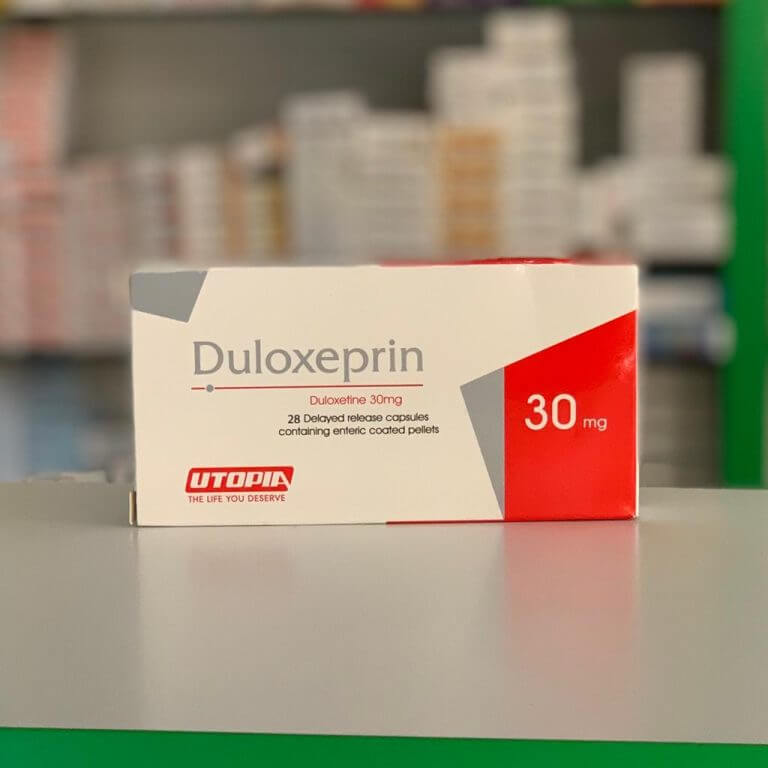
Duloxeprin 30 mg 28 capsules
180£
View analogs- Treatment of Major Depressive Disorder (MDD)
- Management of neuropathic pain associated with diabetic peripheral neuropathy.
- Treatment of generalized anxiety disorder.
- Stress urinary incontinence.
Buy
Product quantities
Form of Release: Capsules
Product Brand:
Utopia Pharmaceutical Company
About the brand
Product Categories: Brain and cerebral circulation


Duloxeprin 30 mg 28 capsules
Composition:
Each capsule contains:
Enteric coated pellets of duloxetine hydrochloride 33.7mg equivalent to duloxetine 30mg
Inactive Ingredients:
Lactose. gelatin, hypromellose, hydroxypropyl methylcellulose acetate succinate, sodium lauryl sulfate, sucrose, talc, titanium dioxide and triethyl citrate.
Properties:
Duloxetine is a potent inhibitor of neuronal serotonin and norepinephrine reuptake and a less potent inhibitor of dopamine reuptake. Duloxetine does not inhibit monoamine oxidase (MA0)
Although the exact mechanism of the antidepressant, central pain inhibitory and anxiolytic actions of duloxetine in humans are unknown, these actions are believed to be related to its potentiation of serotonergic and noradrenergic activity in the CNS.
Indications:
-Treatment of Major Depressive Disorder (MDD)
-Management of neuropathic pain associated with diabetic peripheral neuropathy.
-Treatment of generalized anxiety disorder.
– Stress urinary incontinence.
Dosage and administration:
-Duloxeprin should be swallowed whole and should not be chewed or crushed nor should the capsule be opened and its contents sprinkled on food or mixed with liquids. Duloxeprin is given relevant to meals.
-Major Depressive Disorder:
Duloxeprin should be administered at a total dose of 40mg/day to 60 mg/day (given cither once a day or as 30 mg BID) irrelevant to meals.
-Diabetic Peripheral Neuropathic Pain: Duloxetine should be administered at a total dose of 60 mg/day given once a duy irrelevant to meals.
-Generalized Disorder:
The recommended starting dose for Duloxeprin is 60 mg administered once daily irrelevant to meals. For some patients, it may be desirable to start at 30 mg once daily for 1 week to allow patients to adjust to the medication before increasing the dose to 60 mg once daily.
-Stress Urinary Incontinence:
60 mg once daily.
-Do not stop this medication suddenly.
Side effects:
-Nausea, dry mouth, constipation, somnolence, hyperhidrosis, decreased appetite and weight, fatigue.
-Dizziness, tremors, hot flushes, blurred vision, insomnia, anxiety. decreased libido, erectile and ejaculatory dysfunctions, palpitations, atrial fibrillation, coronary artery disease, myocardial infarction, tachycardia and cardiac failure.
Contraindications:
– Hypersensitivity to duloxetine or any of the inactive ingredients present in the drug.
– Duloxetine use was associated with an increased risk of mydriasis; therefore, its use should be avoided in patients with uncontrolled narrow-angle glaucoma.
– Concomitant use in patients taking Monoamine Oxidase Inhibitors (MAOls) is contraindicated.
Warnings and precautions:
- There is an increased risk of suicidal thoughts and behavior in children, adolescents and young adults taking antidepressants for Major Depressive Disorder (MDD) and other psychiatric disorders.
Duloxeprin is not approved for use in pediatric patients.
- Duloxeprin increases the risk of elevation of serum transaminase levels and bilirubin. So it should not be prescribed to patients with substantial alcohol use or evidence of chronic liver diseases.
- Orthostatic hypotension and syncope have been reported with therapeutic doses of Duloxeprin. The risk of blood pressure decrease may be greater in patients taking concomitant medications at induce orthostatic hypotension (such as antihypertensives.) Blood pressure should be measured prior to initiating treatment and periodically measured throughout treatment.
- Duloxeprin should be used cautiously in patients with a history of mania or seizures.
- Discontinuation of Treatment with Duloxeprin: The following symptoms may occur upon discontinuation of treatment with Duloxeprin: Dizziness, nausea. headache. paresthesia, vomiting. irritability, nightmares, insomnia, diarrhea, anxiety, hyperhidrosis and vertigo. A gradual reduction in the dose, rather than abrupt cessation, is recommended to minimize the risk of these symptoms.
- Drug Interactions:
-Inhibitors of CYPLA2 and CYP2D6: Concomitant use of Duloxetine with these potent inhibitors may result in higher concentrations of the drug in the plasma. -Drugs Metabolized by CYP2D6: Duloxetine is a moderate inhibitor of CYP2D6. When Duloxetine was administered in conjunction with desipramine (a CYP2D6 substrate) the AUC of desipramine increased 3-folds. Therefore, co- administration of Duloxetine with other drugs that are extensively metabolized by this isozyme, and which have a narrow therapeutic index, including certain antidepressants (tricyclic antidepressants such as nortriptyline, amitriptyline and imipramine phenothiazines should be approached with caution.
-Serotonergic Drugs: Caution is advised when Duloxeprin is co administered with other drugs that may affect the serotonergic neurotransmitter systems such as triptans and linezolid.
- Pregnancy and lactation:
There are no adequate and well-controlled studies in pregnant women. Therefore, Duloxeprin should be used during pregnancy only if the potential benefit justifies the potential risk to the fetus. Because the safety of duloxetine in infants is not known, nursing while on Duloxeprin is not recommended.
Storage:
Store at a temperature not exceeding 30°C in a dry place.
Package:
Carton box contains 2 strips each of 14 capsules.
Tags, Keywords:
Active Ingredients:
No comments yet. Be the first to write one.
Your comment will be published after moderation.
You’ll receive a notification to your email when someone replies.