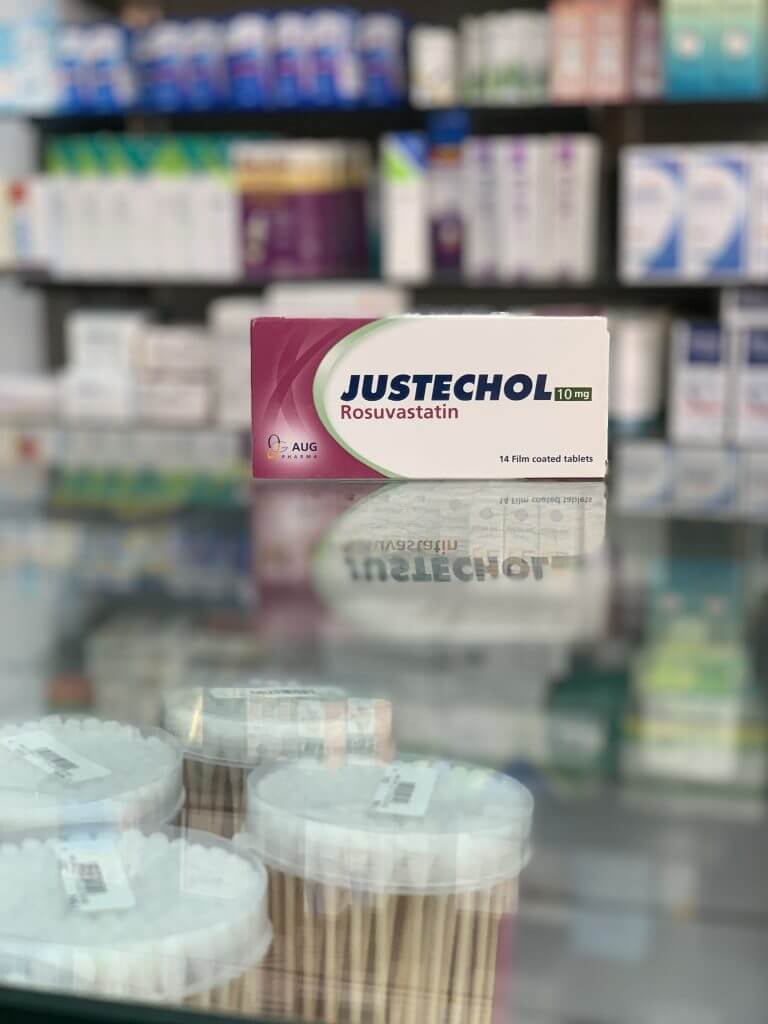
Justechol 10 mg 14 tablets
Composition:
Each tablet contains:
Rosuvastatin – 10 mg.
Excipients:
microcrystalline cellulose, dibasic calcium phosphate, dry lactose, sodium croscarmellose, hydroxypropyl methylcellulose, magnesium stearate, polyethylene glycol, titanium dioxide, purified talc.
Description of the product:
A synthetic hypolipidemic agent from the statin group, inhibitor of HMG-CoA reductase.
Inhibition of enzyme activity reduces intracellular cholesterol content, enhances LDL receptor activity, and accelerates the catabolism of low-density lipoprotein cholesterol.
Indications for use:
- Treatment of hypercholesterolemia in adults, adolescents, and children ≥10 years with primary hypercholesterolemia (type IIa, including heterozygous familial) or mixed hypercholesterolemia (type IIb) as an adjunct to diet.
- Homozygous familial hypercholesterolemia as an adjunct to diet and other therapy.
- Primary prevention of major cardiovascular complications (stroke, myocardial infarction) in adult patients at high risk but without clinical manifestations of coronary heart disease.
Method of Administration and Dosage:
- Before starting therapy, patients should follow a standard cholesterol-lowering diet.
- The drug is taken orally once daily, regardless of food intake.
- Dose range: 5–40 mg/day.
- Initial dose: 5–10 mg/day; in severe hyperlipidemia – 20 mg/day.
- Dose adjustment possible after ≥4 weeks.
- Children 6–9 years: 5–10 mg/day; 10–17 years: 5–20 mg/day.
- Maximum dose for children: 20 mg/day.
- Homozygous familial hypercholesterolemia: initial dose – 20 mg/day.
- For Asian patients and those with severe renal impairment, therapy should start at 5 mg/day; maximum dose – 10 mg/day.
Contraindications:
Hypersensitivity to drug components.
Active liver disease, including persistent elevation of transaminases.
Pregnancy and breastfeeding.
Precautions:
Use with caution in:
- Renal impairment;
- Hypothyroidism;
- Hereditary myopathies;
- Muscle toxicity with other statins;
- Chronic alcoholism;
- Patients over 65 years;
- Liver disease, sepsis, hypotension;
- Surgical interventions, trauma;
- Severe metabolic disorders, uncontrolled epilepsy;
- Patients of Asian origin;
- At 40 mg dose, renal function monitoring is recommended.
- Liver function should be checked before therapy and 3 months after initiation.
- If transaminases exceed 3× ULN, discontinue or reduce dose.
Side effects:
- Generally well tolerated.
- Possible: headache, myalgia, asthenia, constipation, dizziness, nausea, abdominal pain, diabetes mellitus;
- itching, rash, urticaria;
- myopathy, hypersensitivity reactions, pancreatitis;
- jaundice, hepatitis; arthralgia;
- memory impairment.
Pregnancy and lactation:
Contraindicated during pregnancy and breastfeeding.
Storage conditions:
Store at temperatures not exceeding 30 °C, in the original packaging, protected from moisture, and out of reach of children.
Packaging:
Cardboard box containing 2 blisters of 7 tablets each, plus instructions for use.
 Русский
 English
 عربي
عربي