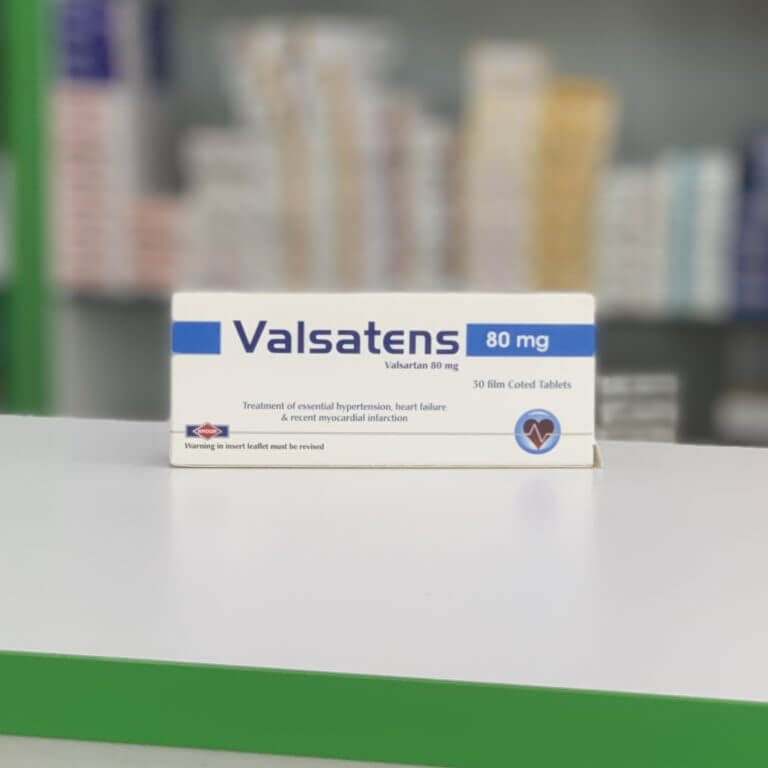
Valsatens 80 mg 30 tablets
Composition:
Each tablet contains:
Valsartan 80 mg
Properties:
Antihypertensive agent. It is a specific angiotensin II receptor antagonist. It has a selective antagonistic effect on AT1 receptors, which are responsible for the implementation of the effects of angiotensin II.
Due to the blockade of AT1 receptors, the plasma concentration of angiotensin II increases, which can stimulate unblocked AT2 receptors. It does not have agonistic activity against AT1 receptors. The affinity of valsartan for AT1 receptors is approximately 20,000 times higher than for AT2 receptors.
Does not inhibit ACE. Does not interact with or block other hormone receptors or ion channels that are important for the regulation of the functions of the cardiovascular system. Does not affect the level of total cholesterol, TG, glucose and uric acid in plasma.
The beginning of the antihypertensive effect of valsartan after its oral administration in a single dose is observed within 2 hours after administration, the maximum effect is achieved within 4-6 hours.
Indications:
Treatment of arterial hypertension.
Treatment of chronic heart failure (II-IV functional class according to the NYHA classification) in patients receiving traditional therapy with diuretics, digitalis preparations, as well as ACE inhibitors or beta-blockers.
Dosage and administration:
The optimal dosage regimen is determined by the doctor. Compliance of the dosage form of a particular drug with indications for use and dosing regimen should be strictly observed.
It is taken orally at a dose of 80 mg 1 time / day or 40 mg 2 times / day, daily. In the absence of an adequate effect, the daily dose may be gradually increased.
Contraindications:
Pregnancy, hypersensitivity to valsartan.
Warnings and precautions:
With hyponatremia and / or a decrease in BCC, as well as during therapy with high doses of diuretics, in rare cases, valsartan can cause severe arterial hypotension. Before starting treatment, correction of water-salt metabolism disorders should be carried out.
Side effects:
-Cardiovascular system: arterial hypotension, postural dizziness, postural hypotension.
-Central nervous system: dizziness, headache.
-Digestive system: diarrhea, nausea, increased bilirubin levels.
-Urinary system: rarely – impaired renal function, increased levels of creatinine and urea nitrogen (especially in chronic heart failure).
-Metabolism: hyperkalemia.
-Hematopoietic system: neutropenia, decrease in hemoglobin and hematocrit.
-Allergic reactions: rarely – angioedema, rash, itching, serum sickness, vasculitis.
-Other: fatigue, general weakness, cough, pharyngitis, increased risk of viral infections.
Storage:
Store at a temperature not exceeding 30 degrees.
Package:
Carton box contains 3 blisters of 10 tablets.
 Русский
 English
 عربي
عربي