Русский
 English
 عربي

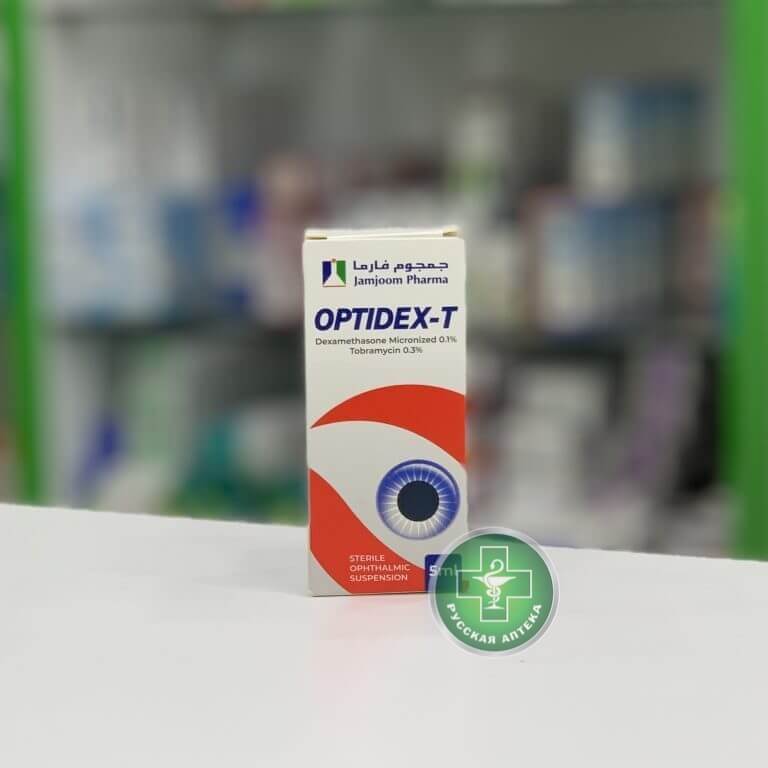
Optidex T Eye drops 5 ml
48£
View analogs- Steroid-responsive inflammatory ocular conditions where prophylactic antibacterial treatment is also indicated (after excluding viral and fungal infections).
- Inflammatory conditions of the palpebral and bulbar conjunctiva, cornea, and anterior segment of the globe (blepharitis, conjunctivitis, keratoconjunctivitis).
- Chronic anterior uveitis.
- Corneal injury from chemical, radiation, or thermal burns, or penetration of foreign bodies.
- Postoperative management of cataract, glaucoma, and strabismus surgeries to prevent and treat inflammation.
Buy
Product quantities
Form of Release: Drops
Product Brand:
Jamjoom Pharmaceuticals
About the brand
Product Categories: Eyes Health • Medicines and vitamins for eyes


Optidex T Eye drops 5 ml
Each ml of eye drop suspension contains:
Tobramycin — 3 mg (0.3%).
Dexamethasone — 1 mg (0.1%).
Excipients:
Benzalkonium chloride — 0.06 mg (0.006% as a preservative), hydroxypropyl methylcellulose (hypromellose), purified water.
Product Description:
- Optidex T is a combination ophthalmic product for topical use, providing pronounced anti-inflammatory and antibacterial effects.
- Mechanism of Action: Dexamethasone:
A synthetic glucocorticosteroid with potent anti-inflammatory, antiallergic, and desensitizing activity (approximately 25 times more potent than hydrocortisone).
Reduces edema, hyperemia, and inflammatory exudation. - Tobramycin: A broad-spectrum aminoglycoside antibiotic. Inhibits bacterial protein synthesis, leading to bacterial cell death.
- Spectrum of Activity: Tobramycin is active against a wide range of Gram-positive and Gram-negative microorganisms: Staphylococci (including S. aureus and S. epidermidis, as well as penicillin-resistant strains), Streptococci (including S. pneumoniae and beta-hemolytic species), Pseudomonas aeruginosa, Escherichia coli, Klebsiella pneumoniae, Enterobacter aerogenes, Proteus mirabilis, Morganella morganii, most strains of Proteus vulgaris, Haemophilus influenzae, Moraxella lacunata, Acinetobacter calcoaceticus, and certain Neisseria species.
- Pharmacokinetics: Systemic absorption following topical ocular administration is low; however, active components penetrate well into ocular tissues and the anterior chamber.
Indications for Use:
- Steroid-responsive inflammatory ocular conditions where prophylactic antibacterial treatment is also indicated (after excluding viral and fungal infections).
- Inflammatory conditions of the palpebral and bulbar conjunctiva, cornea, and anterior segment of the globe (blepharitis, conjunctivitis, keratoconjunctivitis).
- Chronic anterior uveitis.
- Corneal injury from chemical, radiation, or thermal burns, or penetration of foreign bodies.
- Postoperative management of cataract, glaucoma, and strabismus surgeries to prevent and treat inflammation.
Method of Administration and Dosage:
- Method of Administration: Topical ocular use. Instill into the conjunctival sac of the affected eye(s). Shake the bottle well before use.
- Dosage Regime:
Instill 1 to 2 drops into the conjunctival sac every 4 to 6 hours.
During the initial 24 to 48 hours in severe cases, the dosage may be increased to 1 to 2 drops every 2 hours, with frequency decreased gradually as inflammation improves. - Do not discontinue treatment prematurely to avoid relapse of infection.
- Pediatric Use: Safety and effectiveness in pediatric patients have not been established.
Contraindications:
- Hypersensitivity to tobramycin, dexamethasone, or any of the excipients.
- Viral diseases of the cornea and conjunctiva (including epithelial herpetic keratitis / dendritic keratitis, vaccinia, chickenpox).
- Mycobacterial infections of the eye (such as ocular tuberculosis).
- Fungal infections of ocular structures.
- Use following uncomplicated removal of a corneal foreign body.
- Glaucoma.
Precautions:
- Topical Ocular Use Only: Not for intraocular injection or parenteral use.
- Duration of Use and IOP: Prolonged use of corticosteroids may result in ocular hypertension/glaucoma with damage to the optic nerve and visual disturbances. Intraocular pressure (IOP) should be monitored routinely if the product is used for more than 10 days.
- Secondary Infections: Prolonged corticosteroid use may suppress the host response and increase the hazard of secondary ocular infections (including fungal infections) or mask acute infections.
- Superinfection: Prolonged use of tobramycin may result in the overgrowth of non-susceptible organisms, including fungi.
- Contact Lenses: Wearing contact lenses is not recommended during treatment with eye drops containing benzalkonium chloride.
Adverse Reactions / Side Effects:
Local Reactions:
Ocular allergic reactions (itching, eyelid swelling, conjunctival erythema), transient ocular discomfort, burning, or tearing upon instillation.
Ophthalmic Complications:
Increased intraocular pressure, glaucoma, optic nerve damage, visual acuity and field defects, posterior subcapsular cataract formation, delayed wound healing.
Pregnancy and Lactation:
- There are no adequate and well-controlled studies in pregnant women.
- Use during pregnancy only if the potential benefit to the mother justifies the potential risk to the fetus.
- It is unknown whether topical ophthalmic administration of corticosteroids or tobramycin results in sufficient systemic absorption to produce detectable quantities in human milk.
- Caution should be exercised when administering to nursing mothers (temporary discontinuation of breastfeeding may be considered).
Storage Conditions:
Store at 15–25°C.
Discard bottle 1 month after opening.
Keep out of reach of children.
Packaging:
5 ml eye drop suspension in a dropper bottle with a dispenser.
1 bottle together with a patient instruction leaflet in a cardboard box.
Tags, Keywords:
Active Ingredients:
No comments yet. Be the first to write one.
Your comment will be published after moderation.
You’ll receive a notification to your email when someone replies.