Русский
 English
 عربي
عربي
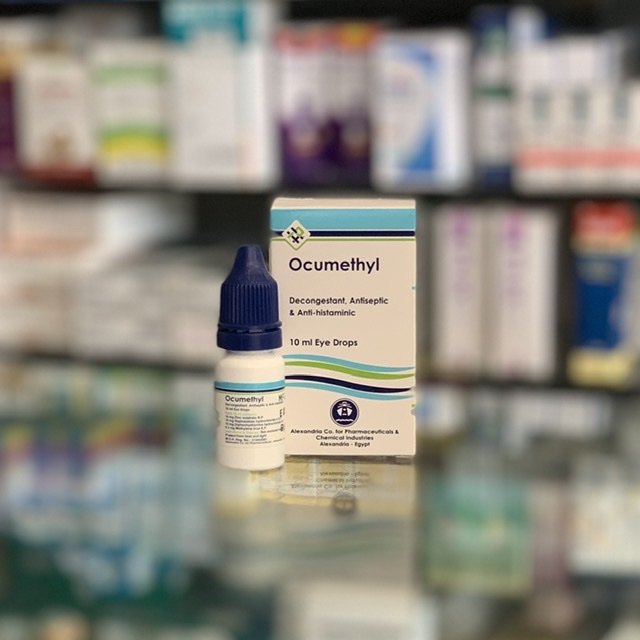
Ocumethyl Eye drops 10 ml
22£
View analogs- Chronic nonspecific conjunctivitis and blepharoconjunctivitis;
- allergic conjunctivitis and blepharoconjunctivitis;
- angular conjunctivitis;
- reduction of symptoms of eye tissue irritation (redness, itching, foreign body sensation).
Buy
Product quantities
Form of Release: Drops
Product Brand:
Alexandria Pharmaceutical Company
About the brand
Product Categories: Eyes Health • Medicines and vitamins for eyes


Ocumethyl Eye drops 10 ml
Composition:
Each 10 ml of solution contains:
Zinc sulfate 10 mg
Naphazoline hydrochloride 10 mg
Diphenhydramine hydrochloride 10 mg
Methylene blue 0.3 mg
Properties:
Okumetil is a combined preparation containing zinc sulfate, diphenhydramine and naphazoline.
Zinc sulfate, when applied topically, has an astringent, drying, anti-inflammatory and antiseptic effect.
Naphazoline is a sympathomimetic. It has a fast, pronounced and prolonged vasoconstrictor effect. When applied topica it reduces swelling and hyperemia of the mucous membranes.
Diphenhydramine is a blocker of HI-histamine receptors. When applied topically, it reduces capillary permeability and prevents tissue edema.
Thus, Okumetil has antiseptic, anti-allergic and anti-inflammatory effects.
Indications:
-chronic nonspecific conjunctivitis and blepharoconjunctivitis;
- allergic conjunctivitis and blepharoconjunctivitis;
- angular conjunctivitis;
- reduction of symptoms of eye tissue irritation (redness, itching, foreign body sensation).
Method of administration and dosage:
Locally. If there are no other doctor’s prescriptions, then instill 1 drop into the conjunctival sac of the affected eye (s) 2-3 times a day.
If during the use of the drug within 72 hours there is no decrease in symptoms, you should stop using the drug and consult a doctor.
Contraindications:
-increased sensitivity to drug components;
- angle-closure glaucoma;
- dry eye syndrome;
-pregnancy;
-lactation;
- hyperplasia of the prostate gland, stenosing ulcer of the stomach and duodenum, stenosis of the bladder neck;
-bronchial asthma;
-epilepsy;
- cardiovascular diseases (ischemic heart disease, arterial hypertension); -pheochromocytoma;
-hyperfunction of the thyroid gland;
-diabetes;
-severe atherosclerosis;
- children up to 2 years old.
Use with caution in patients taking MAO inhibitors or other drugs that increase blood pressure.
Precautions:
To avoid contamination of the solution, keep the bottle tightly closed and avoid touching the tip of the pipette with any surface.
Influence on the ability to drive vehicles and use mechanisms
Within 10-15 minutes after installation, a decrease in visual acuity is possible, and therefore, care must be taken when driving a car and when working with mechanisms.
Side effects:
After instillation, a slight burning sensation, blurred vision, and the development of allergic reactions may occur. With aphakia, the development of maculopathy and the appearance of central scotoma are possible. In this case, withdrawal of the drug leads to the reverse development of symptoms.
After topical use of naphazoline, which is part of Okumetil, reactive hyperemia and edema of the mucous membrane of the eyes, dilated pupil, increased IOP (intraocular pressure) may occur. With prolonged use, the phenomenon of tissue irritation occurs most often.
Since naphazoline has a general resorptive effect when applied topically, it is possible to develop tachycardia, increased blood pressure, nausea, and headache.
Storage method:
At a temperature not higher than 25 degrees.
Packaging:
The cardboard box holds a 10 ml bottle.
Tags, Keywords:
Active Ingredients:
No comments yet. Be the first to write one.
Your comment will be published after moderation.
You’ll receive a notification to your email when someone replies.