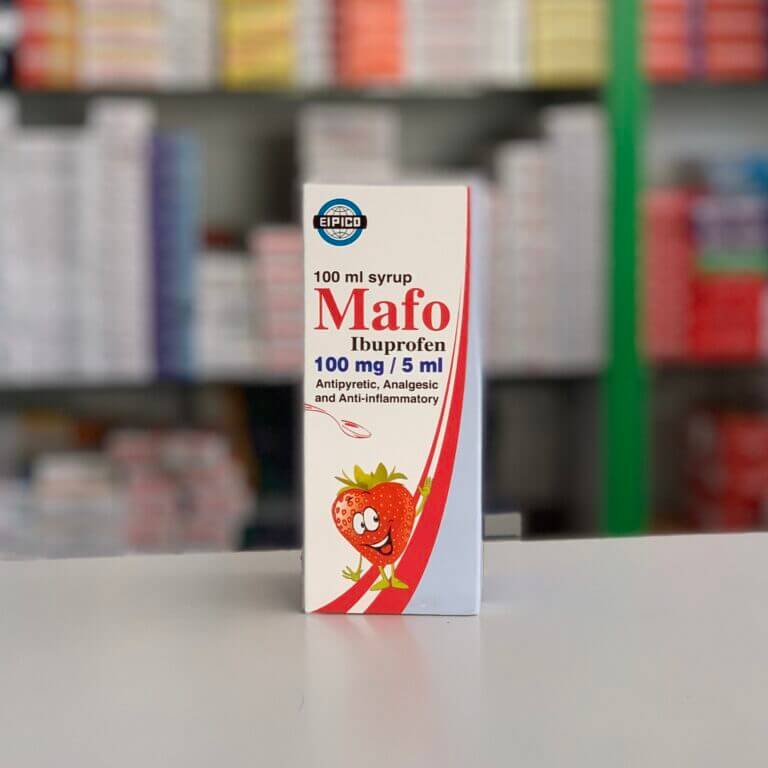
Mafo Syrup 100 mg/5 ml 100 ml
Composition:
Each 5 ml of syrup contains:
Ibuprofen 100 mg
Inactive ingredients:
Glycerol, xanthan gum, sucrose, starch 1500, polysorbate 80. sodium benzoate, citric acid anhydrous, propylene glycol, strawberry flavor oil, carmazine red 85%, purified water.
Properties:
NSAID. It has antipyretic, analgesic and anti-inflammatory action.
Antipyretic action is caused by blocking COX-1 and COX-2 in the arachidonic acid cascade of the CNS, which leads to a decrease in the synthesis of prostaglandins, a decrease in their concentration in the cerebrospinal fluid and a decrease in the excitation of the center of thermoregulation. The effect of lowering the temperature in fever begins 30 min after taking the drug, its maximum effect is manifested in 3 h.
Indications:
-The drug is intended only for the treatment of children.
-Elevated body temperature of various genesis in:
-Colds; ARVI, including influenza; sore throat (tonsillitis);
-child infections;
-postvaccinale reacties.
-pain syndrome of various origins of mild and moderate intensity in: toothache, painful teething; earache with inflammation of the middle ear; headache, migraine; neuralgia; pain in the muscles, joints, due to injuries of the musculoskeletal system.
Designed for symptomatic therapy, reducing pain and inflammation during the period of use, does not affect the progression of the disease.
Dosage and administration:
-The drug is taken orally, after meals. -Before use, the bottle should be shaken to obtain a homogeneous suspension.
-Children 3-6 months: 2.5 ml 3 times a day. Use no more than 24 h without the advice of a pediatrician.
-Children 6-12 months: 2.5 ml 3 times a day.
-Children 1-2 years: 2.5 ml 3-4 times a day.
-Children 3-7 years: 5 ml 3-4 times a day.
-Children 8-12 years old: 10 ml 3-4 times a day.
-Administration of the drug in a single dose can be repeated every 6-8 hours. The maximum daily dose should not be exceeded.
Side effects:
-Digestive system: NSAID-gastropathy (nausea, vomiting, decreased appetite, heartburn, abdominal pain, diarrhea, flatulence, pain and discomfort in the epigastric region); ulceration of gingival mucosa and GI mucosa (in some cases complicated by perforation and bleeding); dryness of oral mucosa, aphthous stomatitis, pancreatitis, constipation, hepatitis.
-Respiratory system: dyspnea, bronchospasm.
-Urinary system: acute renal failure, allergic nephritis, nephrotic syndrome (edema), polyuria, cystitis.
-Allergic reactions: skin itching, skin rash (erythematous or urticaria), angioedema, anaphylactoid reactions, anaphylactic shock, bronchospasm, fever, erythema multiforme exudative (including Stevens-Johnson syndrome), toxic epidermal necrolysis (Lyell’s syndrome), eosinophilia, allergic rhinitis.
Contraindications:
– hypersensitivity to ibuprofen or other NSAIDs (including acetylsalicylic acid), as well as to the auxiliary components of the drug;
-severe hepatic insufficiency, active liver disease;
-confirmed hyperkalemia;
-inflammatory bowel disease;
-sugarase/isomaltase deficiency;
-fructose intolerance, glucose-galactose malabsorption;
-blood clotting disorders (including hemophilia, prolongation of bleeding time, bleeding tendency, hemorrhagic diathesis);
-children under 3 months of age.
Warnings and precautions:
-In patients with bronchial asthma or other conditions with bronchospasm, ibuprofen may increase the risk of bronchospasm. -The use of the drug in these patients is acceptable only with great caution, and in case of breathing difficulties should immediately consult a physician.
-During prolonged treatment with NSAIDs it is necessary to monitor the peripheral blood picture and functional status of the liver and kidneys.
Storage:
In a cool dry place at a temperature not exceeding 30°C.
Package:
Carton box contains a 100 ml bottle, paper instructions.
 Русский
 English
 عربي
عربي