 Русский
 English
 عربي
عربي
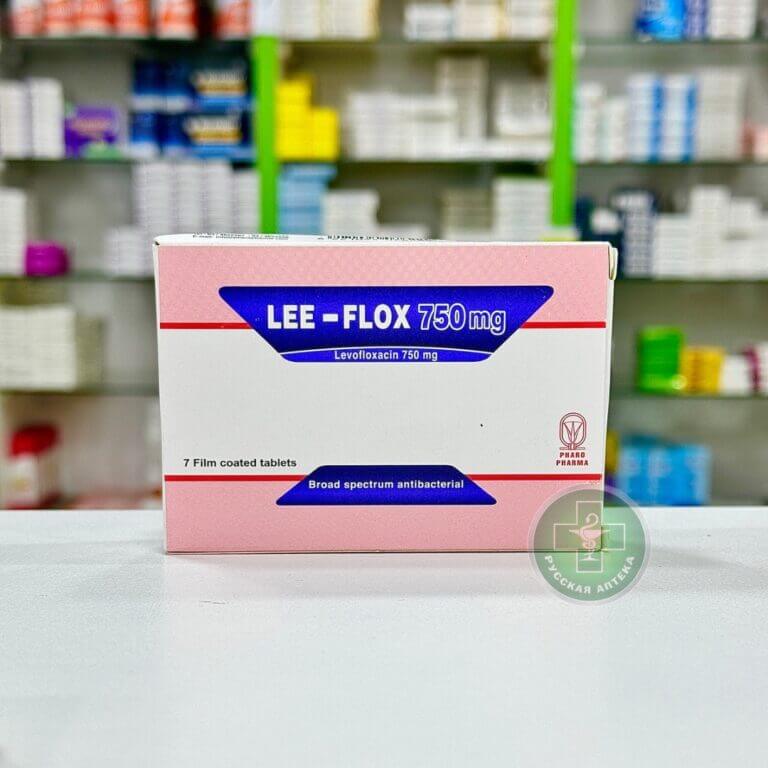
Lee Flox 750 mg 7 tablets
145£
View analogsLevofloxacin is used in the treatment of bacterial infections only, and the most important treatments that it uses include:
Pneumonia.
Hospital-acquired pneumonia.
Chronic prostatitis.
Complex urinary tract infection.
Acute pyelonephritis.
Skin infections.
Acute bacterial sinusitis.
Buy
Product quantities
Form of Release: Tablets
Product Brand:
Pharo Pharma
About the brand


Lee Flox 750 mg 7 tablets
Compound:
Tablets – 1 tablet contains:
Active ingredient: levofloxacin hemihydrate – 768.700 mg, in terms of levofloxacin – 750.000 mg;
Description:
Antibiotic, belongs to the Fluoroquinolone group used in the treatment of pneumonia, prostatitis, acute bacterial rhinosinusitis, salmonella infection, drug-resistant tuberculosis and Urinary tract infection.
Levofloxacin blocks DNA gyrase and topoisomerase IV, disrupts supercoiling and cross-linking of DNA breaks, inhibits DNA synthesis, and causes profound morphological changes in the cytoplasm, cell wall and membranes of microbial cells.
Levofloxacin is active against most strains of microorganisms, both in vitro and in vivo.
Indications for use:
Levofloxacin is used in the treatment of bacterial infections only, and the most important treatments that it uses include:
Pneumonia.
Hospital-acquired pneumonia.
Chronic prostatitis.
Complex urinary tract infection.
Acute pyelonephritis.
Skin infections.
Acute bacterial sinusitis.
Uncomplicated urinary tract infections.
Acute exacerbation of chronic bronchitis.
Pulmonary anthrax; Post-exposure treatment.
Plague.
Contraindications:
Hypersensitivity to levofloxacin or other quinolones, as well as to any of the excipients of the drug epilepsy
history of tendon damage while taking fluoroquinolones
pseudoparalytic myasthenia gravis (myasthenia gravis)
pregnancy (the risk of damage to the cartilaginous growth plates of the fetus cannot be completely excluded)
period of breastfeeding (the risk of damage to the cartilaginous growth zones of bones in a child cannot be completely eliminated)
childhood and adolescence up to 18 years of age (due to incomplete growth of the skeleton, since the risk of damage to cartilaginous growth zones cannot be completely excluded).
Carefully:
In patients predisposed to the development of seizures (in patients with previous lesions of the central nervous system;
in patients simultaneously taking drugs that lower the threshold of convulsive activity of the brain, such as fenbufen, theophylline).
In patients with impaired renal function (mandatory monitoring of renal function is required, as well as correction of the dosage regimen, see section “Dosage and Administration”).
In patients with known risk factors for QT prolongation:
In patients with diabetes mellitus receiving oral hypoglycemic drugs (for example, glibenclamide) or insulin drugs (the risk of hypoglycemia increases).
In patients with psychosis or in patients with a history of mental illness.
In elderly patients.
Pregnancy and lactation:
There are currently no sufficient studies to confirm the safety of the use of the treatment on the fetus; treatment is used if the therapeutic benefit outweighs the risks to the fetus, and a doctor or pharmacist should be consulted before taking the treatment in the event of pregnancy.
The treatment is excreted in breastfeeding milk in small quantities, so caution is advised and not to use it until after seeing a doctor or pharmacist.
Side effects:
Cardiac disorders – Rarely: sinus tachycardia, palpitations;
Nervous system disorders – Common: headache, dizziness; Uncommon: drowsiness, tremor, dysgeusia (taste perversion); Rarely: paresthesia, convulsions;
Visual disturbances – Rare: visual disturbances such as blurred vision;
Respiratory, thoracic and mediastinal disorders – Uncommon: shortness of breath;
Gastrointestinal disorders – Common: diarrhea, nausea, vomiting; Uncommon: abdominal pain, dyspepsia, flatulence, constipation;
Skin and subcutaneous tissue disorders – Uncommon: rash, itching, urticaria, hyperhidrosis;
Metabolic and nutritional disorders – Uncommon: anorexia; Rarely: hypoglycemia, especially in patients with diabetes mellitus (possible signs of hypoglycemia are voracious appetite, perspiration, trembling, nervousness);
Infectious and parasitic diseases – Uncommon: fungal infections, development of resistance of pathogenic microorganisms.
Vascular disorders – Rarely: decreased blood pressure.
General disorders – Uncommon: asthenia; Rarely: pyrexia (fever);
Liver and biliary tract disorders – Often: increased activity of liver enzymes in the blood (for example, alanine aminotransferase (ALT)), aspartate aminotransferase (AST)), increased activity of alkaline phosphatase (ALP) and gamma-glutamyltransferase (GGT); Uncommon: increased concentration of bilirubin in the blood;
Directions for use and dosage:
The drug should be taken orally during meals or between meals, without chewing, with a sufficient amount of liquid.
The intravenous dose is equal to the oral dose, and it may take several days for you to feel better.
Adult dosage:
Pneumonia from a hospitalized infection: 750 mg once daily for 7 to 14 days.
Pneumonia from a community infection: 500 mg once daily for 7 to 14 days, or 750 mg once daily for 5 days depending on the type of bacteria.
Sinusitis: 500 mg once daily for 10 to 14 days, or 750 mg once daily for 5 days.
Bronchitis: 500 mg once daily for 7 days.
Acute bacterial nephritis: 250 mg once daily for 10 days, or 750 mg once daily for 5 days depending on the type of bacteria.
Children dosage:
Generally, this drug is contraindicated for those under the age of 18. But it may be used in very limited cases, such as plague and anthrax.
Storage:
Store in a cool dry place.
Storage temperature should not exceed 30C.
Keep out of the reach of children.
Package:
The cardboard box contains a blister of 7 tablets, instructions.
Tags, Keywords:
- antibiotic for children
- including those caused by atypical pathogens
- secondary infected dermatoses
- moderate acne vulgaris
- impetigo
- upper respiratory tract infections
- erythema migrans
- exacerbation of chronic bronchitis
- onsyllitis
- acute bronchitis
- pneumonia
- rye
- sinusitis
- otitis media
- tonsillitis
- urethritis
- pharyngitis
- cervicitis
Active Ingredients:
No comments yet. Be the first to write one.
Your comment will be published after moderation.
You’ll receive a notification to your email when someone replies.


