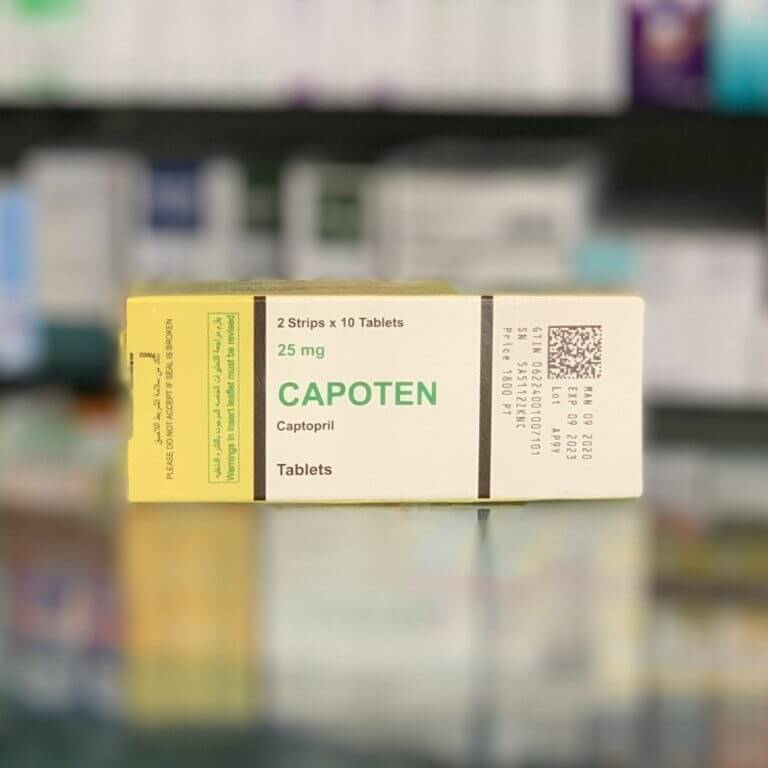
Kapoten 25 mg 20 tablets
Compound:
Each tablet contains:
Captopril 25 mg
Auxiliary components:
Avicel, starch, lactose.
Properties:
The mechanism of antihypertensive action is associated with competitive inhibition of ACE activity, which leads to a decrease in the rate of conversion of angiotensin I to angiotensin II and eliminates its vasoconstrictive effect.
As a result of a decrease in the concentration of angiotensin II, a secondary increase in plasma renin activity occurs due to the elimination of negative feedback on renin release and a direct decrease in aldosterone secretion. Due to the vasodilating action, it reduces the total peripheral vascular resistance (afterload), wedge pressure in the pulmonary capillaries (preload) and resistance in the pulmonary vessels; increases cardiac output and exercise tolerance. Does not affect lipid metabolism.
Indications:
Arterial hypertension (including renovascular), chronic heart failure (as part of combination therapy), left ventricular dysfunction after myocardial infarction in patients who are in a clinically stable condition. Diabetic nephropathy in type 1 diabetes mellitus (with albuminuria more than 30 mg / day).
Dosage and administration:
Capoten is prescribed one hour before meals. The dosing regimen is set individually.
In arterial hypertension, the drug is prescribed at an initial dose of 25 mg 2 times / day. If necessary, the dose is gradually (with an interval of 2-4 weeks) increased until the optimal effect is achieved. For mild or moderate hypertension, the usual maintenance dose is 25 mg 2 times / day; the maximum dose is 50 mg 2 times / day. In severe hypertension, the maximum dose is 50 mg 3 times / day. The maximum daily dose is 150 mg. For the treatment of chronic heart failure, captopril is prescribed in cases where the use of diuretics does not provide an adequate effect. The initial dose is 6.25 mg 2-3 times / day, which is then gradually (with an interval of at least 2 weeks) increased. The average maintenance dose is 25 mg 2-3 times / day. In the future, if necessary, the dose is gradually increased (with an interval of at least 2 weeks). The maximum dose is 150 mg / day.
Contraindications:
– angioedema, incl. hereditary, history (including history after the use of other ACE inhibitors);
– severe renal dysfunction, azotemia, hyperkalemia, bilateral renal artery stenosis or stenosis of a single kidney with progressive azotemia, condition after kidney transplantation, primary hyperaldosteronism;
– stenosis of the mouth of the aorta, mitral stenosis, the presence of other obstacles to the outflow of blood from the left ventricle of the heart;
-expressed violations of liver function;
– arterial hypotension;
– cardiogenic shock;
-pregnancy and lactation;
– age up to 18 years (efficacy and safety have not been established).
– hypersensitivity to captopril and other ACE inhibitors.
Precautionary measures:
Before starting, as well as regularly during treatment with Kapoten, kidney function should be monitored.
In chronic heart failure, the drug is used under the condition of careful medical supervision.
With extreme caution, Kapoten is prescribed to patients with diffuse connective tissue diseases or systemic vasculitis; patients receiving immunosuppressants, especially in the presence of impaired renal function (risk of developing serious infections that are not amenable to antibiotic therapy). In such cases, it is necessary to monitor the picture of peripheral blood before starting the use of Kapoten, every 2 weeks during the first 3 months of therapy and periodically – during the subsequent period of treatment.
Side effects:
From the side of the cardiovascular system: a pronounced decrease in blood pressure, tachycardia, orthostatic hypotension, peripheral edema.
From the urinary system: proteinuria, impaired renal function (increased levels of urea and creatinine in the blood).
From the side of the central nervous system: dizziness, headache, ataxia, paresthesia, drowsiness, blurred vision, fatigue, asthenia.
On the part of the respiratory system: dry cough, passing after discontinuation of the drug, bronchospasm, pulmonary edema.
Storage method:
Store at a temperature not exceeding 30 degrees.
Package:
The cardboard box contains 2 blister of 20 tablets, paper instructions.
 Русский
 English
 عربي
عربي